Jewish Community Fears Sellout in Trump Administration Settlement With Columbia
The reported deal to restore $400 million in frozen funding to the university excludes major concessions initially demanded by the administration.
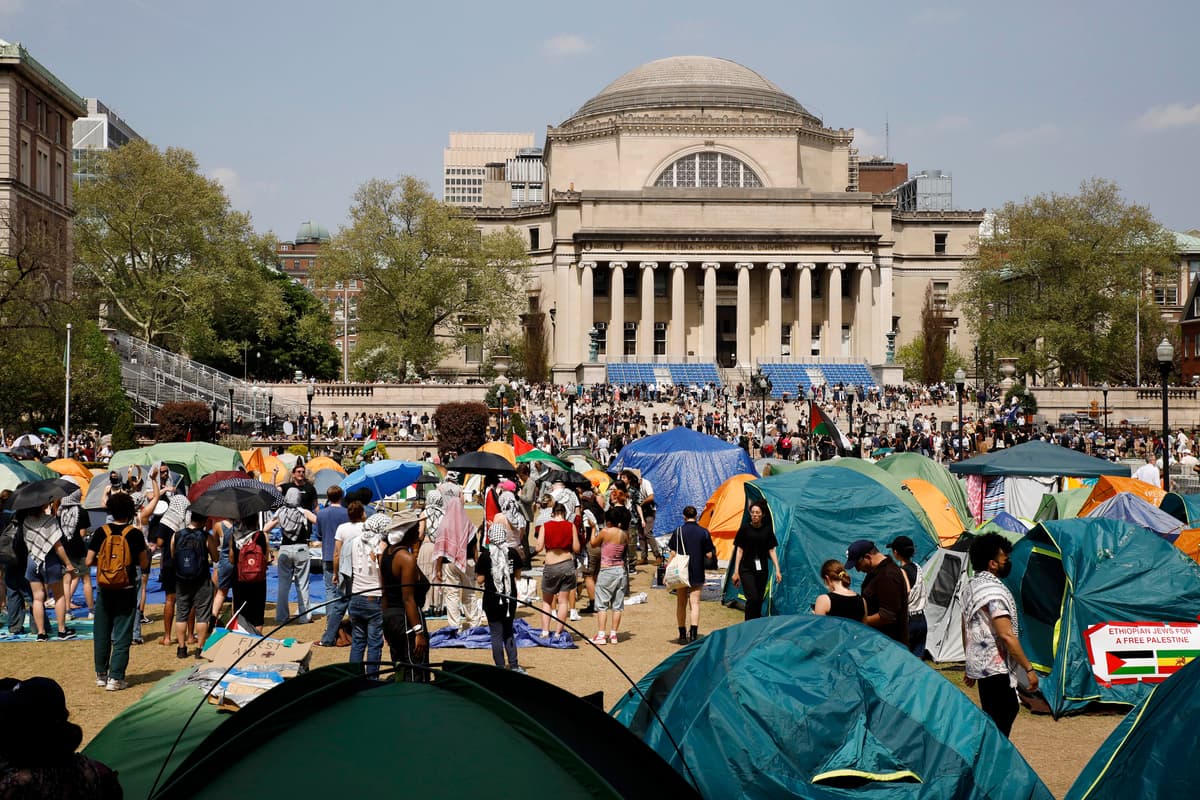

Worry is mounting within Columbia Universityâs Jewish community that the Trump administration is nearing a deal that falls short of addressing what they see as deep-rooted problems at the Ivy League school.
The terms of the agreement, which would see Columbia regain $400 million in frozen federal grants and contracts, surfaced over the weekend in a report by the Free Beacon. The draft deal would require the university to compensate the alleged victims of unlawful discrimination, increase transparency around its admissions and hiring practices, and solidify reporting protocols for foreign donations, among other provisions.
However, the deal excludes some of the more extraordinary concessions initially demanded by the administration. That includes enacting a consent decree that would provide for a federal judge to oversee Columbiaâs adherence to the administrationâs required reforms; overhauling the universityâs governance structure; and requiring the presidential search committee to assemble a politically diverse pool of candidates.
The deal is being hailed by the administration as a major success and follows President Trumpâs praise of Columbia for its conciliatory approach to the governmentâs crackdown on antisemitism; diversity, equity, and inclusion programs; and anti-conservative bias on campus. A senior White House official told the Free Beacon that the âhistoric agreementâ will âmake massive changes throughout higher education.â
Not everyone is so optimistic. Columbia community members and White House allies are voicing concern that the deal doesnât get at the systemic changes they believe are needed to scrub the school of the antisemitism that was put on display in the wake of Hamasâs October 7 attack on Israel but has existed for decades.
âWhatâs being floated as a âdealâ between Columbia University and the federal government is premature and a profound mistake,â a civil rights attorney, Gerard Filitti, warns in an op-ed for the Times of Israel. âIt rewards evasion, ignores failure, and sends the message that elite schools are above accountability when it comes to civil rights and the rule of law.â
Mr. Filitti argued that the school shouldnât be allowed to negotiate a deal until it meets several conditions, including adopting a âstraightforward mask ban,â fortifying its âtime, place, and mannerâ rules for permitted protests, and drafting a plan to hold accountable unrecognized student groups that violate university policies, among others.
A collective of pro-Zionist faculty at Columbia and its affiliate college, Barnard, likened the reported agreement to a âsin taxâ that compensates for âcreating a toxic, antisemitic environment,â and predicted that the school would run into problems with Title VI compliance in the next couple of years. âItâs like Columbia is choosing to pay a carbon credit so they can keep polluting,â they added.
Others pleaded with the administration to reverse course. â@POTUS, Jewish students have endured months of targeted harassment, ostracism, and violence,â a Barnard undergraduate, Shoshana Aufzien, wrote. â@Columbiaâs administration failed to protect us. Now is not the time for appeasement.â
The student expressed particular concern that the White House is dropping its effort to reform Columbiaâs primary policy-making body, the University Senate, which has been criticized for letting off some of the schoolâs most disruptive anti-Israel protesters. âItâs hard to celebrate a deal that ignores the root causes of @Columbiaâs antisemitism problem: namely, its dysfunctional University Senate,â Ms. Aufzien wrote.
The university again made headlines when it unveiled on Tuesday several additional measures aimed at combating antisemitism, including adopting the International Holocaust Remembrance Allianceâs definition for antisemitism, which identifies denying Jews the right to self-determination as a potentially antisemitic act.
Columbia also announced its plans to appoint Title VI and Title VII coordinators, arrange additional antisemitism training for faculty, staff, and students, and implement a âzero toleranceâ policy for antisemitism.
Although the development was welcomed by the schoolâs Jewish community as a step in the right direction, it did little to quell concerns.
âWhile adopting IHRA is better than refusing to adopt it, by itself it is just the definition. The key is in whether and how it is applied to combat antisemitism,â an antisemitism watchdog group, Documenting Jew Hatred at Columbia University, tells the Sun. âAfter all, Columbia has had plenty of rules on its books governing conduct related to harassment, disruptions, hate speech, etc. The problem is that they were not enforced when it comes to Jews.â
The group believes that âoutside enforcement and monitoringâ is required to ensure that Columbia brings an end to the harassment of Jews and Israelis on campus and roots out the ideological climate that encourages it, the group tells the Sun.
The reforms were greeted similarly by a coalition of Jewish and Israeli students at Columbia who deemed them ânecessary but not sufficientâ to combat campus antisemitism.
Fears that the administration has gone soft on the university come in contrast to Mr. Trumpâs portrayal of Columbia as the desperate party. Last week, the 47th president said that âweâre probably going to settle with Columbiaâ before adding, âthey want to settle very badly. Thereâs no rush.â
The university has not been coy about the potentially devastating consequences of the administrationâs funding cuts. Last month, Ms. Shipman lamented that the financial pressures facing the university were âincreasingly acuteâ and warned that âweâre in danger of reaching a tipping point in terms of preserving our research excellence and the work we do for humanity.â
Itâs unclear if the reported deal has been reviewed by the president, nor is it known when Columbiaâs board of trustees will vote on it. The negotiations have been headed by a Trump adviser, Stephen Miller, rather than the interagency antisemitism task force.
Columbia is represented by two Kirklnd and Ellis attorneys, Jay Lefkowitz and Matt Owen. Mr. Lefkowitz is known for securing a favorable plea deal for Jeffrey Epstein in 2006 after he was accused of serious charges related to the trafficking and sex abuse of underage girls.
Mr. Lefkowitz negotiated an agreement with the then-U.S. attorney for Southern Florida, Alexander Acosta, a former colleague, that allowed his client to avoid federal prosecution and minimized the severity of the offenses.