
John Cassavetes’s ‘Gloria’ Among the Offerings at Film Forum’s ‘Women in Action’ Series
‘Gloria’ isn’t even the best of the lot, but Cassavetes’s neo-noir does serve as a time-capsule of New York City at the tail end of the 1970s.
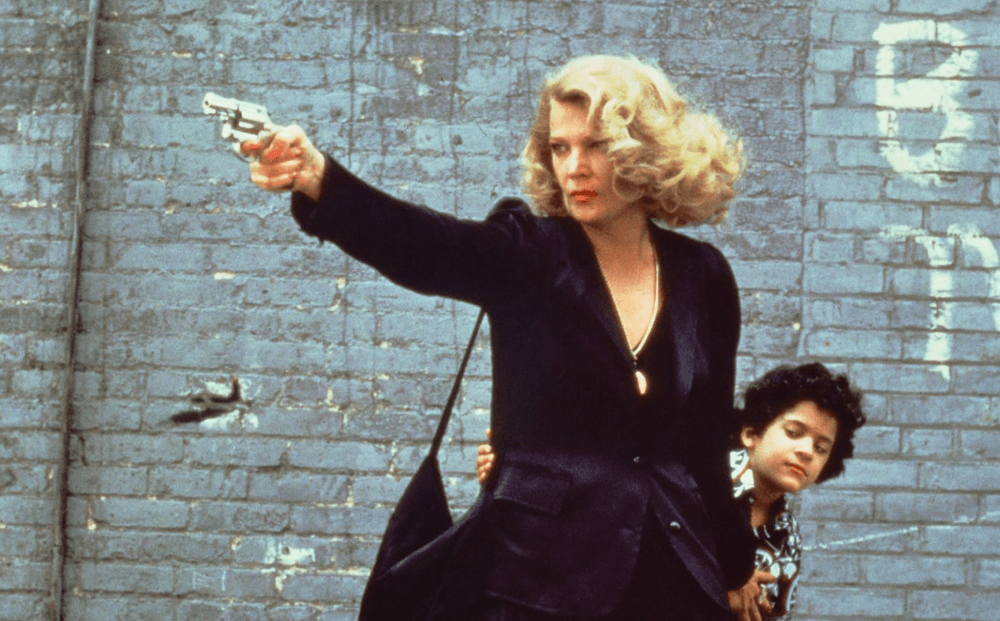
John Cassavetes’s “Gloria” (1980) may not be the official centerpiece of an upcoming series at Film Forum, “Women in Action,” but it is being screened more times than the other 30-some pictures on the schedule with the exception of Oliver Assayas’s “Irma Vep” (1996).
Notwithstanding the evident charms of Maggie Cheung scampering through Paris in a black latex catsuit, Mr. Assayas’s meditation on filmmaking has always been less satirical than self-serving, and meta to a fault. Perhaps the auteur is being indulged because a new film, “Suspended Time,” will soon be opening at Manhattan. There are other pictures featuring active women deserving of your time.
“Gloria” isn’t the best of the lot, but Cassavetes’s neo-noir does serve as a time-capsule of New York City at the tail end of the 1970s. Cinematographer Fred Schuler places a declamatory light on the Bronx, Manhattan, and Queens.
During the opening moments of the movie, we are led into a pre-war apartment building a stone’s throw from Yankee stadium. When Mr. Schuler isn’t engulfing its hallways in darkness, his camera snags on every grimy, paint-chipped, and weather-beaten surface. “Gloria” is gritty enough in its details that it feels less like a studio production than guerilla filmmaking. There have been prettier representations of New York City.
An American stage and screen actress, Gena Rowlands (1930-2024), received an Oscar nomination for Best Actress in the title role, losing out to Sally Field in Martin Ritt’s “Norma Rae.” Gloria is a gangster’s moll who inadvertently inherits the young son of a neighbor, Phil (John Adames). The boy’s accountant father, Jack Dawn (an oddly cast Buck Henry), is a marked man: He’s about to rat out his mob bosses to the FBI and the mob knows it. Polyester-clad thugs are out to get their hands on Jack’s register of incriminating facts and figures.
“Gloria” follows the by-hook-or-by-crook adventures of Gloria and Phil as they deal with each other, the vagaries of New York City, and, not least, escaping from the clutches of gun-toting gangsters. Gloria totes a gun as well and is rather blasé in its usage — as blasé, one might add, as she is in her child-caring capabilities.
Phil is remarkably sanguine about his caretaker’s murderous capabilities, but a man — and much is made of this 6-year-old’s manly responsibilities — learns to realize who it is that is buttering his bread.
A director best known for his improvisational films, Cassavetes wrote the script with Barbra Streisand in mind, and he took on directing duties when the studio hired Rowlands instead — she was, after all, his wife. The film’s dialogue is halting and the holes in the plot are sizable. Still, Rowlands makes good as a tough broad with a heart of gold. An irresistible type, this kind of character, but should you set out to see “Gloria” be warned that you’ll have to deal with Bill Conti’s overbearing soundtrack.
“Women in Action” is a mish-mosh in terms of quality and, for that matter, intent. The series may base itself on a post-feminist ethos, but some of the pictures are pre-feminist in their leanings. Director Jack Hill made “The Big Doll House” (1971) for Roger Corman’s fledgling independent film company, New World Pictures, and turned a tidy profit with its lurid tale of American women imprisoned in a foreign backwater. Corman was also the producer of Steve Carver’s “Big Bad Mama” (1974), in which Angie Dickinson bared all as a grifter making her way through the American South.

The author of “Daughter of Daring: The Trick-Riding, Train-Leaping, Road-Racing life of Helen Gibson, Hollywood’s First Stuntwoman,” Mallory O’Meara, will be on hand to introduce a night of silent daredeviltry, and a Boston Globe film critic, Odie Henderson, plans to speak on the career and influence of the actress Pam Grier prior to the screenings of “The Big Doll House” and “Coffy” (1973), also directed by Mr. Hill. Ms. Grier’s later turn in Quentin Tarantino’s “Jackie Brown” (1997) is on the schedule as well.
Fans of old Hollywood at its most outre are recommended to Nicholas Ray’s “Johnny Guitar” (1954), a Joan Crawford vehicle that borders on the hallucinatory. Made for peanuts on a claustrophobic backlot, the picture is close to nonsensical — something about the railroad coming through town — and the dialogue is tart. Ernest Borgnine gets kicked in the behind, Sterling Hayden cracks wise, and Crawford has it out with Mercedes McCambridge. Should you not believe that an eyebrow pencil and lipstick can be more lethal than a gun, you owe it to yourself to see this camp staple.
The finest film on the schedule is likely Anthony Mann’s “The Furies” (1950), a potent and often discomfiting meditation on fathers, daughters, and the burdens of real estate. Combine Greek myth, Shakespeare, Sigmund Freud, and a steely Barbara Stanwyck, and you have a picture that vies with John Ford’s “The Searchers” (1956), Howard Hawks’s “Red River” (1948), and Sergio Leone’s “Once Upon A Time In The West” (1968) as a standard bearer for our cinematic Old West.
A corker of a movie, it is, and very much worth your time, not to mention a good 20,000 head of cattle.