

Judge Harshly Reprimands Fani Willis for Withholding Phone Data From Secret Romance That Disqualified Her From Trump Case

The district attorney’s obfuscations on transparency earn a rebuke from the bench.
Alyssa Pointer/pool via AP
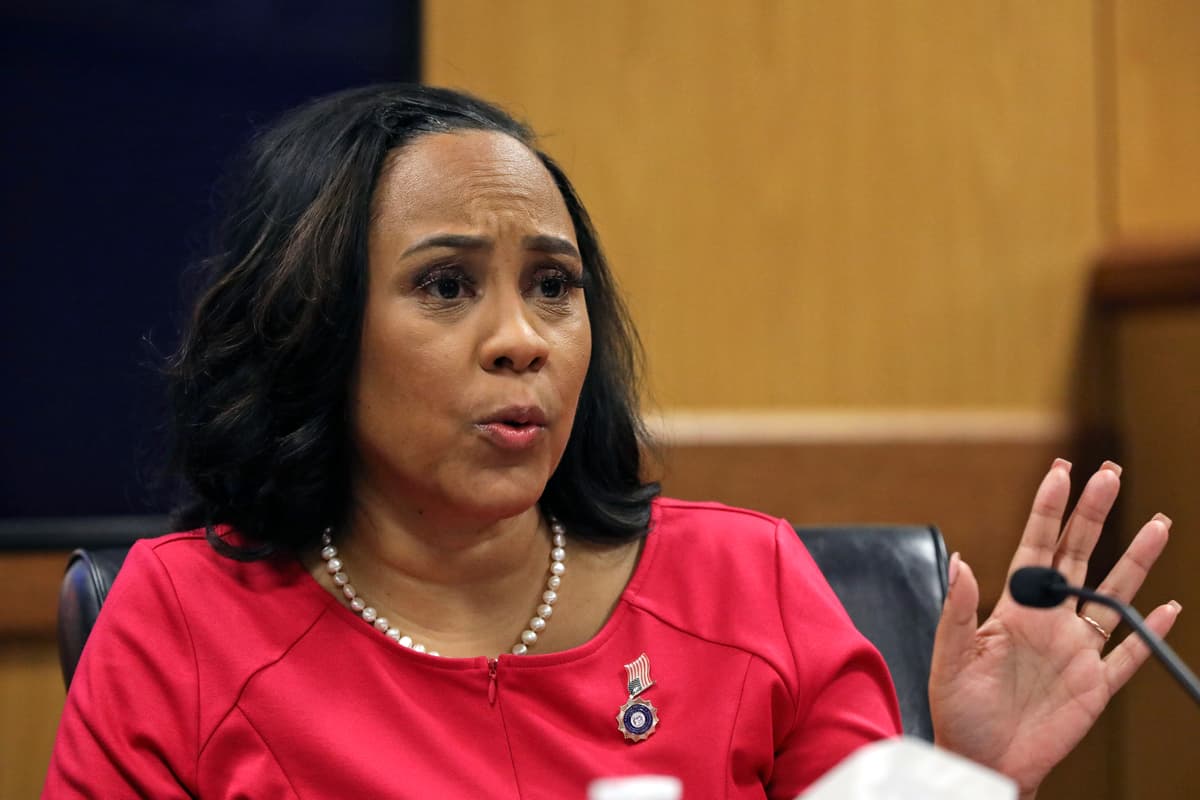
Fani Willis, the Fulton County district attorney, testifies about her romance with Mr. Wade on February 15, 2024, at Atlanta. Alyssa Pointer/pool via AP

The order by a Georgia state judge, Robert McBurney, that the district attorney of Fulton County, Fani Willis, come clean about records relating to her prosecution of President Trump — including the contents of a phone used by her secret lover and handpicked special prosecutor, Nathan Wade —  marks another courtroom setback for the embattled and disqualified prosecutor. 

The ruling — that Ms. Willis has 14 days to furnish the requested documents — punctuates a saga that began two years ago as an open records request by a conservative legal organization, Judicial Watch. The group is seeking from Ms. Willis “all documents and communication sent to, received from, or relating to Special Counsel Jack Smith” and “all documents and communication sent to or received from the United States House January 6th Committee.”

Ms. Willis has denied coordinating with Mr. Smith. She has also declined to disclose details of her cooperation with the Democratic-controlled January 6 committee. Judge McBurney writes in this newest rebuke of the district attorney that Ms. Willis “initially claimed to have no responsive records.” Judicial Watch, “doubting this for the very good reason that it already had a responsive document in its possession,” sued and has, the judge writes, “since secured a default judgment against” Ms. Willis, who, “it turns out, does have responsive records.”

Ms. Willis’s most recent affidavit, Judge McBurney explains, omits, among other lacunae, to specify if “anyone consulted with Nathan Wade, who is now employed elsewhere but who at the relevant time was, among other things, Defendant’s lead counsel for” her election interference racketeering case into Mr. Trump and 18 other defendants. Ms. Willis also leaves out the “protocol” used to search her own devices.   

Ms. Willis’s non-compliance with judicial orders for disclosure has been so severe that judges have in two separate matters levied fines against her office for the combined total of some $75,000 — including $21,578 to Judicial Watch for “attorneys costs and fees.” Judicial Watch confirms that it has been paid. In March, a court ordered Ms. Willis to turn over 212 pages of documents, along with an explanation for why they had been withheld. Ms. Willis  contends that the records are protected by attorney-client privilege, a claim that has not prospered.  

Now Judge McBurney lashes Ms. Willis’s “desultory efforts to determine the full universe of responsive information” and “repeated denials” of the existence of relevant documents. The judge does concede that some records requested by Judicial Watch relate to Ms. James’s criminal case, which “remains open (if not particularly active).” The Georgia Court of Appeals disqualified Ms. Willis from the case because of her affair with Mr. Wade. 

That court found the romance to have generated a “significant appearance of impropriety” and that this was  the “rare case in which disqualification is mandated and no other remedy will suffice to restore public confidence in the integrity of these proceedings.” The trial judge, Scott McAfee, declined to disqualify Ms. Willis even though he found that her behavior was “legally improper” and emitted an “odor of mendacity.”

The Court of Appeals, though, concluded that Ms. Willis and Mr. Wade lied under oath when they testified that their romantic relationship did not begin until he was hired for the job — service for which he would be paid some $650,000 despite never having prosecuted a felony before. Telephone evidence adduced by the defendants found that the pair exchanged thousands of text messages and calls before he was named as special prosecutor.

After Mr. Wade was hired he and Ms. Willis took vacations together to destinations like Aruba, Belize, and Napa Valley. Mr. Wade paid for those trips on his credit card, and Ms. Willis testified that she paid him back in cash she stored at her home. Her father, also under oath, averred that the practice of keeping cash at home was a “black thing.” After Mr. Wade departed from the case he reflected to ABC News that workplace romances are “as American as apple pie.”

While Mr. Wade and Ms. Willis represented to Judge McAfee that their connection was no longer amorous, the pair have been seen in public together even after Ms. Willis’s disqualification. Last year, Mr. Wade showed up at the roadside arrest of Ms. Willis’s pregnant adult daughter for allegedly driving with a suspended license. The district attorney —  standing alongside a roaring Georgia highway —  described him as “just a friend.” In March, the two were videotaped at a departures area of LAX airport, exiting a restaurant and preparing to board a plane. 

Judicial Watch’s president, Tom Fitton, says in a statement that “Fani Willis can’t be trusted. Every time we go back to court there are new excuses and new documents that she said never existed. And now we find that entire universes of records may have been ignored.”     


The New York Sun

© 2025 The New York Sun Company, LLC. All rights reserved.

Use of this site constitutes acceptance of our Terms of Use and Privacy Policy. The material on this site is protected by copyright law and may not be reproduced, distributed, transmitted, cached or otherwise used.

The New York Sun

Sign in or  create a free account

or
By continuing you agree to our Privacy Policy and Terms of Use