Judge Involved in Early Stages of Comey Criminal Case Denounces ‘Government Misconduct’ in Setback for Prosecutors
A magistrate judge orders an ‘extraordinary’ remedy — the sharing of secret grand jury materials with the former FBI director.
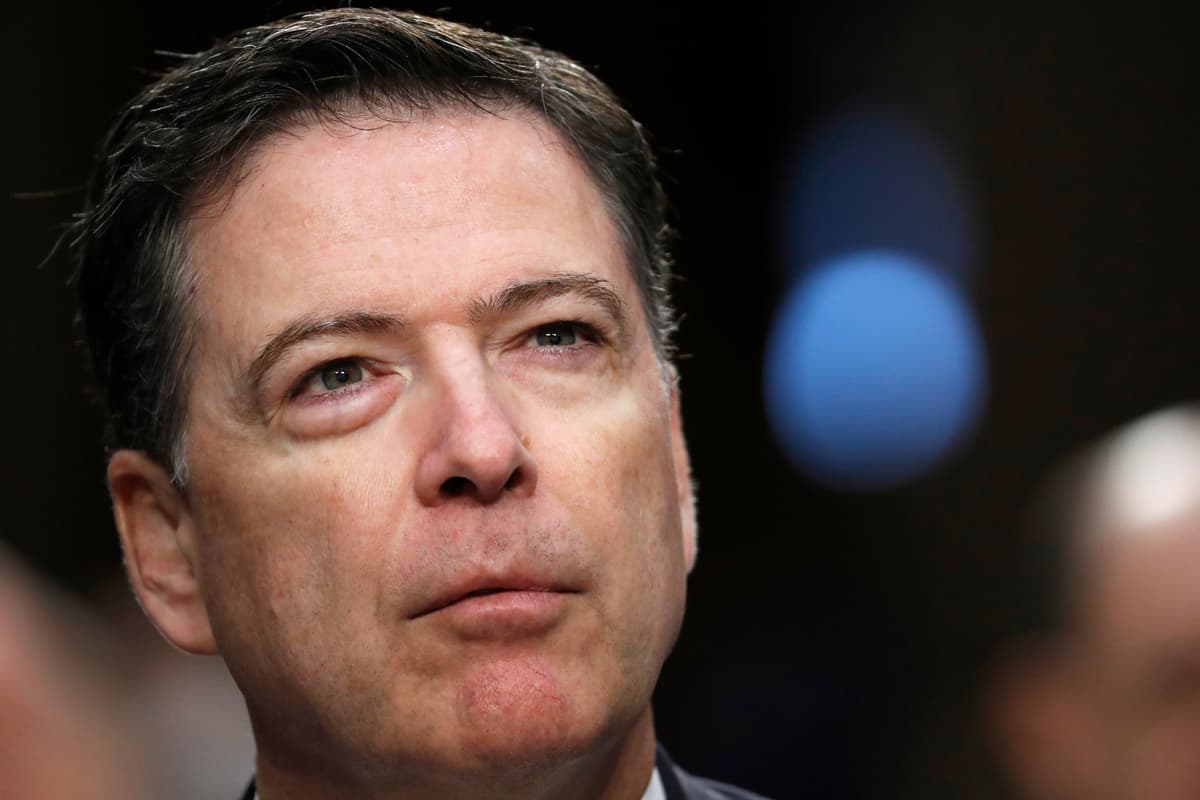

The order by a federal magistrate judge, William Fitzpatrick, commanding the Department of Justice to turn over grand jury records to the former director of the FBI, James Comey, is a setback for the Trump administration’s effort to convict America’s erstwhile FBI chief for lying to Congress.
The order from Judge Fitzpatrick — assigned to oversee ancillary issues in the case by its presiding judge, Michael Nachmanoff, a Biden nominee and former public defender — concedes that ordering full disclosure of grand jury materials is an “extraordinary” remedy, but reasons that the circumstances here are “unique” and point to “government misconduct.”
Judge Fitzpatrick’s ruling amounts to a rebuke of the acting United States attorney for the Eastern District of Virginia, Lindsey Halligan, a former personal attorney for President Trump who is leading the case against Mr. Comey.
Judge Fitzpatrick found “that the government’s actions in this case — whether purposeful, reckless or negligent — raise genuine issues of misconduct, are inextricably linked to the government’s grand jury presentation and deserve to be fully explored by the defense.”
A magistrate judge is not an Article III jurist, meaning that they have not been confirmed by the Senate and are instead tasked with ruling on pre-trial motions, which are usually routine. Judge Fitzpatrick was appointed in 2022. That same year a magistrate judge in Florida, Bruce Reinhart, approved Special Counsel Jack Smith’s warrant for a search of President Trump’s Mar-a-Lago home.
Judge Fitzpatrick, who lacks the power to throw out the case but can make things difficult for prosecutors, cites “a disturbing pattern of profound investigative missteps, missteps that led an FBI agent and a prosecutor to potentially undermine the integrity of the grand jury proceeding.” He also found that an FBI agent who saw privileged materials was then allowed to present to the grand jury — a “highly irregular” decision and “radical departure” for the DOJ. That agent was the only witness the grand jury heard.
Federal law mandates that a “court may authorize disclosure—at a time, in a manner, and subject to any other conditions that it directs—of a grand-jury matter … at the request of a defendant who shows that a ground may exist to dismiss the indictment because of a matter that occurred before the grand jury.” Here Judge Fitzpatrick finds that “government misconduct may have tainted the grand jury proceedings.”
Grand jury materials are, as a rule, secret. The precedent that governs Judge Fitzpatrick mandates that jurists who are considering releasing grand jury materials must “balance the petitioner’s need for release against the traditional public interest reasons for grand jury secrecy.” At the center of the dispute between Mr. Comey and the government are warrants that pertain to a confidante of Mr. Comey, Daniel Richman, who now teaches at Columbia.
Mr. Richman, though, also served as Mr. Comey’s attorney, meaning that at least some of the records that underlie the warrants are protected by attorney-client privilege. Judge Fitzpatrick writes that “ the prosecutor” — that’s Ms. Halligan, the government’s only attorney at the grand jury hearing — made at least two statements that appeared to be “fundamental misstatements of the law.” One of those appeared to be that Mr. Comey and not the government bore the burden of proof at trial.
Ms. Halligan, who was a personal defense attorney for Mr. Trump in his Mar-a-Lago case and then was tasked with changing the culture at the Smithsonian, had never prosecuted a felony before charging Mr. Comey with lying to Congress in 2020 testimony regarding leaks with respect to the investigation into Russian interference in the 2016 presidential election. Now, Judge Fitzpatrick is scrutinizing her response to “challenging questions” from jurors.
Ms. Halligan’s initial plan was to charge Mr. Comey on three counts. A grand jury, though, handed up indictments on only two counts. Ms. Halligan then sought and secured a second indictment on those two counts. Judge Fitzpatrick, though, raises the possibility that the grand jury never reviewed the final edition. He writes that “If this procedure did not take place, then the Court is in uncharted legal territory.”
Judge Fitzpatrick reckons that “his unusual series of events, still not fully explained” by Ms. Halligan and the DOJ, “calls into question the presumption of regularity generally associated with grand jury proceedings.” The presumption of regularity is a powerful shield that can be invoked by prosecutors against charges — also leveled by Mr. Comey in a separate filing — that they are pursuing a prosecution for “vindictive” or “selective” reasons.
The Supreme Court has ruled that district court judges possess the power “to dismiss an indictment because of misconduct before the grand jury, at least where that misconduct amounts to a violation of one of those ‘few, clear rules which were carefully drafted and approved by this Court and by Congress to ensure the integrity of the grand jury’s functions.’”
Judge Fitzpatrick reasons that “the procedural and substantive irregularities that occurred before the grand jury, and the manner in which evidence presented to the grand jury was collected and used, may rise to the level of government misconduct resulting in prejudice to Mr. Comey.” That could warrant dismissal of charges.