Governor Hochul’s Gamble: Endorsing Zohran Mamdani for Short-Term Gain, She Ignores Danger of the Candidate’s Radical Views
The governor’s move risks legitimizing a movement openly hostile to the values that sustain New York and America.

New Yorkers are famously pragmatic. They may talk ideology on the street and online, but when it comes time to vote, they usually focus on basic needs: public safety, affordability, and a city that works well for them. That pragmatism has often delivered competent leadership. We’ve had bad mayors, to be sure, but voters often forget how much worse other choices could have been.
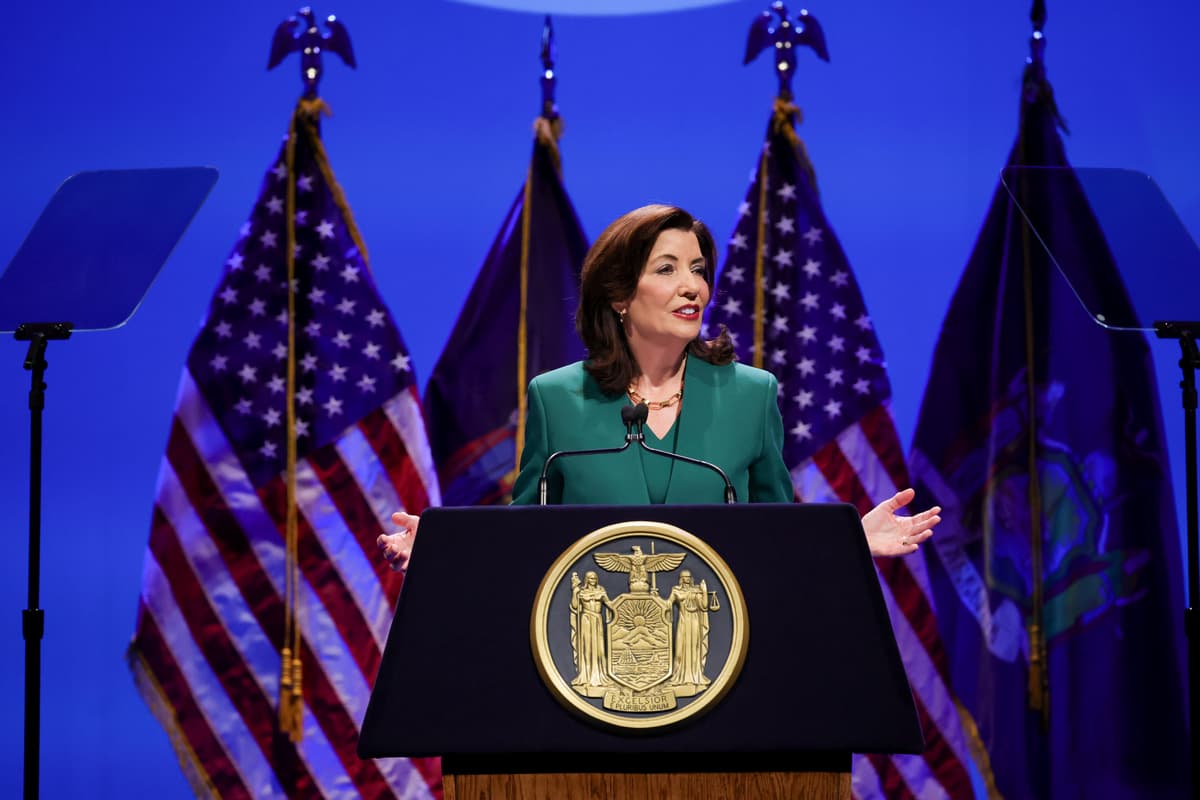
Governor Kathy Hochul’s recent endorsement of Assemblyman Zohran Mamdani tests the limits of that pragmatism. Mrs. Hochul, a moderate Democrat and self-described “staunch capitalist,” has built her career on balancing the demands of New York City’s progressive base with the expectations of suburban and upstate voters. She has been a strong supporter of Israel and consistently emphasized law and order.
Mr. Mamdani, by contrast, represents the ideological left in its most unfiltered form. His agenda includes aggressive rent control, steep new taxes on the wealthy, and — in his most explosive proposal — a vow to arrest Prime Minister Benjamin Netanyahu if he visits New York City. This pledge is legally meaningless: The NYPD reports to the mayor, and the United States is not a party to the International Criminal Court. Yet symbolically, it is an outright rejection of America’s alliances and constitutional norms.
Initially, Mr. Mamdani was dismissed as fringe. The political establishment viewed him as a protest voice without broad appeal. Meanwhile, Governor Andrew Cuomo barely campaigned, assuming his name recognition and institutional backing would carry the day. That complacency created a vacuum that Mr. Mamdani filled with energy, organization, and a clear message.
The results have been striking. A recent New York Times/Siena College poll shows Mr. Mamdani with a commanding lead in the upcoming general election, propelled by younger voters, renters, and activists frustrated with rising housing costs, crime, and a political class they see as out of touch. Mr. Mamdani hasn’t just launched a campaign; he’s built a movement.
Faced with this reality, Mrs. Hochul made her move. In a Times op-ed, she acknowledged “disagreements” but said months of private conversations convinced her they share priorities on affordability and safety. She praised his outreach to Jewish leaders and his promise to give police “every resource” to keep the streets safe.
This was classic political calculus. By endorsing Mr. Mamdani, Mrs. Hochul hopes to avoid being cast as an obstacle to change while strengthening her own position ahead of a likely Republican challenge. Yet it comes at a steep cost.
Mr. Mamdani’s rise is not just about New York. His rhetoric reflects a worldview building for years on campuses nationwide. A generation of young Americans has been steeped in ideas that cast capitalism as exploitation, policing as oppression, and both Israel and America as fundamentally illegitimate. For too long, these ideas were dismissed as harmless activism. Now, through figures like Mr. Mamdani, they are moving from Twitter threads to City Hall.
So many Americans have ignored this ideological current at our collective peril. If left unchallenged, this worldview could remake the city — and very possibly the country — in ways we will come to regret.
Republicans have already seized on the opportunity to frame Mr. Mamdani’s rise — and Mrs. Hochul’s endorsement — as proof that Democrats are drifting too far left. By tying Mrs. Hochul to Mr. Mamdani, GOP leaders hope to energize their base, peel off moderate Democrats, and win back swing districts in future elections. Representative Elise Stefanik condemned Mrs. Hochul’s decision, declaring she now owns “every radical position” Mr. Mamdani holds. In key suburbs like Nassau County, recent polling shows both Mrs. Hochul and Mr. Mamdani with deeply negative ratings; a sign that backlash could reshape the current electoral map and give Republicans a path to reclaim seats they lost in past cycles.
Yet simply labeling Mr. Mamdani as “radical” won’t stop him. Mr. Cuomo and others made that mistake when they dismissed him early on. Ignoring his movement only strengthened it. Conservatives, moderates, and responsible liberals must engage his arguments on housing, safety, and governance and offer clear, credible alternatives. If they fail, Mr. Mamdani’s ideas will dominate the debate by default, and he will become the most consequential Democratic politician of his era.
Mrs. Hochul’s endorsement reflects a governor playing for short-term survival. In the long run, it risks legitimizing a movement openly hostile to the values that have sustained New York and America for generations.
New Yorkers often surprise pollsters. They tell friends and pollsters one thing, then vote differently when alone in the booth. This year, Mrs. Hochul is banking on that pattern repeating; that voters will flirt with radical change but ultimately choose stability.
Hope is not a strategy, though. Mr. Mamdani’s rise is a warning sign that cannot be ignored. The ideas he represents are no longer confined to campus protests. They are now at the center of the city’s politics. If voters and leaders overlook the stakes, they may soon find themselves living with a very different New York and wondering why they didn’t act when they had the chance.