
Koreans, Heading to the Polls To Elect a New President, Worry That Trump Will Pull Some American Forces
‘Nobody wants the Americans to leave Korea,’ a retired diplomat says with 10 days to go before the election.

SEOUL — The fear is pervasive: South Koreans are responding as if they were already on notice that the Americans may soon be pulling troops out of Korea, according to one report, and that South Korea will be more exposed than ever to attack. South Korea’s biggest-selling newspaper, Chosun Ilbo, headlined the concerns as if the plan for withdrawing several thousand American troops was already in the works.
“US troop cuts in Korea back on the table as Pentagon weighs Indo-Pacific shift,” the paper announced, disclosing what it believed is a basic shift in strategy. “Plan to relocate forces to Guam signals focus on Taiwan, China — and renewed cost-sharing pressure on Seoul,” the paper reports in its front-page story.
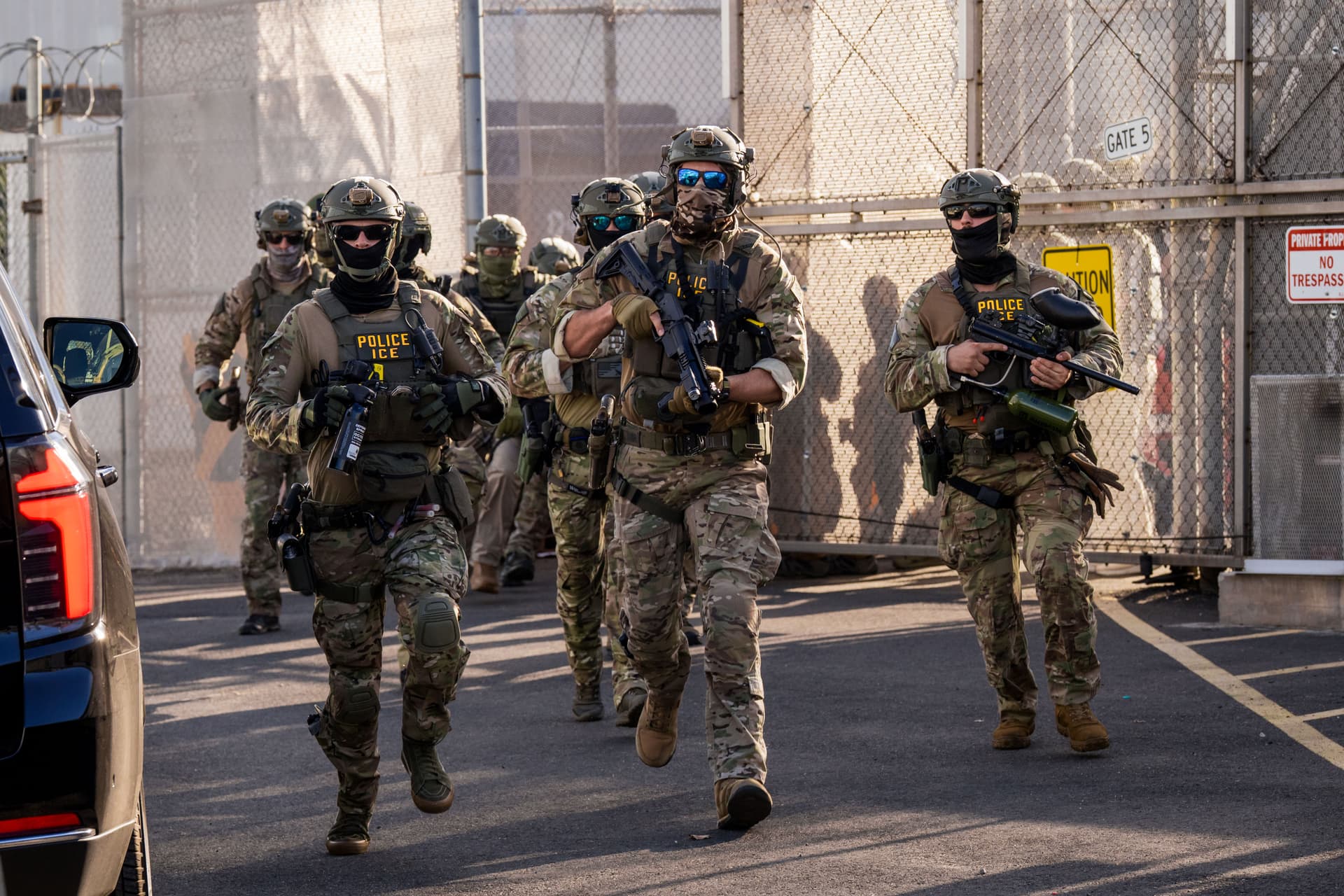
The basis of the report is a Wall Street Journal story. It reports that one version of the plan calls for slashing America’s 28,500 troops in Korea by nearly 16 percent, or 4,500 GIs. The report, which the Pentagon refused to confirm, triggered fears here of an American betrayal of South Korea in the face of the rising strength of North Korea, allied with Russia.
The North contributed about 12,000 troops needed to drive Ukrainian forces out of the Kursk region abutting Ukraine. North Korea also counts on Communist China, widely viewed here as attempting to assert its political and economic influence over the South with 10 days to go before a snap election for president on June 3. “Everyone worries about American troops leaving Korea,” a retired Korean diplomat tells the Sun. “Nobody wants the Americans to leave Korea.”
That view, though, is open to question. In the current presidential campaign, the left-leaning candidate, Lee Jae-Myung, a former provincial governor and mayor, has a commanding lead over his conservative rival, Kim Moon-soo, also a former governor and, most recently, labor minister in the government of the ousted conservative president, Yoon Suk-yeol.
“Concerns are spreading that if Lee Jae-myung becomes president, the withdrawal of U.S. troops may become a reality,” Seoul’s Yonhap News reported Mr. Kim as saying. “I hope that he apologizes for his past statements about [American] occupation and clarifies a firm stance on the South Korea-U.S. alliance.”
Appealing to the broad sentiments of the Korean electorate, Mr. Lee has adopted an ambivalent position. “We should maintain and strengthen our powerful defense capabilities, military power and strengthen the South Korea-US security alliance,” Yonhap quoted him as saying, while advocating “a dialogue, cooperation, communication and coexistence where possible.”
Regardless of who wins, the topic of the American commitment to Korea is sure to come up soon after the election. Mr. Trump, who called in his first term for reducing Washington’s commitment to Korea, has said he might tie American troop strength to South Korea’s agreement on how much to contribute to the cost of keeping them here.
Washington and Seoul struck a deal while President Biden was in office for Seoul to contribute $1.1 billion a year, but Mr. Trump might demand more, while imposing tariffs intended to cut down the South’s 2024 trade surplus of $66 billion. The Korea Development Institute is forecasting a growth rate of less than 1 percent for this year partly as a result of American tariffs.
For South Koreans, the prospect of America reducing its commitment raises the question of whether the South should produce its own nuclear warheads rather than rely on the American nuclear umbrella. Korean conservatives are sure to repeat the demand while debate rages over the future of the Korean-American alliance.
A key factor is the Pentagon shifting its focus to the People’s Republic of China’s threat against the Republic of China. This shift is strongly recommended by the undersecretary of defense, Elbridge Colby, who believes the South should do more to take over its own defenses.
A major newspaper here, Dong-A Ilbo, observes that North Korea, “having advanced its nuclear and missile programs, is modernizing its conventional forces with Russian support.” The South, it said, will need to be “fully prepared to safeguard the military and economic alliance with the U.S. while deterring North Korean provocations.”
One South Korean commentator, Chun In-bum, a retired lieutenant general, suggested, “Instead of reacting with alarm, South Korea should see this development as a signal to evolve its approach to alliance management.” Writing in the Korea Times, General Chun declared, “A flexible, regionally integrated U.S. force posture centered on the Korean Peninsula is not a liability — it’s a critical asset … an opportunity to modernize the alliance and deepen Seoul’s role in preserving regional stability.”