‘Let My People Go,’ Prime Minister Netanyahu Demands at the United Nations
The premier of the Jewish state strikes a defiant note in the face of a walkout — and rousing applause from a cadre of Israelis and their supporters.
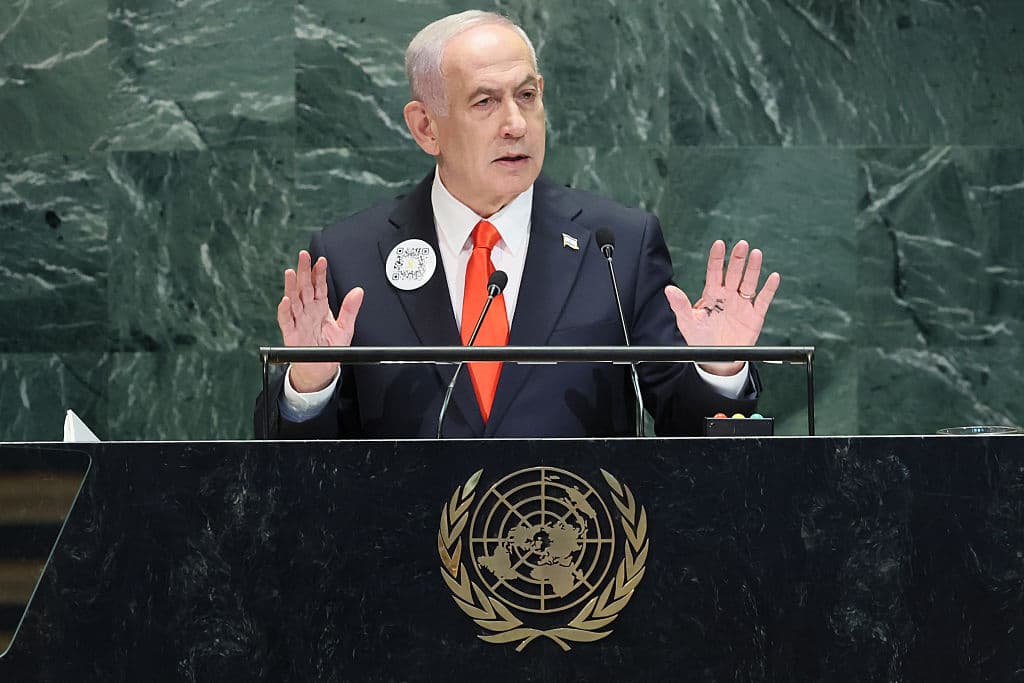

Using digital and analogue visual aides and speaking to a mostly empty United Nations hall, Prime Minister Benjamin Netanyahu on Friday scolded European countries that are pushing for recognition a Palestinian state and promised a peaceful Mideast in the near future.
In a pre-organized move, Arab, Muslim, and some European delegations emptied the General Assembly hall in protest as Mr. Netanyahu was escorted to the lectern. The premier answered with a stunt of his own, ordering the Israel Defense Force and intelligence agencies to place loudspeakers around Gaza City and to bug cellular phones of Hamas operatives in order to broadcast his speech to the Strip.
Speaking at first in Hebrew and then in English, the premier addressed the living Israeli hostages in Gaza. “This is Prime Minister Netanyahu, speaking to you live from the United Nations,” he said, after reading the names of the hostages. “We have not forgotten you, not even for a second. The people of Israel are with you. We will not falter and we will not rest until we bring all of you home.”
Mr. Netanyahu, who is accused by his Israeli opposition of abandoning the remaining October 7, 2023, abductees, appealed to Gazans to “now” free all 48 hostages, including 20 living ones. “If you do, you will live,” he warmed the hostage holders. “If you don’t, Israel will hunt you down.” Mr. Netanyahu, quoting the biblical Moses in Egypt, thundered, “Let my people go.”
Holding a white board and a black pen, he also conducted a staged pop quiz, indicating that Israel’s enemies are also the enemies of Europe and America. On his lapel, Mr. Netanyahu wore a QR barcode, linking to video footage of the horrors Hamas inflicted on Israel on October 7.

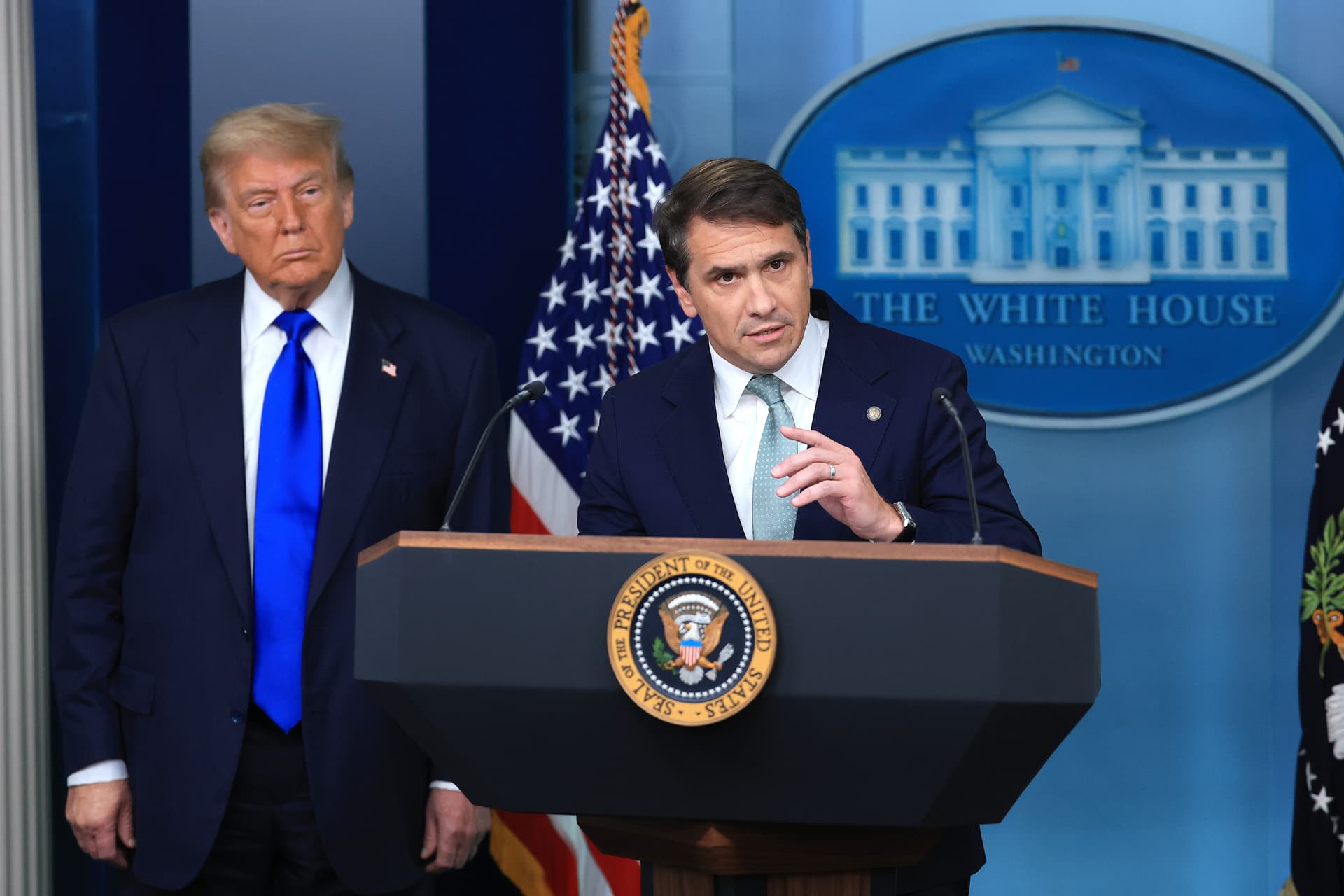
In anticipation of a Monday White House visit, where President Trump says he is working on a deal to end the Gaza war, Mr. Natanyahu said, “The war could end right now.” The Strip, he said, “would be demilitarized. Israel would retain overriding security control, and a peaceful civilian authority would be established by Gazans and others committed to peace with Israel.”
Such an outcome tracks well with a reported plan that Mr. Trump presented to Arab and Muslim leaders at New York on Tuesday. Beyond the generalities, though, details could sink the negotiations. Mr. Trump said on Thursday that he will “not allow” Israel to annex parts of Judea and Samaria, as some of Mr. Netanyahu’s coalition partners urge.
Mr. Netanyahu might benefit from the White House’s pressure, as he seeks to appease would-be Arab and Muslim partners to sign peace treaties or come to security agreements with Israel. According to Israeli press reports, Mr. Trump’s warning has in fact been coordinated with the prime minister, to allow him to resist political pressure from his right.
Mr. Netanyahu, though, vowed he would not agree to a Palestinian state in Gaza and the West Bank, as urged by some of America’s staunchest European allies on Monday. Mr. Trump has also opposed the drive to recognize the Palestinian state, which was orchestrated by France and Saudi Arabia.
“Giving the Palestinians a state one mile from Jerusalem after October 7 is like giving Al Qaeda a state one mile from New York City after September 11,” Mr. Netanyahu said. “This is sheer madness. It’s insane, and we won’t do it.”
On the other hand, he confirmed that Israel is negotiating with Syria over security arrangements. “I believe an agreement can be reached that respects serious sovereignty and protects both Israeli security and the security of the minorities in the region, including the Druze,” he said.
Similarly, he added, if the Lebanese government persists in disarming Hezbollah, peace is possible with that country as well. He also commended a speech of President Prabowo Subianto of Indonesia, a country with the world’s largest Muslim population. Mr. Subianto’s comment that Mideast peace depends on ensuring Israel’s security is “a sign of things to come,” Mr. Netanyahu said. Indonesia is reportedly considering taking in Gaza refugees.
Two years after the October 7 massacres, Mr. Netanyahu concluded, “the resolve of Israel and the strength of Israel burned brighter than ever. With God’s help, that strength and that resolve would lead us to a speedy victory and to a brilliant future of prosperity and peace.”