
Letitia James Fires Back at Secret Grand Jury Expected To Charge Her With Violating Trump’s Civil Rights 

Freshly unsealed documents shed light on how New York’s top law enforcement official is working to ward off more criminal charges.
Spencer Platt/Getty Images
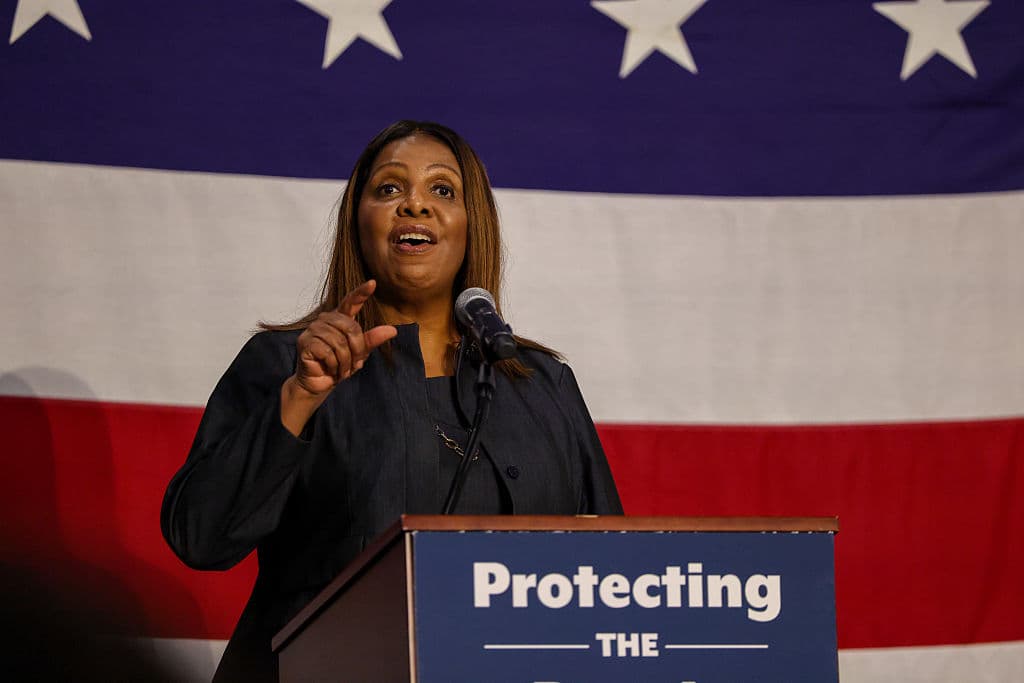
Attorney General Letitia James hosts a town hall at SUNY Westchester on May 08, 2025 at Valhalla, New York. Spencer Platt/Getty Images

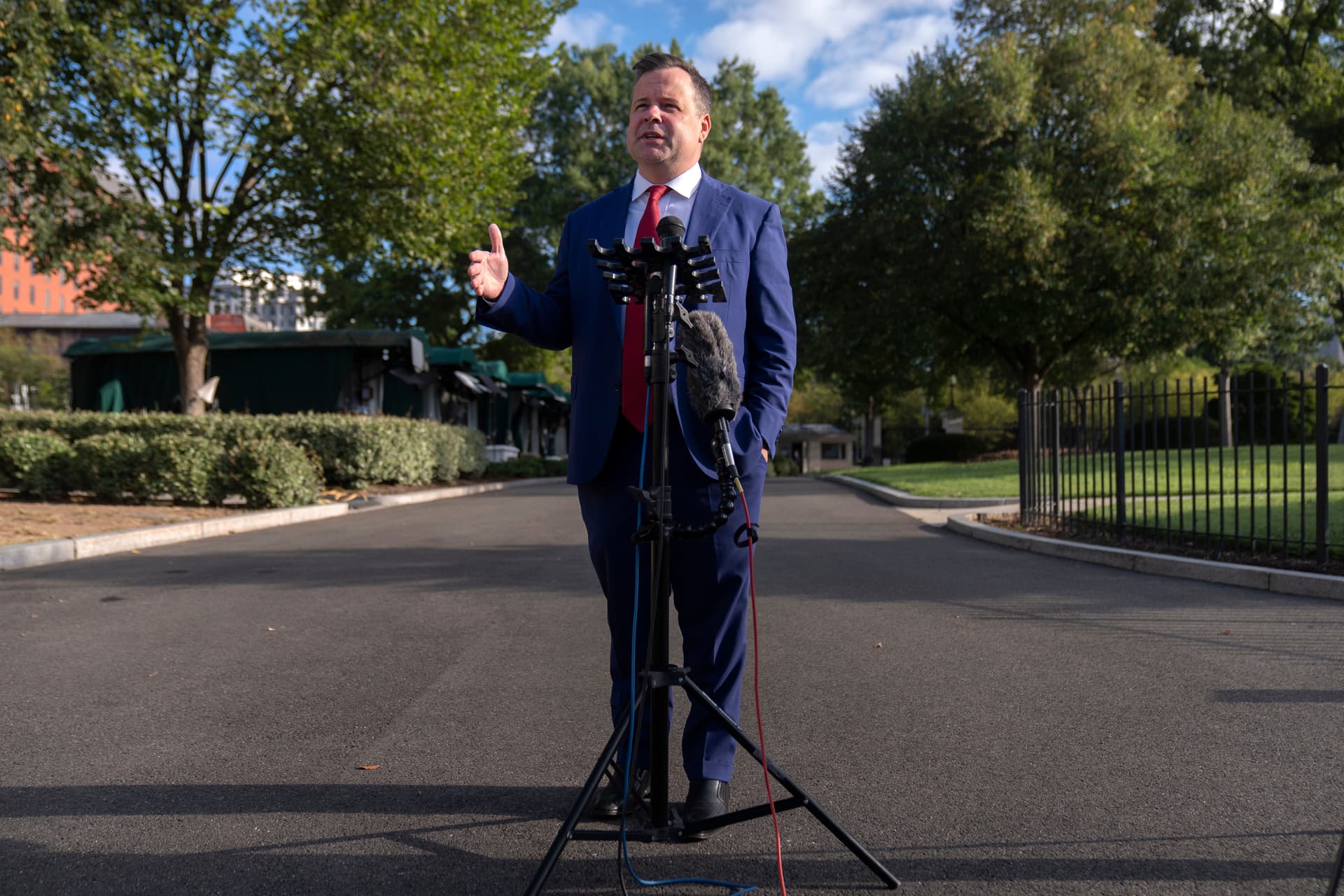
The effort by the New York attorney general, Letitia James, to disqualify the acting United States attorney for the Northern District of New York, John Sarcone, underscores the gathering, if mysterious, peril that Ms. James faces in her home state. 

Ms. James has been separately charged with mortgage fraud in Virginia, where she has pleaded “not guilty” to two criminal counts. She is also facing an investigation, in New York, into whether she violated President Trump’s civil rights when she brought a civil financial fraud case against the president, his two adult sons, and his business. Ms. James secured a $500 million judgement, a stunning penalty that was overturned on appeal. 

Mr. Trump argued that his companies were targeted by a political opponent for business practices that are de rigueur in the clubby world of Manhattan’s real estate barons and their lenders.

Just as the mortgage fraud case against Ms. James comes with a dollop of irony —  it was mortgage fraud for which she prosecuted the Trump Organization —  so does the specter of civil rights charges. Democrats have for years accused Mr. Trump of trampling on civil rights. Now he’s trampling back. 

Mr. Sarcone, a tough-on-crime loyalist from Mr. Trump’s 2016 campaign, is also investigating Ms. James’s push against the National Rifle Association, which was incorporated in New York. A 2024 civil ruling secured by the prosecutor forced the NRA to reform its governance and pay millions of dollars in fines, and contributed to the organization’s downward spiral. Ms. James had sought to dissolve the organization, and alleged that its former executive director, Wayne LaPierre, used it as his “personal piggy bank.” 

The unsealed documents disclose that Ms. James hopes to quash the case before it gains momentum by moving to block Mr. Sarcone and to block the subpoenas issued by his office. That strategy mirrors the one she has adopted in the Old Dominion, where she has moved to disqualify the acting United States attorney there, Lindsey Halligan. Both Ms. Halligan and Mr. Sarcone are serving on an interim basis, making them vulnerable to challenge.    

Ms. James attempted to suspend Mr. Sarcone and quash the subpoenas in August, but her motions have just been unsealed — against the wishes of the Department of Justice. Ms. James has pushed for the records in the federal probe to be public. Judge Lorna Schofield, an appointee of President Obama, ruled: “Unsealing this action is not only permissible but compelled.”

Ms. James argues that the “subpoenas are retaliatory, infringe on NYOAG’s First Amendment rights, invade New York’s state sovereignty and are unenforceable due to Mr. Sarcone’s improper appointment as Acting U.S. Attorney.” Mr. Sarcone was initially an interim United States attorney, but that appointment ran out after 120 days. Federal law mandates that the judges in his district then vote to decide whether to extend tenure. In Mr. Sarcone’s case, the judges declined to do so.

Attorney General Pam Bondi then named Mr. Sarcone “special attorney to the attorney general” and contended that this was equivalent to an “acting” position. A baleful precedent for the administration, though, is unfolding in nearby New Jersey. In August a federal judge there ruled that Alina Habba, who like Ms. Halligan is a former personal attorney for Mr. Trump, was unlawfully appointed, though the judge declined to immediately dismiss all the cases brought under her writ.

Ms. Habba’s path to power mirrored Mr. Sarcone’s. She too was first named as an interim appointment; her road to confirmation to the Senate blocked by the implacable opposition of the Garden State’s Democratic senators, Andy Kim and Cory Booker, who have veto power over United States attorneys appointments in their state due to a Senate convention called “blue slipping,” which the Republican Senate majority leader, John Thune, has said he will respect.  

Ms. Habba, already a long shot, enraged New Jersey Democrats when she brought criminal charges against the mayor of Newark, Ras Baraka, and Congresswoman LaRonda McIver. Both were arrested while protesting outside an ICE facility. The charges against Mr. Baraka were dropped, but Ms. McIver has pleaded “not guilty” to three felony counts of assault and obstruction. She faces the possibility of years in prison if she is convicted. 

In June Mr. Sarcone claimed that “a maniac with a knife who was speaking in a foreign language” accosted him outside of the Hilton at downtown Albany. Mr. Sarcone claimed that the man, Saul Morales-Garcia, an illegal immigrant, “threatened my life.” State prosecutors initially charged Mr. Morales-Garcia with attempted murder, but that charge was dropped. He pleaded guilty to second-degree menacing.

Ms. Halligan, who is in Virginia leading the prosecutions of Ms. James and a former director of the FBI, James Comey, is also facing challenges to her authority. She replaced the former interim United States attorney for the Eastern District of Virginia, Erik Siebert, who, ABC News reports, was resisting those two cases. Mr. Trump claims he fired Mr. Siebert because he was supported, via the blue slips, by Virginia’s two Democratic senators, Tim Kaine and Mark Warner.

The federal law governing interim appointments, though, appears to preclude appointing two consecutive interim United States attorneys. That, at least, was the interpretation propounded in 1986 by a young DOJ lawyer who would later become a Supreme Court justice, Samuel Alito. That position was put forth in a memorandum that has come to be known as the “Alito Memo.”

Charges have yet to be handed up in New York against Ms. James, and the probe into her work as attorney general there could yet peter out, or find form as a civil case. Deprivation of rights, though, can take criminal form — as Mr. Trump knows well. That was one of the crimes Special Counsel Jack Smith accused him of committing in respect of January 6. 


The New York Sun

© 2025 The New York Sun Company, LLC. All rights reserved.

Use of this site constitutes acceptance of our Terms of Use and Privacy Policy. The material on this site is protected by copyright law and may not be reproduced, distributed, transmitted, cached or otherwise used.

The New York Sun

Sign in or  create a free account

or
By continuing you agree to our Privacy Policy and Terms of Use