Lincoln Had an Important Ally in This Southern Lady 

Elizabeth Van Lew’s daring efforts on behalf of the Union cause cost her affection and respect, though she knew that many in her city were on her side but were cowed by the fanaticism of Confederate neighbors.

Via Wikimedia Commons
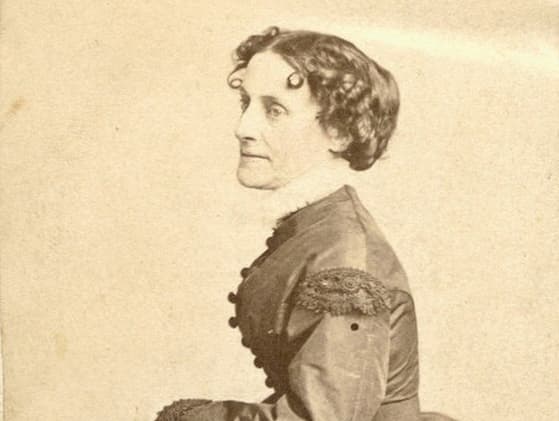
Elizabeth Van Lew (1818–1900) in a portrait by photographer A.J. De Morat. Via Wikimedia Commons

Lincoln’s Lady Spymaster: The Untold Story of the Abolitionist Southern Belle Who Helped Win the Civil War’
By Gerri Willis
Harper, 288 Pages

Elizabeth Van Lew, born into a slaveholding family with a high social position at Richmond, Virginia, believed with all her might in the preservation of the Union and in the extirpation of slavery. Her outspoken opposition to secession, and her daring efforts on behalf of the Union cause, cost her the affection and respect of her community, though she knew that many in the city were on her side but were cowed by the fanaticism of Confederate neighbors.

Gerri Willis has a powerful story to tell about the role of women in the Civil War, the transformation of the South into a police state, and the profound part slaves and ex-slaves played in aiding the Yankee army.

So many accounts of the Civil War treat it as a North/South story, but the virtue of Ms. Willis’s approach is to show that popular opinion was divided within the South and the North, with groups in both sections supporting emancipation and the Union, and others sympathizing with slaveholders and disunion.

Community pressure was such that even the bold Van Lew had to go underground, as she aided Union soldiers escaping from Confederate prisons and, in one instance, installing an ex-slave in the home of Jefferson Davis to spy on him, reading his mail and reporting on the documents she found on his desk. Davis caught her searching his office, yet she escaped punishment because he could not believe that a black woman would have the nerve and intelligence to inform on him. 

Women like Van Lew showed tremendous courage on behalf of the Union cause even as others were more rabid about secession than their menfolk. The astute Van Lew knew when to temper her Unionist activities, mollifying at least some in her outraged community by tending to wounded Confederate soldiers, and maintaining her status as a Southern lady.

Ms. Willis has the benefit of Van Lew’s diary, providing precise details of her operations and close connections with the Union chain of command right up to U.S. Grant. Unfortunately, Ms. Willis is not content with interpreting what her sources have to say.

The busybody biographer feels called upon to say what her subject “must have” been feeling. The must haves proliferate — no less than 26 times — following in quick succession so that the biography veers toward the factitious. 

Here is an example: A Union soldier is caught with orders to assassinate Jefferson Davis: “Elizabeth must have been shocked. She hadn’t called for an assassination of the Confederate president, and to her knowledge, neither had the union.” What was going through Van Lew’s mind cannot be ascertained. To put it another way, might she not have, for a moment, entertained the idea of assassination? Why not eliminate the “must have” and allow the reader to see Elizabeth as plain as the biographer can make her without adding a dramatic scene that would work well in a movie but has no place in a biography?

Ms. Willis provides similar factoids (inventions that look like facts) when dealing with John Wilkes Booth and Grant. Readers are entitled to draw their own conclusions and not have their grasp of history and biography mucked up. The Hemingway dictum that less is more, drawing on the strength of understatement, would have benefited this biography.

It is natural to wonder what happened to Van Lew and her allies after the war, and Ms. Willis gratifies such curiosity, showing how Van Lew’s violation of community sentiment was transformed into ghost stories about her, suggesting that her clandestine activities continued to haunt her community’s imagination.

More remarkable, however, were her postwar years, when she served as Richmond’s postmaster, an unusual position for a woman of her time, putting the administrative skills learned by organizing a spy ring to the efficient delivery of the mail and the employment of freed slaves.

Alas, Van Lew’s position became untenable at a time when nostalgia for the lost cause prevailed and the country sought to reunite, depriving both women like Van Lew and the new emancipated slaves in the Reconstruction South the possibility of enjoying and profiting from the freedom they had won in the war.

Mr Rollyson is the author of the forthcoming “Making the American Presidency: How Biographers Shape History.


The New York Sun

© 2025 The New York Sun Company, LLC. All rights reserved.

Use of this site constitutes acceptance of our Terms of Use and Privacy Policy. The material on this site is protected by copyright law and may not be reproduced, distributed, transmitted, cached or otherwise used.

The New York Sun

Sign in or  create a free account

or
By continuing you agree to our Privacy Policy and Terms of Use