Lindsey Halligan Moves To Block Dismissal of Comey Case as Judge Ponders Legality of Her Appointment

Halligan could be disqualified from prosecuting both Comey and Letitia James by a judge in South Carolina.
AP Photo/Jacquelyn Martin
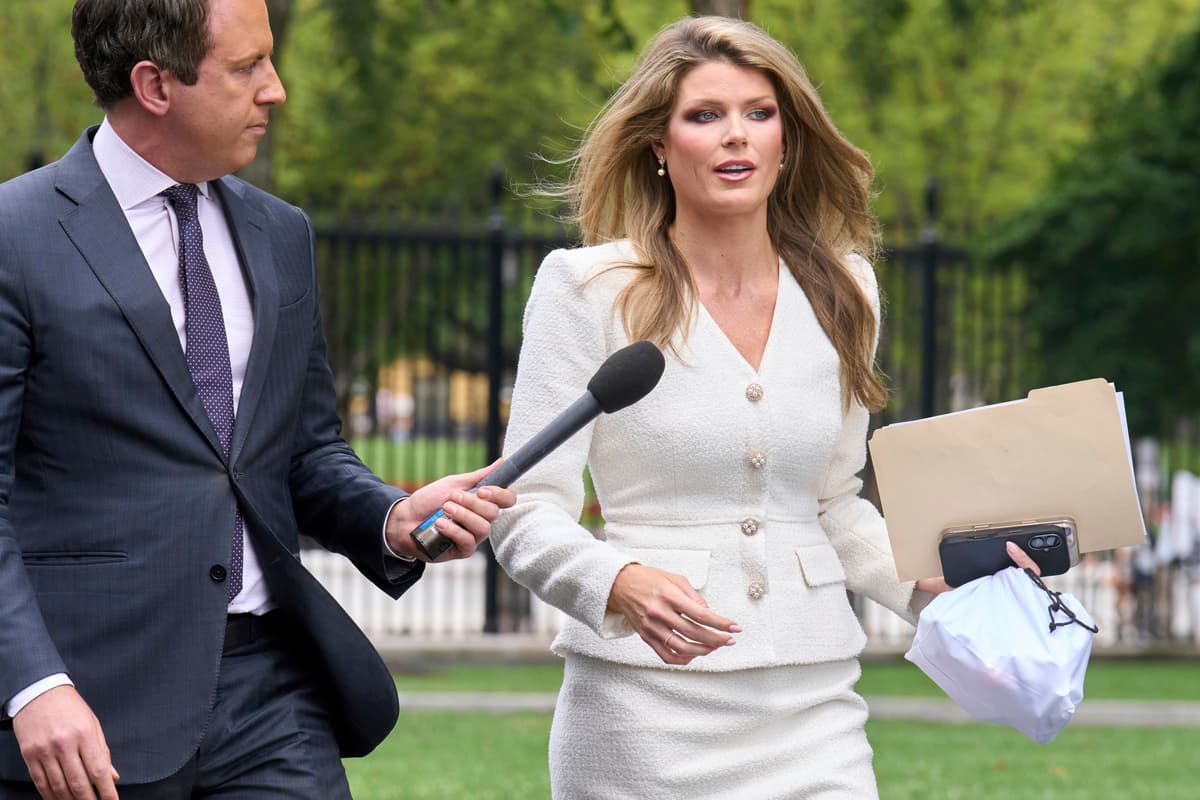
Lindsey Halligan speaks with a reporter outside of the White House, August 20, 2025, at Washington. AP Photo/Jacquelyn Martin

The fate of the interim U.S. Attorney for the eastern district of Virginia, Lindsey Halligan, will be decided before the Thanksgiving holiday as a judge weighs whether or not to disqualify her from her post. As the sword of Damocles hangs over Ms. Halligan’s head, she is not letting up in her prosecution of former FBI director James Comey. 

In a legal filing sent to Judge Michael Nachmanoff on Thursday afternoon, Ms. Halligan pushed back against Mr. Comey’s attempts to have the charges against him dismissed. 

Mr. Comey was indicted in September for allegedly lying to Congress about his knowledge of FBI officials leaking to the press during his tenure, though he has said there is no merit to the accusations. 

He is asking Judge Nachmanoff to dismiss the indictment on a number of grounds, including that Ms. Halligan was illegally appointed, that the prosecution is vindictive, and that the language Mr. Comey used when allegedly lying to Congress did not represent a lie at all.

The charges stem from an exchange Mr. Comey had with Senator Ted Cruz in September 2020, when he appeared virtually before a Senate Judiciary Committee hearing. 

Mr. Comey says the indictment must be dismissed because the line of questioning from Senator Ted Cruz at that 2020 hearing was too “ambiguous.”

In a court filing on Thursday, prosecutors working for Ms. Halligan shot back, saying that it is up to a jury to decide if that line of questioning was too convoluted. 

Prosecutors quote a separate court opinion to argue that it is up to “men of ordinary intellect” to decide if Mr. Cruz’s line of questioning was too confusing. 

“In other words 
 by a jury,” prosecutors write. 

“The alleged ambiguities raised by the defendant do little to obscure this meaning of Senator Cruz’s questions. To start, the defendant says that the questions were compound,” the lawyers continue. “But ‘Who’s telling the truth?’ is not a compound question.”

“In any event, choosing between competing interpretations of Senator Cruz’s questions is the jury’s role,” they concluded. 

The prosecutors’ push to keep their case against Mr. Comey alive comes at the same time that Ms. Halligan’s fate hangs in the balance. Both Mr. Comey and New York attorney general Letitia James — who also is being prosecuted by Ms. Halligan — are moving to have the acting U.S. attorney removed from her post on the basis that she cannot legally serve in the position. 

Both Mr. Comey and Ms. James argue that because Ms. Halligan was installed to replace a previous interim U.S. attorney, she has no right to bring these cases. Mr. Comey’s assertion relies on an Office of Legal Counsel memo from 1986 which states that the judges of a federal district must choose an acting U.S. attorney once another acting U.S. attorney is removed from the position. 

That OLC memo, which is still on the books, was authored by sitting Justice Samuel Alito. 

Judge Nachmanoff outsourced the question of the legality of Ms. Halligan’s appointment, as is customary, to a judge in a different district. On Thursday, Judge Cameron Currie of the district of South Carolina, who was nominated to the bench by President Clinton, heard arguments for Ms. Halligan’s dismissal. 

According to NBC News, Judge Currie questioned prosecutors, as well as lawyers for Mr. Comey and Ms. James at the eastern district of Virginia courthouse on Thursday morning. Based on questioning, she seemed skeptical that Ms. Halligan had the legal basis to serve in the position. 

Judge Currie also questioned the government’s lawyer, Henry Whitaker, about missing transcripts from the grand jury proceedings. The judge says she was concerned about the gap between when the transcripts ended and when the indictment was actually handed up.

“It became obvious to me that the attorney general could not have reviewed” grand jury materials, Judge Currie said, raising questions about a filing from Attorney General Pam Bondi stating that she signed off on the indictment. Mr. Whitaker responded to say that Ms. Bondi “said she reviewed the proceedings.”

“She could not have,” Judge Currie said of Ms. Bondi. “She reviewed the witness testimony.”


The New York Sun

© 2025 The New York Sun Company, LLC. All rights reserved.

Use of this site constitutes acceptance of our Terms of Use and Privacy Policy. The material on this site is protected by copyright law and may not be reproduced, distributed, transmitted, cached or otherwise used.

The New York Sun

Sign in or  create a free account

or
By continuing you agree to our Privacy Policy and Terms of Use