Lindsey Halligan Scrambles To Save Teetering Prosecution of James Comey by Arguing Her Grand Jury Mistake Was Not Fatal
The former FBI director is also requesting that the case be tossed because what he told Senator Ted Cruz in 2020 was ‘literally true.’
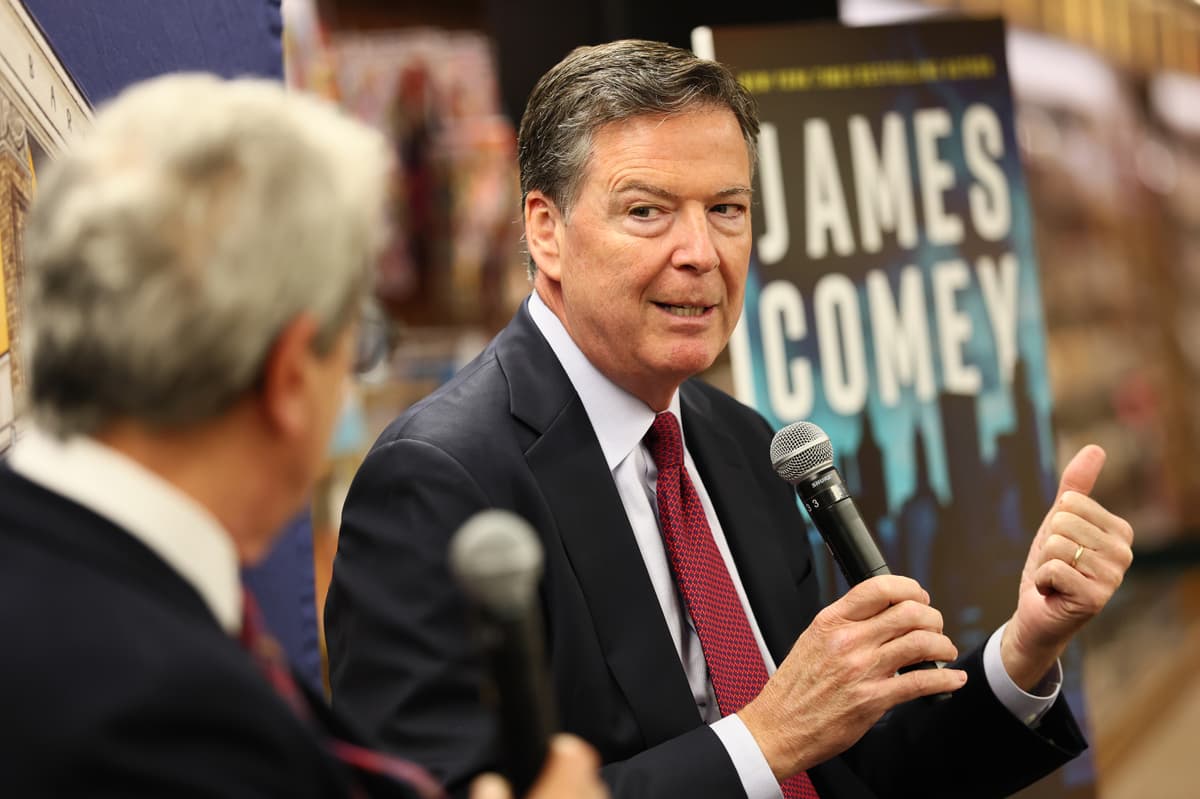
Dueling motions by the defense and prosecution in the Justice Department’s criminal perjury case against James Comey underscore how the former FBI director’s formidable legal team is aiming to crush President Trump’s case against him in the cradle.
Mr. Comey on Thursday launched a full-bore attack on Senator Ted Cruz, claiming the Texas lawmaker asked questions that were so inaccurate that it was impossible to lie in response to them. Meanwhile, the prosecution filed a critical brief arguing why a grand jury snafu is not fatal to the prosecution.
The filing was ordered by Judge Michael Nachmanoff after a hearing on Wednesday where the jurist, an appointee of President Biden, was harshly critical of the government’s handling of the grand jury in the case. The acting United States attorney for the Eastern District of Virginia, Lindsey Halligan, was summoned to the stand and told the court that the full grand jury never saw the final edition of the indictment.
Mr. Comey was charged on two counts of lying to Congress and obstructing a congressional investigation, both in connection to leaks to the press relating to the investigation into election interference in the 2016 election. He has pleaded not guilty. The original draft of the indictment, though, contained three charges, only two of which eventually ended up being approved.
Mr. Comey’s defense lawyer, Michael Dreeben, a former counsel to Special Counsels Jack Smith and Robert Mueller, contended in court that the irregularities in the handling of the grand jury — Ms. Halligan presented the case herself amidst reports she had difficulty finding line prosecutors to support her — means that “there is no” valid indictment. The case was filed just five days before the statute of limitations expired, leaving the DOJ little margin for error.
Judge Nachmanoff now wants to know what both sides make of the case of Gaither v. United States, decided in federal court in the District of Columbia in 1969. In that grand larceny case – in which two men stole five sport coats from a now defunct department store – the District of Columbia Circuit, sometimes reckoned the most powerful court in the country behind the Supreme Court, ruled that a grand jury must see the final indictment. That is called the “Gaitherizing” rule.
Ms. Halligan, in her filing to Judge Nachmanoff, insists that Gaither’s precedent does not require dismissal. She writes that “in Gaither, the grand jury never saw any version of the eventual indictment. In this case, the grand jury was provided with the proposed Indictment, deliberated, and determined that probable cause existed to believe that the defendant had committed the crimes charged in two counts.”
Ms. Halligan then explains that “the foreperson signed an indictment that contained only the two counts for which the grand jury had determined that probable cause existed to indict” — even if the rest of the grand jury never laid eyes on the indictment’s final version. Ms. Halligan insists that “only the numbering of the counts (i.e., proposed Count Two became Count One, and proposed Count Three became Count Two) and the paragraphs differ” between the edition the jury saw and the one it did not.
The court in Gaither held that there never was a “grand jury indictment in the legal sense,” which mirrors exactly Mr. Dreeben’s argument that the government’s indictment is void. Ms. Halligan, though, argues that merely removing one charge and keeping the other two between versions “brought about no deviation in substance from what the grand jury decided to charge.”
The Federal Rules of Civil Procedure ordain that a “grand jury may indict only if at least 12 grand jurors concur,” but the question surfaced by Ms. Halligan’s snafu is whether all 12 must vote on the final version or if they merely need to agree on the substance of the charges. The DOJ declares that the law “simply does not require a successive-voting procedure where there is a mixed return from the grand jury on a multi-count indictment.”