Luis Buñuel’s ‘Viridiana’ May Not Be as Shocking as Upon Its Initial Release, but It’s Still Plenty Discomfiting
Buñuel’s meditation on the limitations of faith and the inherent vulgarity of humankind is best seen as a black comedy festooned in horror movie drag.
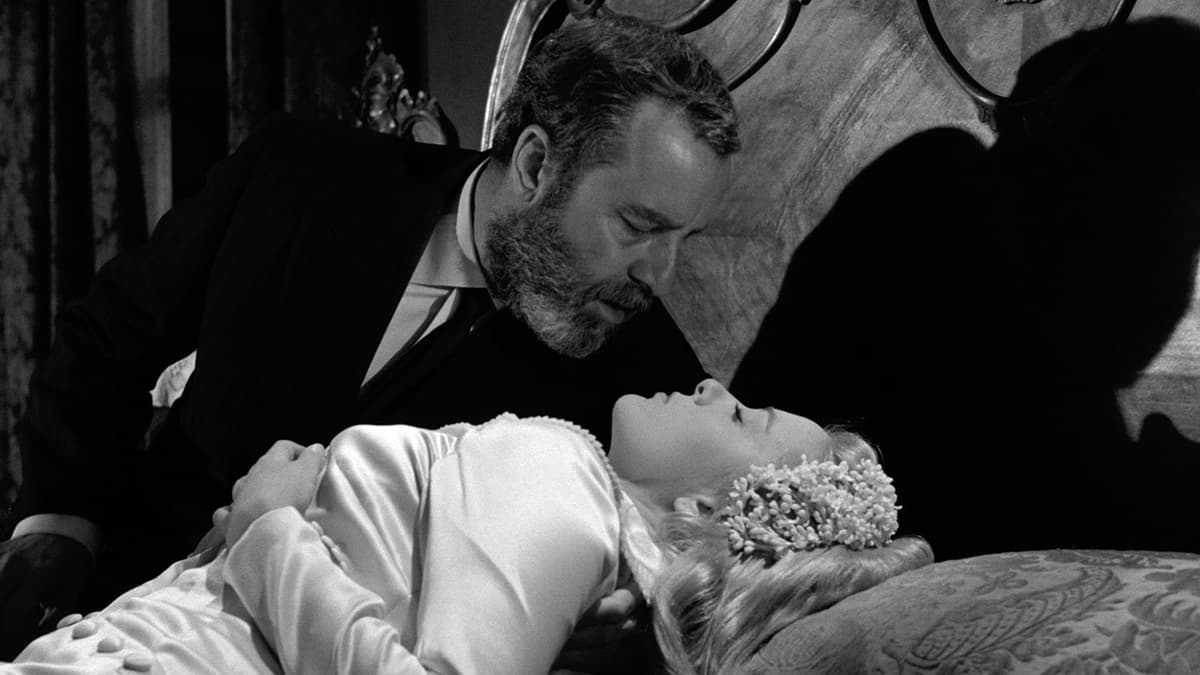
Luis Buñuel’s “Viridiana” (1960), a film undergoing a revival at Film Forum, is book-ended by two very different pieces of music. Handel’s “Messiah” underscores the opening titles as the camera alights on a once splendid country mansion. Ashley Beaumont’s “Shimmy Doll” serves as the backdrop for the culminating scene in which three principal characters sit down for a game of cards.
What can a transition from the soaring choruses of the former to the tinny rockabilly of the latter possibly mean?
The obvious answer is that the gulf between the otherworldly and the profane is wide, deep, and ungovernable. Like many Surrealist troublemakers, Buñuel wasn’t averse to overplaying his hand. At one point in “Viridiana,” the seduction of a housekeeper by her employer is followed by a quick cutaway of a cat leaping on a mouse. Later, Buñuel updates Leonardo’s “The Last Supper” by peopling it with a galley of drunken, licentious, and rambunctious miscreants. We get it, Luis, we get it: Nothing is sacred.
“Viridiana” was the first film Buñuel made in his native Spain after having renounced his citizenship two decades earlier. He spent his formative years creating pictures that irked the Vatican, his financial backers, the Second Republic, Generalissimo Francisco Franco, and his friend Salvador Dalí. Buñuel went on to play footsie with MGM and then found steady work in Mexico. His return to Spain was prompted by the urging of young filmmakers and a government eager to prove its international cultural standing. The Franco regime agreed to foot half the bill for a Buñuel picture.
“Viridiana” was Spain’s contribution to the 1961 Cannes Film Festival, where it shared top honors with Henri Colpi’s largely forgotten “The Long Absence.” Cineastes are one thing, the Holy See another: A writer at the Vatican newspaper slammed “Viridiana” as blasphemous. Franco, presumably suffering buyer’s remorse, booted Buñuel out of Spain, and the movie was summarily banned. The director played innocent in terms of the resulting hubbub, averring that the pope “is a better judge of such things than I am.” But, you know, provocateurs talk.
Yesterday’s outrage is today’s received wisdom, and if “Viridiana” isn’t as shocking as it may have been upon its initial release, it’s still plenty discomfiting. Buñuel’s meditation on the limitations of faith and the inherent vulgarity of humankind is best seen as a black comedy festooned in horror movie drag. The atmosphere and settings, along with a conclusion that is salacious in its ambiguity, mark “Viridiana” as a Victorian spook show, a ham-handed morality tale for those with little taste for the righteous path.

At the center of the story is a woman on the verge of taking her vows as a nun, Viridiana (a pearlescent Silvia Pinal). She receives word that an uncle from whom she is estranged, Don Jaime (Fernando Rey), would like to meet with her. The mother superior strong-arms the young woman into making the trip, as it is her uncle who has financed her education. Viridiana agrees to the journey, but is eager to get it over-and-done with, particularly when Don Jaime asks for her hand in marriage. She is, after all, a dead ringer for his late wife. Viridiana, already ill at ease, is aghast. She turns down the proposal.
Whereupon things turn ugly, as sedatives are administered, rape is narrowly forestalled, and Don Jaime hangs himself in the courtyard of his home. Viridiana is left unmoored by these events and quits the sisterhood, but is adamant in pursuing a life dedicated to good works. She rounds up a motley array of beggars and provides them room-and-board at her uncle’s estate. Shortly thereafter, Viridiana’s cousin, the handsome, curt, and lusty Jorge (Francisco Rabal), arrives to claim the estate as his own. Selflessness and avarice are placed in sharp contrast.
The final act details the havoc wrought upon the estate by Viridiana’s wards when they are left without oversight. Base instincts come to the fore and a majority of the seven deadly sins are indulged.
Buñuel’s worldview reaches a Goya-like corrosiveness here, and the results are dark and mortifying, hard to watch. The movie’s apogee suggests that Christian piety is doomed to failure or, at least, corruption. All the same, Buñuel doesn’t altogether capitulate to nihilism: A perpetual tongue-in-cheek guarantees, if not forgiveness, then a check on misanthropy. “Viridiana” is a great movie of dubious virtue.