
Mamdani’s Coalition of Socialists and Islamists Could, Like Tehran’s ‘Red and Black’ Alliance in 1979, Boomerang on Leftists
As the leftist candidate stands on the brink of becoming New York City’s next mayor, Iran’s history offers a stark warning.
Modern Iranian history flashes a bright caution sign as America’s far left and Islamist movements converge in our cities and universities. Iranians have seen this movie before, and the American left are playing their role perfectly. It’s only a matter of time until the tragic third act.
In the 1960s and 1970s, Marxists and Islamists in Iran joined forces against the Shah, united by anti-imperialist slogans and revolutionary fervor. The Shah called it the “red and black” alliance. Western liberal elite writing in the likes of the New Yorker dismissed the warning as propaganda.
Within a few years, though, that alliance brought down one of the Middle East’s most modernizing governments and replaced it with a theocracy that imprisoned and executed the very same leftists who had helped it win.
The American version, often called the “red and green” alliance, follows the same logic. It is a coalition of negation, united by what it resents and opposes. The outcome of such partnerships is predictable: the greens will eat the reds, as did the black-turbaned Ayatollah after 1979.

The Democratic Socialists of America and several of its elected members have become the most visible members of the red and green alliance. While old-fashioned socialism is, on its face, unrelated to Islam, the DSA constantly mirrors the language of Islamist movements who define their purpose as “resistance” to Israel and to the United States.
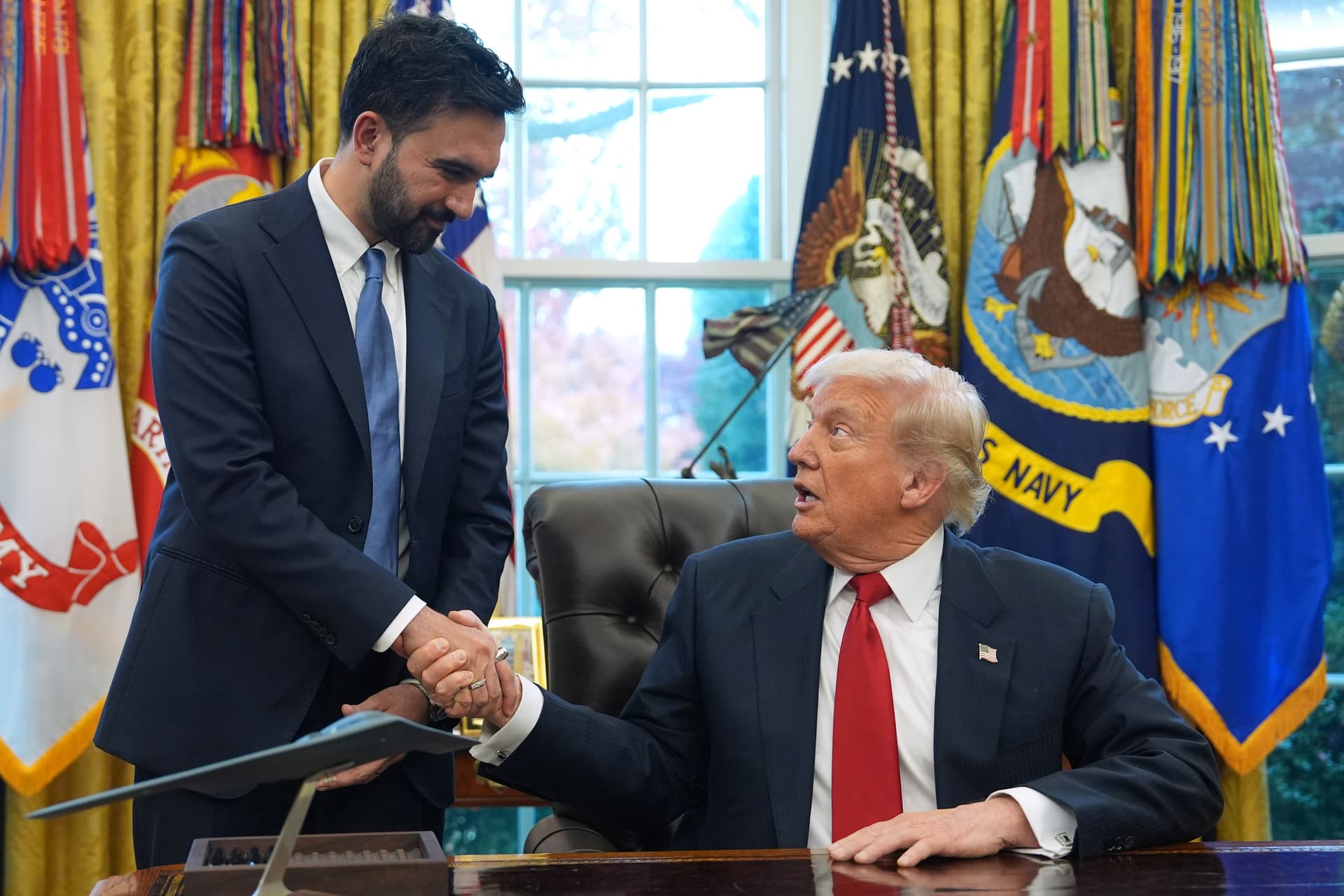
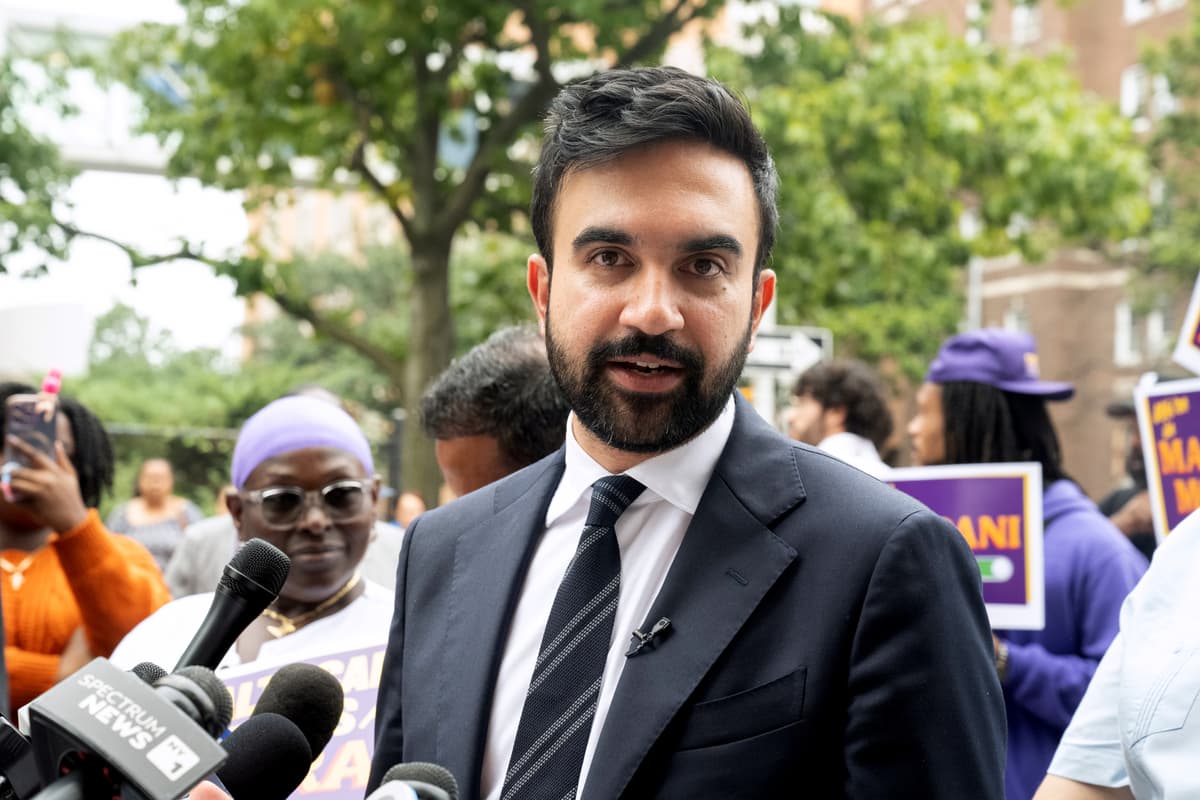
New York mayoral frontrunner Zohran Mamdani, a DSA member and the new darling of this cadre, pointedly declined, initially, to say Hamas should disarm, winks at the phrase “globalize the Intifada,” calls Israel an apartheid state, and joined a fundraiser for UNRWA despite well-documented links between the agency and Hamas operatives.
Just last week, Mr. Mamdani campaigned with an imam who was labeled by prosecutors as an “unindicted co-conspirator” in the 1993 World Trade Center bombing.
The infiltration of Islamism into American socialist circles is deep and abiding. The DSA endorses the Boycott, Divestment, and Sanctions campaign, calls for ending American military aid to Israel, and declares solidarity with global violent “struggles” in an effort to build a “liberated world.”

In the days following Hamas’s massacre of October 7, 2023, DSA chapters in several major cities described the terrorist attack as “the direct result of occupation” and affirmed the group’s “unequivocal support for the Palestinian struggle.” The repetition of these narratives across progressive networks has steadily normalized Islamist movements as legitimate vehicles of justice.
During the Iranian Shah’s modernization campaigns of the 1960s and 1970s, the clerical establishment denounced secular reforms as anti-Islamic, while Marxist parties attacked them as capitalist. This pincer move drew on the same vocabulary of “anti-imperialism” and directed their anger at the same institutions. This anger eventually metastasized into the 1979 Islamic Revolution.
When Ayatollah Khomeini returned from exile in 1979, the left imagined it would share in his power. Many Iranian and Western commentators, including those writing in The New York Times, described Khomeini as a populist reformer. Within four years, the left was gone.

The communist Tudeh Party was outlawed in 1983, its leadership imprisoned and forced to “confess” on state television. In 1988, thousands of political prisoners, most of them Marxists or secular dissidents, were executed. The Iranian left had mistaken shared opposition for shared purpose. Once the Islamists consolidated control, they eliminated their partners.
In both Iran’s red–black alliance and the American red–green trend, movements that disagree on almost everything else find unity in their opposition to Western power. In 1970s Iran, “anti-imperialism” served as the common language: for Marxists it meant class liberation, for clerics it meant religious purification. Today, the language of “decolonization” serves the same function.
This convergence has already shifted moral boundaries. In universities, terrorism is discussed as “resistance.” In media coverage, Islamist organizations are portrayed as civil rights partners. Each repetition blurs the distinction between opposing a government’s policy and undermining the principles of democracy itself.
The United States is not Iran in 1978. Its institutions are stronger, its civic traditions deeper, and its public more diverse. Cultural patterns, though, often precede political ones. Iran’s red–black alliance began in student circles, pamphlets, and slogans about justice. It ended in prisons and mass graves.
The red–green alliance in the United States may not reach that end, but its intellectual structure is identical. If the American left intends to remain democratic, it will look to Iran’s history, lest it unknowingly repeat it.
_____________
This piece was co-authored by Tymahz Toumadje, a policy analyst at the National Union for Democracy in Iran.