Mamdani’s Scavenger Hunt Invites Return of ‘Fun City’
Behind the bonhomie of the leftist mayoral candidate lurks the trouble.
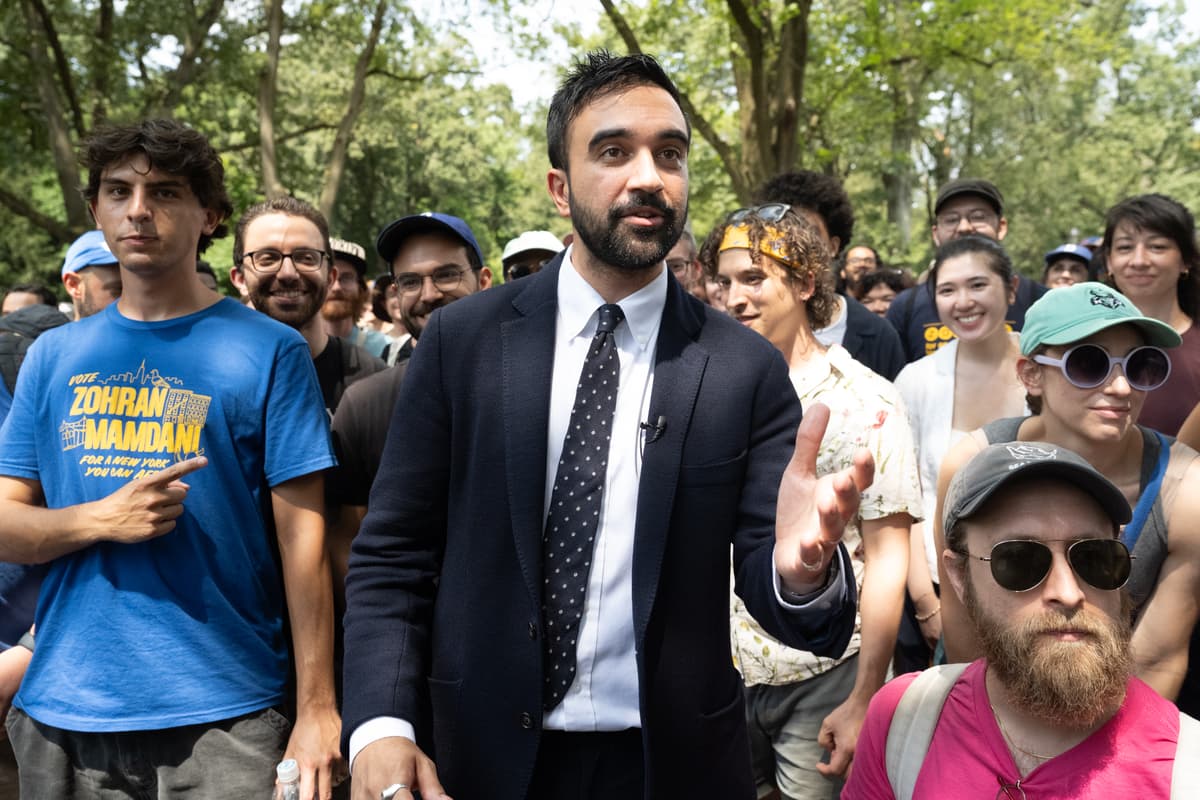
The latest campaign stunt from Marxist mayoral candidate Zohran Mamdani is a scavenger hunt. One could scoff that this is a frivolous folly amid a political contest with serious implications. It’s of a piece, though, with the “gee-whiz joy,” as New York Magazine puts it, that is a hallmark of the Mamdani campaign. The candidate wields social-media bromides to sugarcoat a socialist agenda. Behind the bonhomie lurks the trouble.
The idea of a scavenger hunt reflects Mr. Mamdani’s amiable campaign persona. His social media clips, pitched to the TikTok generation, “reach out to the young and disengaged,” per New York. Mr. Mamdani tells NY1 that a Bronx bus rider told him that she “used to love New York,” but “now it’s just where I live.” Events like the scavenger hunt, he says, are meant “to bring that love back.” If you can find it.
Mr. Mamdani is using the hunt, too, as a chance to ding his campaign rival, Mayor Eric Adams, who faces legal questions amid bribery allegations against his aides, including one accused of slipping cash to a reporter by way of a bag of potato chips. In a campaign video this morning, Mr. Mamdani is seen nibbling on chips and confiding “I have something to hide.” He adds: “Many things in fact, because we’re doing a scavenger hunt.”
It could prove catnip to members of the “Barista Proletariat,” as Michael Barone describes the young, downwardly mobile, and resentful voters backing Mr. Mamdani. Nor would these columns begrudge Mr. Mamdani for deploying a little levity on the hustings. What’s concerning, though, is the far-left political agenda that underpins Mr. Mamdani’s bid for office. These policies seem less likely to leave New Yorkers smiling.
The high spirits of the Mamdani campaign stir echoes of the semi-ironic nickname bestowed on New York City during the mayoralty of another smiling youthful liberal who in 1965 swanned into Gracie Mansion on hopes of left-leaning civic revival, John Lindsay. “Fun City” became the byword for Lindsay’s tenure as New York under his well-meaning but soft-minded management descended into illegality, grime, and chaos.
Lindsay himself coined the phrase “Fun City” at a time when his idealistic plans for reform were running up against the reality of labor unrest and budgetary shortfalls. Striking transit unions, at the outset of his first term, sought to make an example of the untested mayor. “I still think it’s a fun city,” Lindsay told a New York Herald-Tribune columnist, Dick Schaap. The hard-bitten journalist took the moniker and ran with it.
Schaap popularized “Fun City” as “an affectionate, if snide, gibe at the overwhelmed city,” the Times later explained. Yet the term came to stand for the folly of liberal misrule as the smirking mayor proved no match for the challenges confronting the metropolis. The transit strike was followed by labor unrest among trash collectors and public school teachers all demanding more taxpayer dollars. Plus too, a blackout struck and rising financial problems sapped the city.
Lindsay left office in 1974, but the disastrous legacy of his mayoralty would haunt New York for years. In 1975 the city barely avoided bankruptcy. In 1977, television viewers of a Yankees game were appalled to witness in real time large swathes of the South Bronx ablaze. The incident came to be seen as a symptom, chronicled in Jonathan Mahler’s book “Ladies and Gentlemen, the Bronx is Burning,” of the disorder launched by Lindsay.
It’s not hard to imagine Mr. Mamdani’s cheerful campaign pledges fomenting a similar wave of unintended consequences. His past advocacy of defunding the police and legalizing prostitution look like sure bets for inducing a new wave of social disorder. Under Mr. Mamdani’s lax policies, one can anticipate, among other setbacks, a resurgence in open-air drug abuse and the return of homeless encampments that once plagued the city. “Fun City,” indeed.