

Massachusetts Town Moving Ahead With Reparations Plan Despite Funding Questions

Amherst may not have enough revenue from a marijuana tax to cover the program.
Manny Ceneta/Getty Images
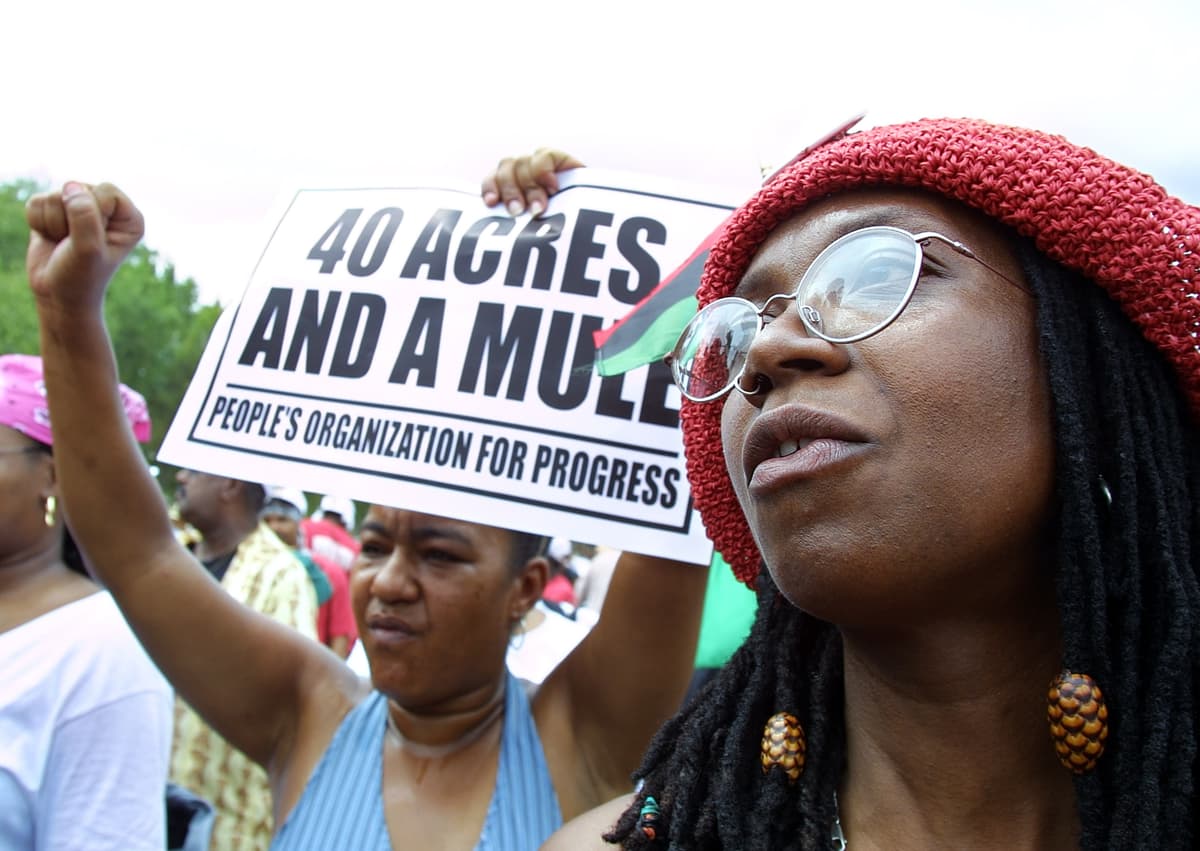
Demonstrators call for slavery reparations on the National Mall at Washington, DC. Manny Ceneta/Getty Images

A Massachusetts town is moving forward with a plan to set up reparations for residents who say they are still affected by slavery despite already questioning how it will be properly funded.

The Amherst Town Council has unanimously approved the formation of a Black Reparations Committee. The committee will have a year to come up with recommendations to spend $100,000 a year to address alleged harms caused by “support of slavery and post-reconstruction discrimination” by the town, residents, and businesses.

Unlike some other reparations programs planned or under way in the country, the Amherst committee will lean on a 2023 report by the African Heritage Reparation Assembly to decide about funding youth programs, affordable housing, business grants, and entrepreneurial training. The nine committee members will also regularly meet with the descendants of enslaved Amherst residents and those with enslaved ancestors to keep them updated.

The town’s Reparations Stabilization Fund was supposed to be funded by cannabis tax revenues but it now appears that will not be enough to cover the whole amount. Counting on funding from drug taxes has already proven problematic elsewhere.

The first reparations program in the country to make payments was paused earlier this year after running into funding issues. The 6-year-old program in Evanston, Illinois, has distributed more than $5 million to more than 200 people but has not brought in as much money as expected from a 3 percent tax on recreational marijuana sales.

Similar reparations commissions have been established in other cities and statewide in California, Colorado, Maryland, Massachusetts, New York, and Illinois.

New York’s state commission studying possible reparations says it will miss a deadline to complete its report and is asking for about $5 million more in funding to continue work.

In June 2023, a reparations task force in California released a report with 115 recommendations as to how the state — which never legally allowed slavery — could compensate descendants of slaves.

Los Angeles has its own reparations commission. It released a 386-page report in February stating that the city had “direct involvement and complicity” in the marginalization and disenfranchisement of African Americans. It recommended that funding models be studied to address the lasting impact of “racial terror” on Black residents, and city funding should be dedicated to make payments.


The New York Sun

© 2025 The New York Sun Company, LLC. All rights reserved.

Use of this site constitutes acceptance of our Terms of Use and Privacy Policy. The material on this site is protected by copyright law and may not be reproduced, distributed, transmitted, cached or otherwise used.

The New York Sun

Sign in or  create a free account

or
By continuing you agree to our Privacy Policy and Terms of Use