Memorial for Kirk Sketches America as Both a Godly and an Enlightened Nation

Yet the Democratic Party is coming close to absenting itself altogether from the alliance of the American project with benign Providence.

AP/John Locher
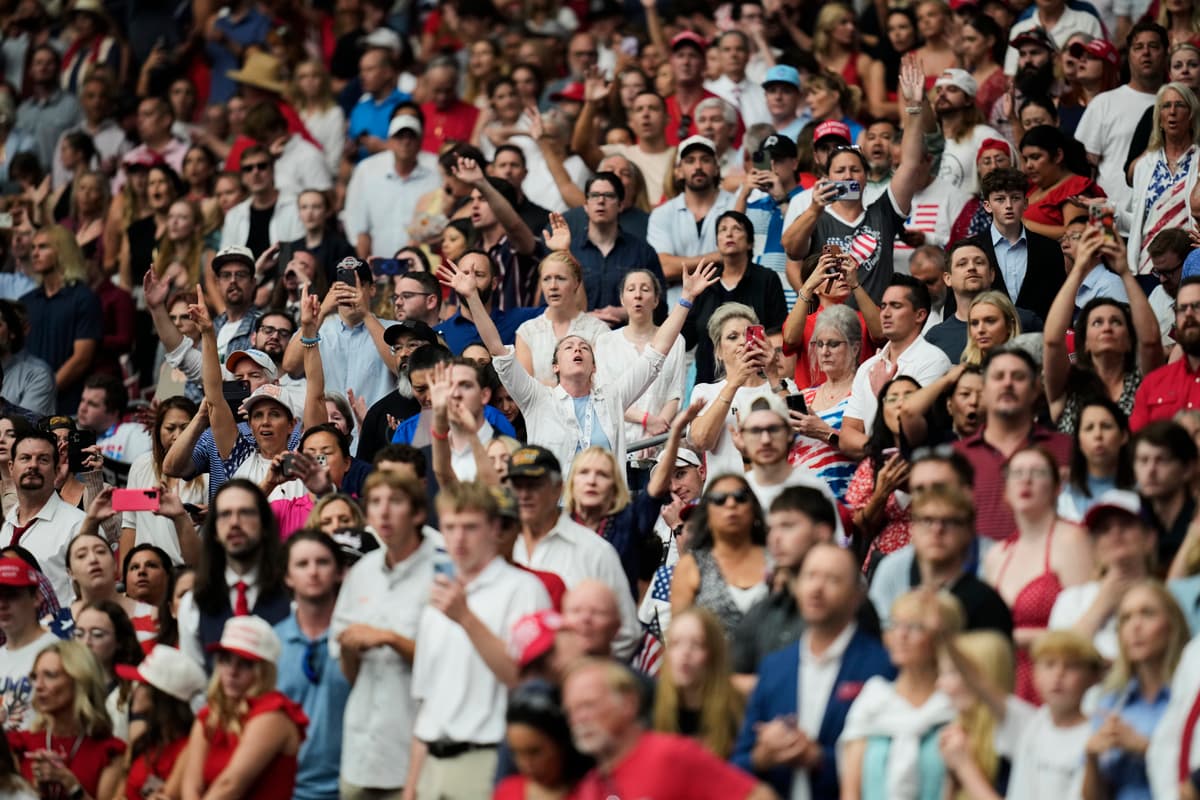
Mourners before the start of a memorial for conservative activist Charlie Kirk, September 21, 2025, at Glendale, Arizona. AP/John Locher

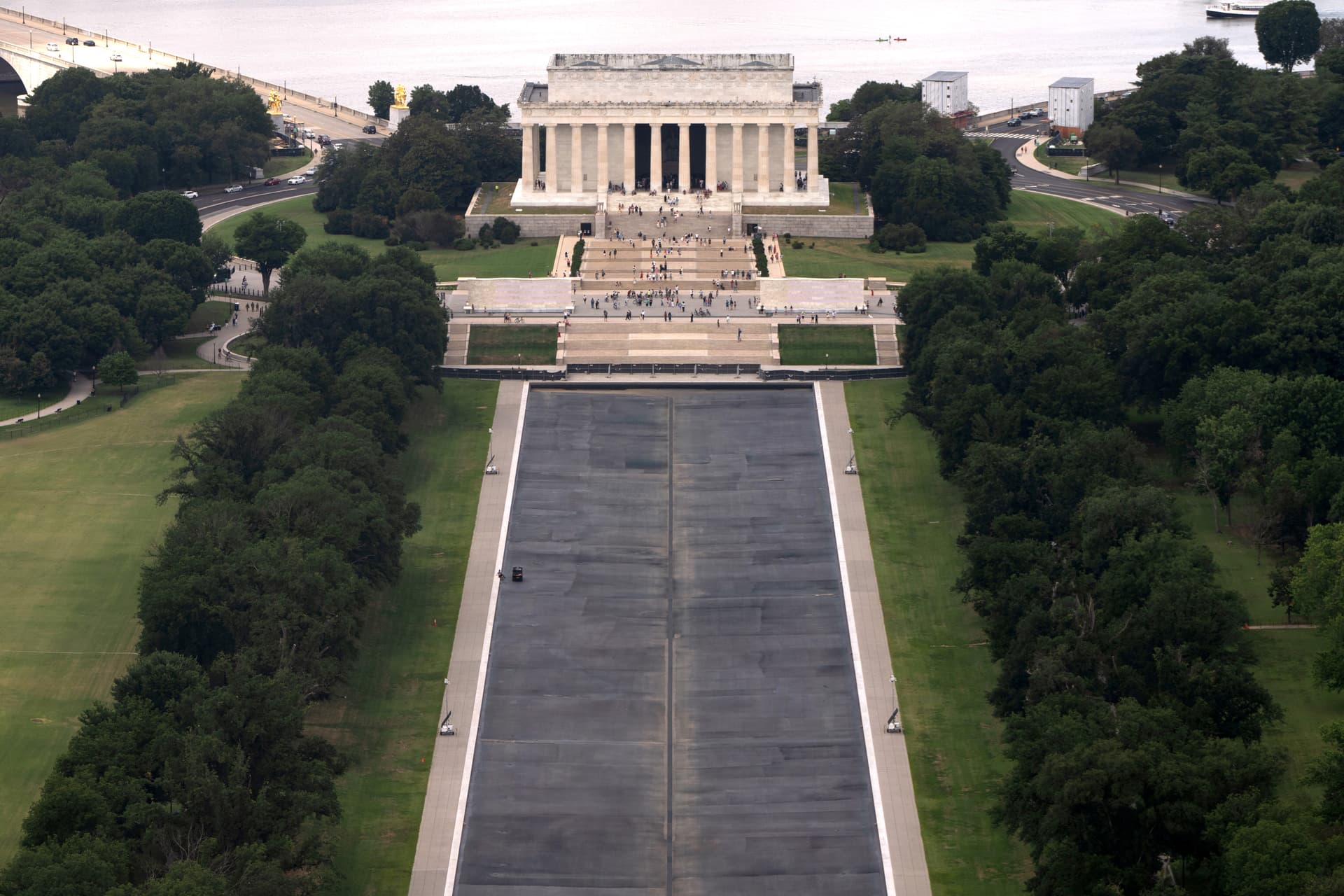
The memorial service on Sunday at Glendale, Arizona, for Charlie Kirk must rank as one of the most astonishing and seminal political and sociological moments in America in living memory. To find an event that had as comprehensive an impact on the social and political direction of the country, we must go back to Martin Luther King Jr.’s “I have a dream” address from the steps of the Lincoln Memorial on August 28, 1963.

This takes nothing from the traumatizing impact of the assassination of John F. Kennedy or the terrorist attacks on the World Trade Center and the Pentagon on September 11, 2001; those were profoundly shocking and saddening events. They did not, though, lead to a profound change in the partisan political fortunes or the general political and social direction of the country.

No sensible person who heard King rumble out his address could have doubted that the segregationists were going to be overwhelmed by the righteous majority of Americans belatedly recognizing that it was morally indefensible to treat a large minority of citizens as inferior people because of racial discrimination. The assassination of Charlie Kirk and the resulting veneration shown, culminating in the immense memorial occasion attended by approximately 80,000 people on Sunday at Glendale, and addressed by the widow of the deceased with great eloquence and spirituality and by the leaders of the federal government mobilized the tragic occasion in both political and philosophical terms.

The secretary of state, secretary of defense (or war), and the secretary of health and human services all spoke in scriptural terms. So to an extent did the vice president and certainly Mrs. Kirk did also. President Trump acknowledged that forgiving his enemies was a point where he bifurcated from Erika Kirk’s deeply moving statement that because of her religious beliefs she was able to forgive the murderer of her husband.   

This was a mighty and combined political and religious ceremony, perhaps unprecedented in America. The political leadership of the country committed itself unreservedly to the concept of the United States as a Christian nation, though certainly with no hint of lack of tolerance of other faiths and beliefs. Nor can I recall any occasion when an incumbent administration or any political party clutched the Christian traditions of America so tightly to its bosom as implicitly to represent its rival, in this case the Democrats, as composed of heretics, the faithless, or outright wrongdoers.

There are early and sketchy reports of increasing religious practice in America, especially among young Roman Catholics. It is too early to say if this really is a trend and whether it is or not, if the spectacularly Christian ceremony in honor of Charlie Kirk on Sunday and the pledges of Mrs. Kirk and others to amplify the efforts of his Turning Point USA movement will accelerate any form of re-Christianization of America.                 

This question arises because of America’s unique achievement at its founding of establishing itself as at once a nation of the Enlightenment, which was a movement that encouraged religious skepticism and favored deistic notions over sectarian adherence and was not incompatible with atheism, and a godly nation that would reciprocate the generosity of Almighty Providence in granting the splendid hinterland of North America to those who would choose to emigrate to and settle it.

The United States has always managed to maintain a relatively high level of practicing religiosity with the tenacious attachment to the constructive principles of the Enlightenment: a singular success in exploiting two powerful positive forces that are to some extent contradictory.

I mentioned in this column last week that I was with Mr. Trump in the Oval Office when he learned that Charlie Kirk died and we were shortly joined by the vice president. I emphasized that both men were exemplary in their expression of nothing except sympathy for the deceased and his family and concern for the level of violence in the country.

There was not an ill-tempered or vindictive or even remotely partisan word from either man and the only reference to a possible political backlash was when I expressed the hope that everybody would be so disgusted by this horrible incident that it would create a natural pressure for comparative moderation.                                       

Once again the Democrats have clambered aboard an unpopular policy position as many of their more prominent spokespeople denounced Charlie Kirk even while disapproving of his assassination. Attorney General Pam Bondi bungled the initial announcement of the policy to discourage excessive disparagements of political opponents, but the administration, as it demonstrated at the Kirk occasion on Sunday, is making the appropriate distinction between freedom of speech and defamation, especially with a likely consequence of incitement to violence.

Attempts to claim that Stephen Colbert or Jimmy Kimmel were forced out of their late-night television programs because of official pressure, rather than the losses they were hemorrhaging from the collapsed ratings and unamusing comments, have failed. Unctuous Hillary Clinton, who first compared Mr. Trump and Hitler and denounced half his followers as “deplorables,” replied last week to criticism with complaints against the administration’s “authoritarianism.”

More broadly, the administration has got into lock-step with Christian practice and belief, and has effectively endorsed the widespread fear that atheism — not the absence of religious practice but the inflexible belief there are no spiritual values, no supernatural intelligence, absolutely nothing beyond what is visible in terrestrial life — eventually leads to individuals elevating themselves to the status of Gods.

Alexander the Great, and to a limited extent Julius and Augustus Caesar, accepted to be considered partially divine. Of more recent memory and relevance, the pagan festivals of Stalin’s Soviet Union and Hitler’s Third Reich effectively installed those dictators as secular deities. America has always recognized not just the fact but the need for official and public respect for Judeo-Christian principles supported by some sort of divine intelligence that can to a degree be propitiated by man. “In God we trust.”

Although few practicing politicians in America would define themselves in these terms, the Democratic Party is coming perilously close to absenting itself altogether from the timeless and imperishable alliance of the American project with benign Providence. Beyond mourning a remarkable man, this was the most important message of the extraordinary ceremony at Glendale. If the Democrats stumble into identification with partisan slander, violence, and, in all respects, un-Godliness, they are doomed.


The New York Sun

© 2025 The New York Sun Company, LLC. All rights reserved.

Use of this site constitutes acceptance of our Terms of Use and Privacy Policy. The material on this site is protected by copyright law and may not be reproduced, distributed, transmitted, cached or otherwise used.

The New York Sun

Sign in or  create a free account

or
By continuing you agree to our Privacy Policy and Terms of Use