Michigan Appeals Court Rejects Habeas Corpus Request To Free Chimpanzees From Zoo

The judges say chimps are animals, not ‘persons,’ and should be treated as ‘property.’
Via Nonhuman Rights Project
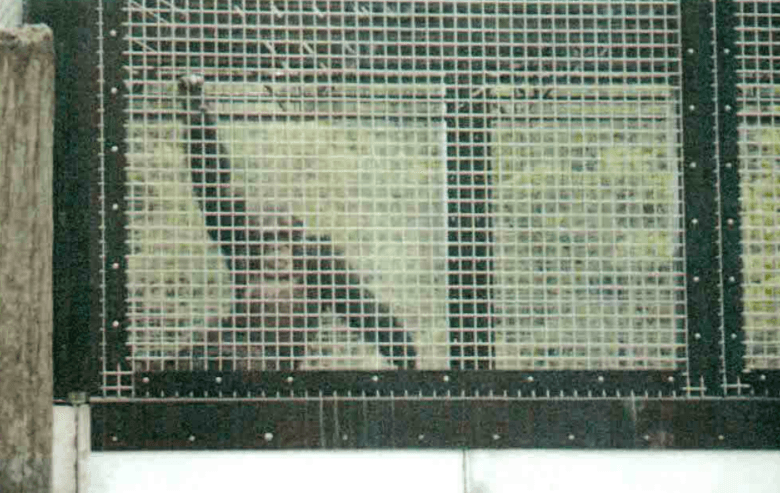
The Michigan Court of Appeals denied a writ of habeas corpus for the chimpanzees at the DeYoung Family Zoo at Wallace, Michigan. Via Nonhuman Rights Project

A bid to set seven chimpanzees free from a zoo in Michigan on the grounds that their “right” to “bodily liberty” is being violated has failed because they are not “persons,” according to a court.

The Michigan court of appeals denied a writ of habeas corpus for the chimpanzees at the DeYoung Family Zoo at Wallace because they are “wild animals.”

“On the face of the complaint, the chimpanzees at defendants’ zoo are not eligible for habeas relief,” the court said. “They are not ‘persons’ possessing the ‘personal liberty’ interest that habeas vindicates.”

The judges said that the alleged plight of the chimpanzees is “not analogous to slaves or women — both categories comprised human beings recognized as ‘persons’ in our legal tradition” because they are “animals, and as the common law authorities all make clear, animals — including wild animals, such as these chimpanzees — are treated as property.”

Additionally, the court said that there is “no exception” for “intelligent animals.”

Earlier this year, lawyers for the group representing the chimpanzees, the Nonhuman Rights Project, filed their complaint alleging that the “chimpanzees have the common law right to bodily liberty” and that that “right is being violated because they are being deprived of their ability to exercise their autonomy.”

A trial court previously rejected their request to have the chimpanzees released on the grounds that they are not “persons.”

The Nonhuman Rights Project said in a statement about the appeals court ruling that it is “deeply troubled that the Michigan Court of Appeals declined to protect autonomy — a supreme value under Michigan law — when the autonomous beings are chimpanzees.”

The group said it plans to appeal the decision to the Michigan supreme court.

Other courts in America have considered the question of whether chimpanzees should be classified as “persons” and have similar rights. In 2014, the appellate division of New York’s supreme court heard arguments in a case brought by the Nonhuman Rights Project that sought to free a chimpanzee named Tommy. The group argued that the chimp was being held against his will.

But the judges in that case ruled at the time that Tommy did not qualify as a “legal person.”

“[We] conclude that a chimpanzee is not a ‘person’ entitled to the rights and protections afforded by the writ of habeas corpus,” the court said. “In our view, it is this incapability to bear any legal responsibilities and societal duties that renders it inappropriate to confer upon chimpanzees the legal rights … that have been afforded to human beings.”

In a separate case, animal rights activists lost their bid to free two other chimps, Hercules and Leo, though they were later transferred to a sanctuary in Georgia.


The New York Sun

© 2025 The New York Sun Company, LLC. All rights reserved.

Use of this site constitutes acceptance of our Terms of Use and Privacy Policy. The material on this site is protected by copyright law and may not be reproduced, distributed, transmitted, cached or otherwise used.

The New York Sun

Sign in or  create a free account

or
By continuing you agree to our Privacy Policy and Terms of Use