
‘Mistress Dispeller’ Is a Documentary About a Service Distinctive to China That’s Described by the Title
Unhappy partners can spend significant sums of money to ward off those who would break up their marriages. One such service is said to have had more than a million clients.
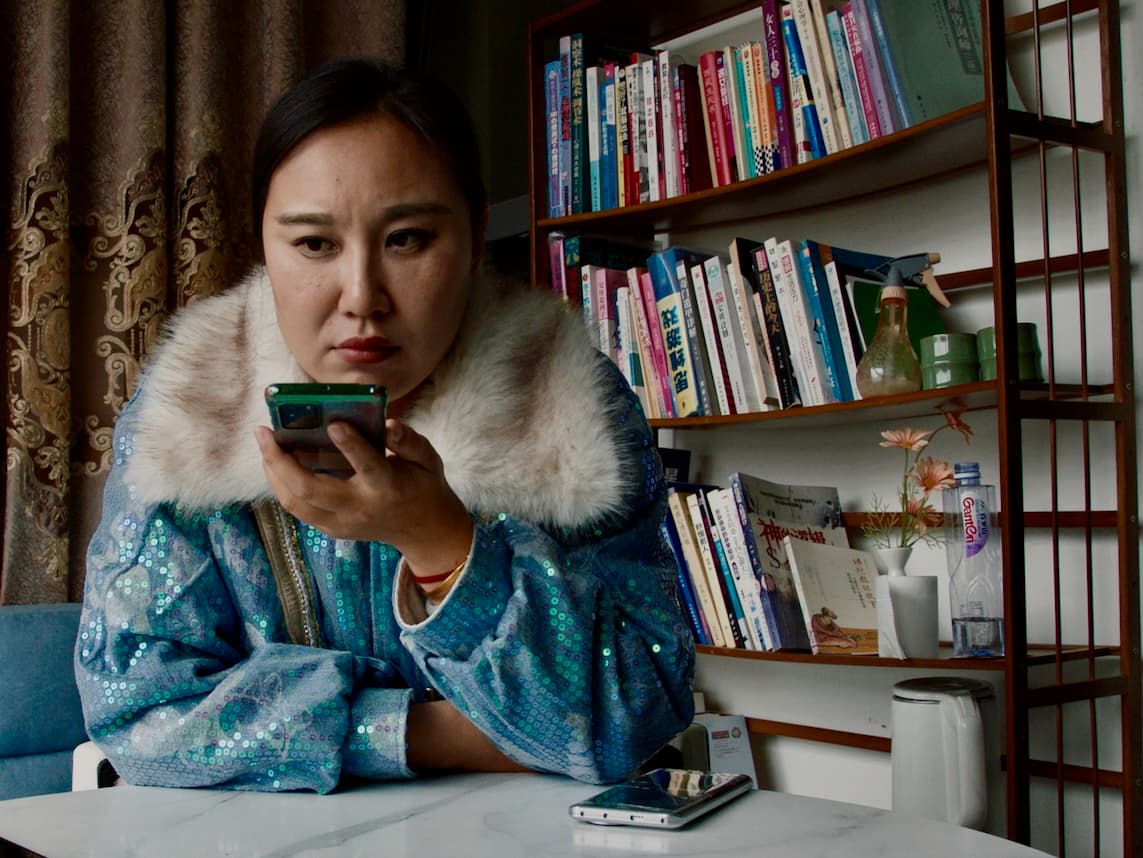
Elizabeth Lo’s “Mistress Dispeller” begins with a run of text testifying to the veracity of the events we’re about to watch and how everyone in the film agreed to appear on screen. Ms. Lo was wise to do so: Her documentary had undergone a circuitous, three-year route, largely due to its original subjects — six married couples based in China — withdrawing consent to have their stories aired in public.
One motivator was the picture’s emphasis on adultery, not the easiest subject about which to be open, but so was the director’s duplicity. As outlined by a journalist, George Fenwich, writing in AnOther magazine, Ms. Lo “had to conceal the true nature of the documentary.” The wiggle room between cinéma and vérité is inescapable, but some filmmakers wiggle more than others. Ms. Lo re-started “Mistress Dispeller” with her ducks in a row and in plain sight.
Still, it’s a wonder what people are willing to do when a camera is in the room. Take Mr. and Mrs. Li, a middle-aged couple at the center of “Mistress Dispeller.” They are stunningly ordinary: The Lis have a modest flat in Luoyang, exercise regularly, and live a life of unostentatious comfort. Mr. Li is a man of few words; Mrs. Li is distracted. Boredom bred of duty typifies the marriage.
Mr. Li is never without his phone and rarely at home. What he’s doing and where he’s going is never made clear to Mrs. Li, but she has her suspicions. Mrs. Li and her younger brother visit Wang Zhenx, a 30-ish woman who specializes in saving marriages beset by infidelity and who goes by the honorific “Teacher.” A marriage counselor, you might think, but Teacher Wang’s methodology is distinctive: Using false pretenses, she enters into a couple’s life and attempts to save the union by, you guessed it, dispelling the mistress.

The practice has been with us or, rather, the denizens of China for about 20 years. Unhappy partners can spend significant sums of money to ward off those who would break up their marriages. A founder of the Weiqing Love Hospital, Shu Xin, avers that there are 33 ways in which a straying partner can be waylaid in his amorous pursuits. More than a million clients have engaged Mr. Shu’s services. How many of them were happy with its program is left unanswered.
Teacher Wang, upon being hired by Mrs. Li, pretends to be a friend eager to improve her skills at badminton — a sport at which Mr. Li is adept. A casual game turns into a dinner invitation at the Li home for which there’s been some serious machination on the parts of Mrs. Li and Teacher Wang.
The women agree that Mrs. Li will make a fuss at the dinner table and leave Teacher Wang alone with Mr. Li. The plan goes into effect and Mr. Li confesses to having an affair with a business associate, a younger woman who cuts a slim and fashionable silhouette, Fei Fei. The mistress soon finds herself, and not without complaint, in the company of Teacher Wang.
“Mistress Dispeller” is a fascinating venture, surprisingly non-prurient yet unseemly all the same. It’s also sad, very sad.
Among the more surprising insights gleaned from Ms. Lo’s film is Teacher Wang’s theory about mistresses: “When someone becomes a mistress, it’s because they feel they don’t deserve complete love.” Toward the end of the picture Fei Fei meets with Mrs. Li face to face under the guidance of Teacher Wang. The resulting conversation is remarkably sober and even-handed, but high drama all the same — the kind of scene documentarians dream about. How the dreams of our three principals are faring since the completion of “Mistress Dispeller” is a question you can’t help but ask when leaving the theater.