Musk Is Gone but DOGE Lives on — In a New Way

The tech billionaire’s departure and staffing shakeups raise doubts, but the unusual cost-cutting effort may now be institutionalized.

AP/Jose Luis Magana
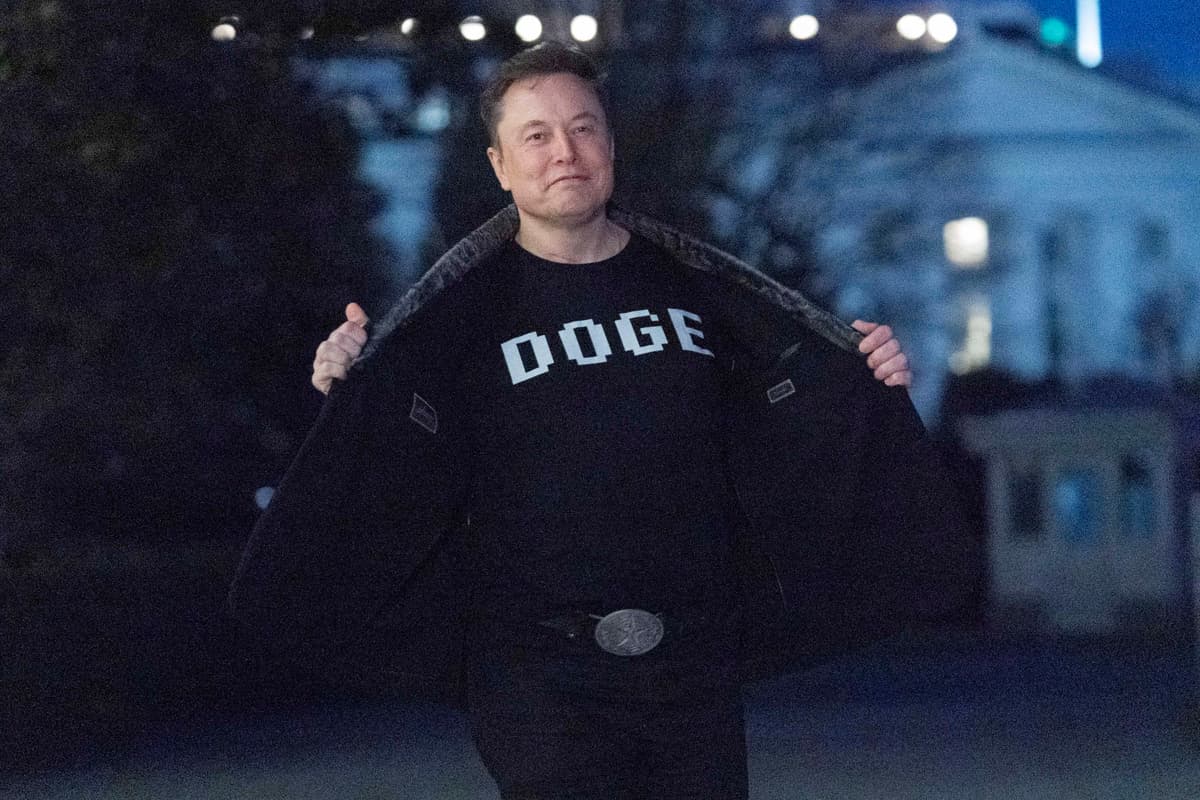
Elon Musk sports a T-shirt that reads 'DOGE' on the South Lawn of the White House, March 9, 2025. AP/Jose Luis Magana

While Musk’s exit and a staffing shakeup raises doubts, DOGE’s influence may now be institutionalized.

Just over a month after Elon Musk stepped away from day-to-day operations, the Department of Government Efficiency — better known as DOGE — finds itself at a crossroads. 

Once dismissed by critics as a publicity stunt and praised by supporters as a bold reimagining of bureaucracy, DOGE may now be evolving into something more lasting: not just a disruptor, but perhaps a fixture in the machinery of federal governance.

Yet its future may now hinge on a new political rift. In a stunning turn, President Trump — once Mr. Musk’s chief proponent — is threatening to unleash DOGE on the tech billionaire himself, stating that “DOGE is the monster that might have to go back and eat Elon” and essentially scrutinize the government massive subsidies tied to Mr. Musk’s companies. 

The threat came after Musk publicly criticized the “Big Beautiful Bill” and hinted at backing primary challengers to Trump-aligned Republicans. Musk also has talked about plans to create a third political party. 

So, is DOGE likely to survive in a cutthroat Washington? 

“DOGE remains a potent force, embedded in agencies like Treasury and Interior, driving Trump’s vision to slash bureaucratic bloat,” Managing Director of Nestpoint Associates, John Thomas, tells the New York Sun. 

“It’s not a conventional agency but a relentless task force. The establishment’s push to tame it hasn’t dulled its edge yet. Musk has been able to change the culture in Washington, and that spirit lives on.”

Launched in January 2025, DOGE operatives claimed over $180 billion in savings — a widely disputed figure. Independent estimates now place the actual figure far lower amid mounting scrutiny over how those savings were calculated. 

In any case, however, the focus has shifted: today, the story of the disruptor department is less about headline-grabbing cuts and more about what it has embedded into the machinery of government — and what that means for the future.

Leadership Behind the Curtain

Mr. Musk’s departure marked the exit of its public face, not its operation.  

Amy Gleason, previously a top executive at the United States Digital Service and appointed in February, continues to serve as the official Acting Administrator. Meanwhile, budget veteran Russell Vought has quietly assumed a central role in coordinating DOGE staff across cabinet departments following Mr. Musk’s departure. 

Mr. Musk’s departure did, however, trigger at least some attrition within the General Services Administration, which coordinates much of DOGE’s work. Notably, Edward “Big Balls” Coristine, the 19-year-old wunderkind who became a viral symbol of DOGE’s youth brigade, resigned in late June, only to take up a position at the Social Security Administration. 

His exit follows others tied to Neuralink and Tesla, fracturing the informal network Musk built within agencies, with some returning to the private sector and others moving directly into other government positions. 

According to global risk analyst Dennis Santiago, with Mr. Musk out, the writing is now on the wall. 

“The ‘persona’ factor now rests solely with the president, who, unlike Mr. Musk, is a government official expected to act using official government agencies, as opposed to advisory groups in the conduct of government affairs,” he tells the Sun. 

“In the areas of auditing government infrastructure, several official agencies exist. The departure of Mr. Musk from DOGE would seem to logically call the question of whether DOGE has now become a point of inefficiency for the government process, potentially duplicating or complicating the work of official audit agencies.”

While Musk’s exit and a staffing shakeup raises doubts, DOGE’s influence may now be institutionalized. Its centralized data platform — aggregating payments, Social Security, and regulatory records — is reportedly still active and integral to enforcement actions. 

DOGE operatives now work inside at least 15 federal agencies, from Health and Human Services to Treasury, under traditional civil‑service oversight.

Embedded Infrastructure, or a Flash in the Pan?

Stripped of Musk-era populism, DOGE’s real legacy is how deeply it has entrenched itself in the daily workings of federal agencies. Its central data system, built to merge payments, Social Security data, and regulatory records, has so far withstood legal challenges and continues to power much of the department’s influence.

“DOGE’s advantage lies in its outsider zeal, cutting wasteful contracts like the $420 million NASA deal and forcing agencies to rethink bloated budgets. Its disadvantages — it lacks a permanence that is required to make a long-lasting difference in Washington,” Mr. Thomas noted. 

“It also doesn’t have to behave transparently like a normal agency, which fuels critics’ attacks that because there isn’t ample sunlight into the effort, they must be doing something wrong. DOGE must continue to walk a balancing act of transparency but efficiency to achieve the mission.”

Departments now regularly audit credit card use, review vendor licenses, streamline software procurement, and digitize outdated systems — moves that reflect DOGE’s data-first philosophy.

In March 2025, for example, DOGE shut down the United States Institute of Peace — a congressionally funded think tank — by firing its leadership and most of its roughly 600-strong staff, seizing control of its headquarters with assistance from law enforcement, and closing its building and website. 

Then, even after a judge reinstated the organization’s leadership in May, DOGE’s reforms stuck: the institute maintained new data-driven systems and tighter controls over IT and Human Resources. Its systems now also require evidence-based budgeting and regular contract reviews.

Legal and Congressional Handbrakes

DOGE, however, isn’t operating carte blanche the way it did in its early days. 

In a recent win for critics, DOGE lost control of grants.gov, the federal website that posts funding opportunities from various government agencies, potentially freeing up $500 billion in federal dollars. 

The Supreme Court also recently put temporary restrictions on its access to sensitive Social Security data — yet didn’t block it entirely — showing that legal oversight of the department is tentatively growing. Government watchdogs like Citizens for Responsibility and Ethics in Washington and American Oversight have also filed a wave of lawsuits demanding transparency, forcing DOGE to defend its authority in court. 

Some Democratic lawmakers, including Rep. Jamie Raskin (D-Maryland) and Rep. Gerald Connolly (D-Virginia), are also investigating whether DOGE’s mass firings were legal — including its elimination of nearly 1,400 Education Department jobs, which is now costing over $21 million a month in legal fees and stalled operations. 

Despite the pushback, DOGE’s cost-cutting efforts continue. It has audited credit card use across 55 agencies — closing over 600,000 federal accounts — and launched sweeping regulatory reviews in more than 10 departments. Most recently, the department led a significant rollback of ATF rules, cutting two-thirds of the agency’s inspectors and speeding up background checks, fueling national controversy around gun policy. 

The Verdict: A Permanent Disruption?

While DOGE continues to outlive its creator, its trajectory is far from settled. Future legal rulings will determine how much autonomy the watchdog group retains, while Congress may choose to either legitimize or contain its scope. 

“I believe DOGE was meant to be a temporary organization designed to accelerate the pace of change in the first 100 days of the incoming administration, a way to gain momentum to implement a promised agenda to reduce the size and scope of the federal government apparatus,” Mr. Santiago contended. “Those 100 days have passed.”

There is a strong contingency in Washington, however, that sees things differently. 

Senator Joni Ernst (R-Iowa) and Representative Aaron Bean (R-Florida) introduced the Delivering On Government Efficiency in Spending (DOGE) Act in June, a bill that would make DOGE’s financial oversight powers — especially at the Treasury Department — permanent. DOGE currently operates under executive authority. This law could make it a formal part of federal law. 

And the organization is seeking a bigger share of the budget to execute its work. 

As of this fiscal year, DOGE employed an estimated 89 full-time equivalent staffers, including both direct hires and reimbursable agency-funded employees. For 2026, the administration requested an increase to 150 full-time staff members, 80 percent of whom would be reimbursable via agencies. 

What is yet to be seen is whether Trump will call the shots and eliminate the department, whether Washington will more broadly harness or reform it, or whether the mission itself will thrive or fade away against the backdrop of increased government spending. 

“The swamp doesn’t surrender easily, but they’re digging in,” Mr. Thomas added. “DOGE’s future hinges on Trump’s political capital and whether its cuts deliver tangible taxpayer relief without crippling services. It’s unlikely to become permanent, given the relatively short presidential terms. Congressional backing and public support will decide if it outlives 2026.”


The New York Sun

© 2025 The New York Sun Company, LLC. All rights reserved.

Use of this site constitutes acceptance of our Terms of Use and Privacy Policy. The material on this site is protected by copyright law and may not be reproduced, distributed, transmitted, cached or otherwise used.

The New York Sun

Sign in or  create a free account

or
By continuing you agree to our Privacy Policy and Terms of Use