


NATO, European Allies Set To Meet This Week To Coordinate Response to Russian Drone Incursions
Following a series of Russian violations into European airspace, the goal is to forge a path for finalizing a ‘drone wall’ to prevent future encounters.
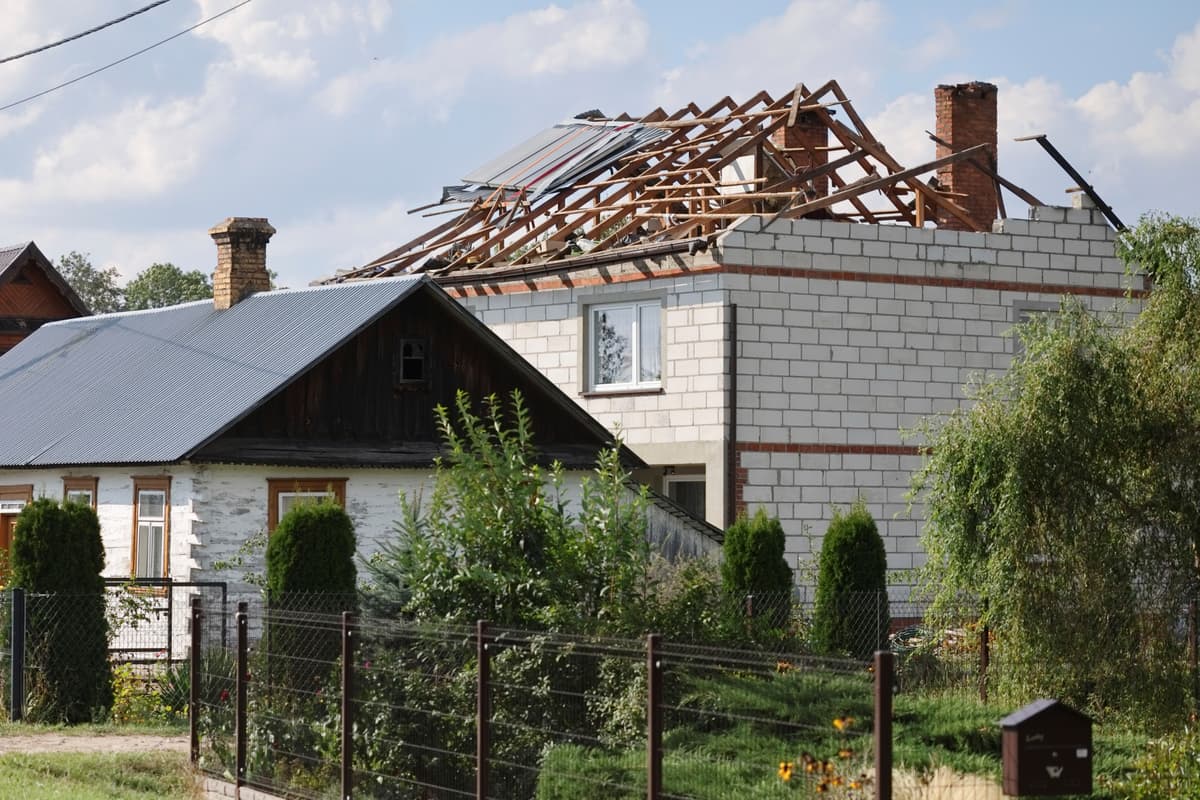
European nations fed up with Russia’s violation of their airspace with the use of drones and fighter jets are meeting this week to develop a plan to hold the warring nation accountable.
Officials from several nations are meeting Wednesday at Copenhagen to discuss the incursions that Ukraine’s president, Volodymyr Zelensky, claims is Russia’s testing of European air security. The talk aims to develop a coordinated NATO-European Union defense grid.
A key part of the defense system is a proposed multibillion-dollar “drone wall” — already in production — capable of shooting Russian drones out of the sky if they reach European territory. Britain’s defense minister, John Healey, announced earlier this month that Ukrainian-style interceptor-drones that have been proven effective in countering Russian drones will be manufactured in the United Kingdom.
NATO has already deployed F-35s, Patriot systems, and AWACS aircraft across the Baltic region, where Estonia reported Russian fighter jets in its airspace last week. Russia denied that it had violated any international borders despite three Russian MiG-31s being chased away by Italian fighters stationed on the Eastern flank of NATO.
In Poland, fighter jets scrambled on Sunday as Russia violated Polish airspace to launch an enormous drone assault on Ukraine. It was the second time this month that Russian drones violated Polish airspace — the first triggered a NATO consultation and multinational air defense operation.
In the lead-up to Wednesday’s meeting, Denmark’s transportation ministry imposed a nationwide ban on all civilian drones between Monday and Friday, saying officials are seeking to differentiate between “enemy drones being confused with legal drones and vice versa.”
Anyone caught flying the drones will be fined or face prison sentences of up to two years.
The measure follows several incursions over Danish military bases and airports. Copenhagen’s airport was closed last Monday for four hours after unidentified drones were spotted flying nearby. On Wednesday, Aalborg airport, which serves both civilian and military planes, was shut down for three hours to all arrivals and departures.
On Friday, a drone flew over Denmark’s biggest airbase, Karup.
Germany has also upped its drone surveillance along its northern border with Denmark after drone sightings in Schleswig-Holstein.
Prime Minister Mette Frederiksen suggested Russia was responsible for the “hybrid attacks,” which also include cyberhacks, cut underwater cable lines, and even the spread of conspiracy theories aimed at destabilizing European nations.
“Even though the authorities cannot conclude who is behind the hybrid attacks against our airports and other critical infrastructure, then we can at least conclude that there is primarily one country that poses a threat to Europe’s security – and that is Russia,” she said Friday, explaining the purpose of this week’s consultation.
“There is no European country that can defend itself alone against Russia. Not even Ukraine, which has otherwise bravely fought for more than three years now,” she said. “And that is why we have our NATO alliance. That is why we are in the process of expanding the European defense industry, and that is why we are in the process of a historic rearmament here in Denmark.”
Despite NATO warning that it will defend “every inch of allied territory” in response to drone incursions, Russia’s foreign minister, Sergey Lavrov, last week mocked the EU’s response to drones as “hysteria” and accused it of using drone incidents to justify military spending.
However, on Saturday, Russia’s foreign ministry spokeswoman, Maria Zakharova, issued a more severe response, accusing Ukraine of conducting a “false flag” operation in Romania and Poland to draw NATO into war with Russia.
“Reportedly, Bankovaya Street is plotting a Gleiwitz incident of its own with the aim of creating a casus belli for a Russia-NATO war,” Ms. Zakharova said in a statement posted on Telegram likening Ukraine’s activities to the Nazi false flag operation in Poland that launched World War II.
In the statement, she cited Hungarian reports that claimed Kyiv is seeking to repair downed or intercepted Russian drones, equip them with munitions, then send the disguised Russian drones to major NATO transport hubs in Poland and Romania in order to launch a disinformation campaign in Europe that accuses Moscow of the attacks, thereby unleashing an armed conflict between the Russian Federation and NATO.
“According to Hungarian journalists, the reason behind Zelensky’s plan is simple: the Ukrainian military are suffering a crushing defeat. The army is collapsing no longer at a tactical level, but strategically. If this information is true and gets validated, one thing can be said for certain: Europe has never been so close to starting [a] Third World War,” Ms. Zakharova said.