Netanyahu, Ahead of United Nations’s 80th Session, Emerges as the West’s Last Architect

Israeli premier is a leader who shapes history rather than letting it shape him.
AP/Richard Drew
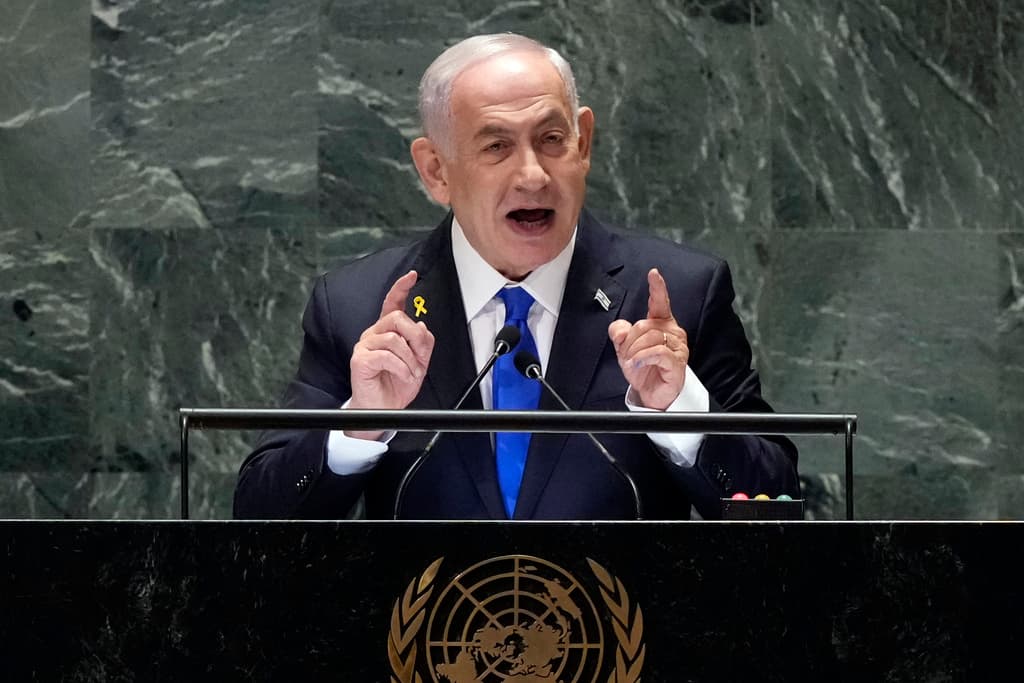
Prime Minister Netanyahu addresses the 79th session of the United Nations General Assembly, September 27, 2024. AP/Richard Drew

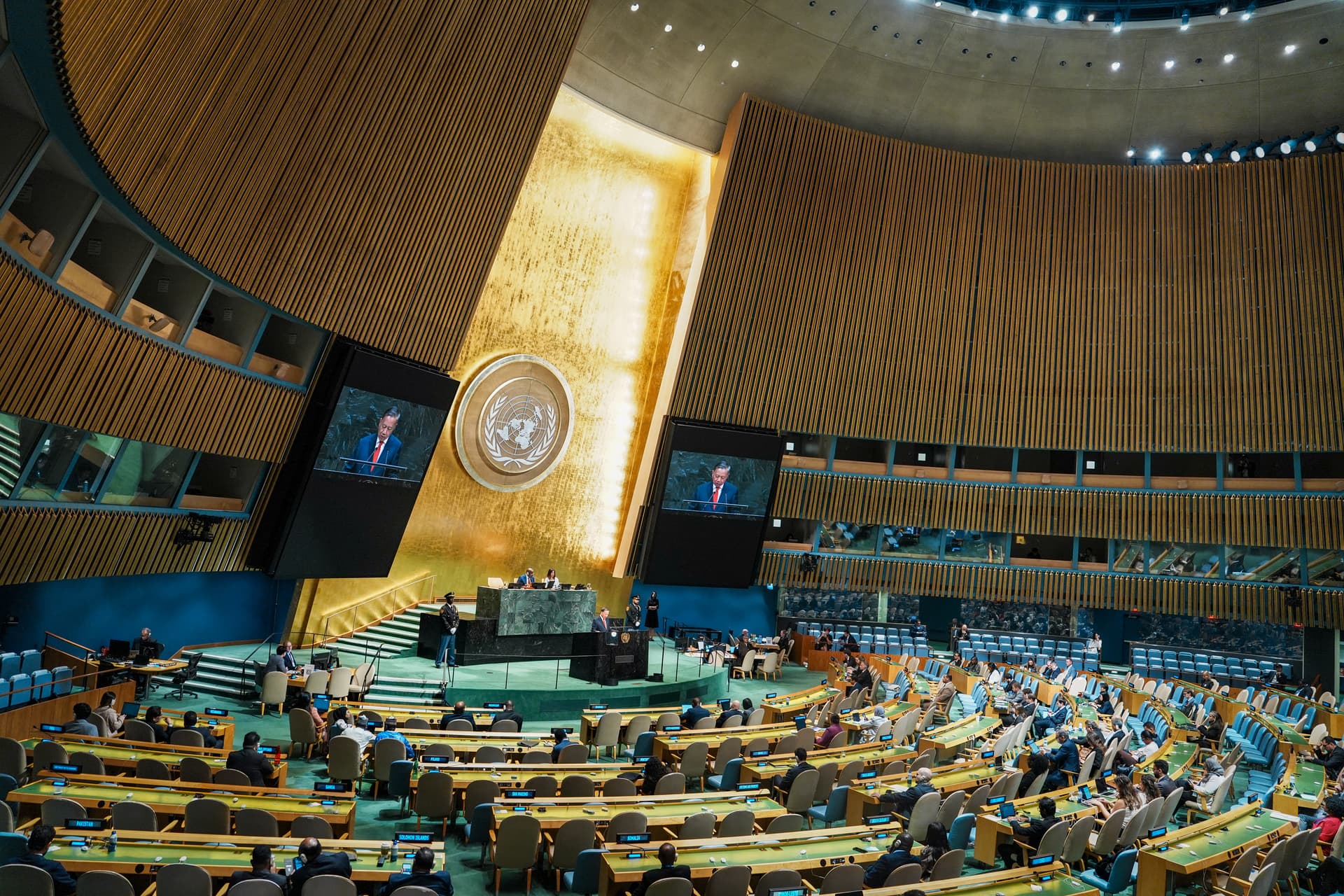
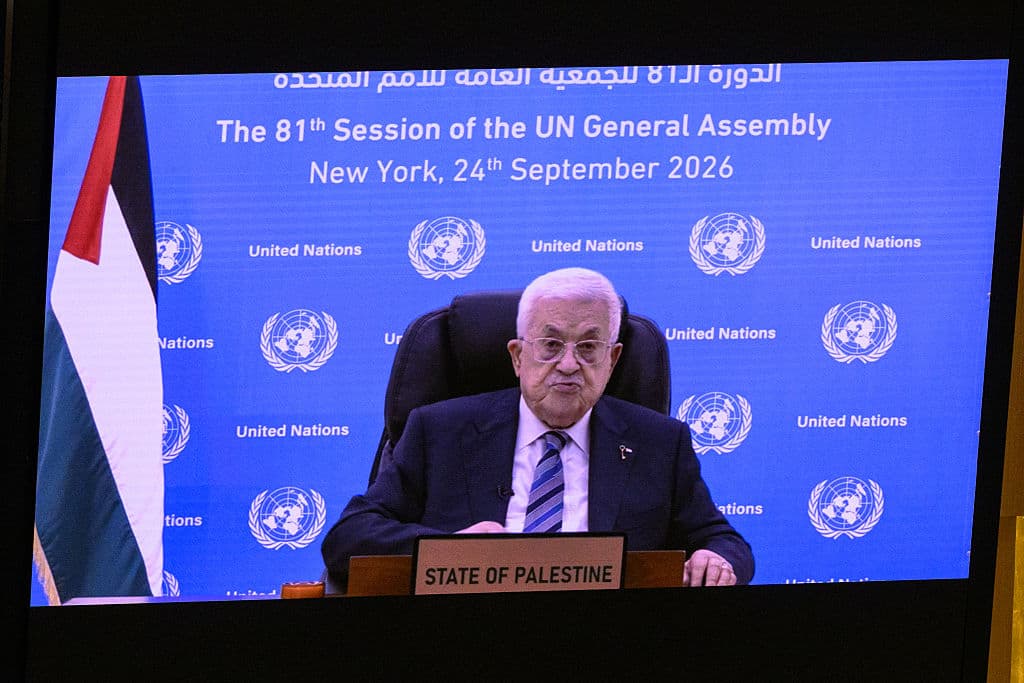
The United Nations General Assembly debate will open this month with a parade of Western leaders offering theater over statecraft. President Emmanuel Macron of France will perform grandeur; Britain’s prime minister, Sir Keir Starmer, neutrality, and Australia’s premier, Anthony Albanese, inclusion. Their words will dissolve before the motorcades clear Manhattan.

Prime Minister Benjamin Netanyahu will cut through the performance, preferring command to choreography. He speaks as an architect; a leader who shapes history rather than letting it shape him.

Mr. Netanyahu will cite Messrs. Macron, Starmer, and Albanese’s recognition of a Palestinian state while Hamas still holds hostages in Gaza as proof of appeasement. Mr. Starmer tied Palestinian statehood to Israel’s surrender, with no parallel conditions on Hamas. They acted as if a press conference could erase 3,000 years of history.

Mr. Netanyahu has called this recognition a betrayal, accusing Messrs. Macron and Albanese of fueling antisemitism. He set a deadline: Rosh Hashanah, the Day of Judgment, warning that history would not forgive hesitation.

Mr. Netanyahu will present Israel’s June strikes on Iran’s nuclear infrastructure as deterrence restored for all within Tehran’s reach. Yet deterrence requires memory as much as missiles. From Beirut to Doha, sanctuaries are no longer safe. Those who strike Jews will face consequences — wherever they hide.

Above all, he will insist that Israel’s sovereignty has never depended on foreign approval.

History proves him right. Foreign capitals may purport to confer sovereignty, but Israel endures because the Jews did what no resolution could: built an iron wall and kept building. Palestinian leadership chose a different path, rejecting statehood in favor of sabotage. 

Yet history did not begin in 1948. Or 1967. The Jews were rooted in Judea long before any empire renamed it. That continuity, people to land, memory to place — is covenant. It cannot be signed away. 

Mr. Netanyahu stands out because he governs in the tradition of the giants the West has forgotten how to produce. 

Churchill held the free world together until allies arrived. Reagan proved peace could be achieved through strength. Thatcher rebuilt Britain’s economy. Each carried the burden of power, reshaping a nation in their image.

That tradition is all but gone. The West now produces placeholders — bland conformists, allergic to ambition. They condition the public to lower expectations and mistake drift for stability. But drift is not neutral. President Biden was elected to steady the ship. Instead, Kabul collapsed and borders were overrun, eroding trust at home and credibility abroad. 

At Washington, ambition still counts. Untethered from precedent, President Trump broke deadlocks thought unbreakable: moving the embassy to Jerusalem and brokering the Abraham Accords. His moves endure, but without a unifying strategy they remain consequential fragments. More than a placeholder, but no architect.  

Mr. Netanyahu is. Others give speeches; he built systems. Economic liberalization, military doctrine, and regional alignments were layers of a single design. After six victories across double-digit campaigns, he is still standing; trials his rivals hoped would finish him now testify to his endurance.

In Israel, existential threat produces a different kind of leader. He may be the only democratic leader governing as a civilizational strategist: thinking in generations, treating patience as an instrument, moving only when the ground is firm. 

For 40 years his mission has been singular: prevent Iran from going nuclear. When Tehran crossed his red line, he unleashed 12 days of coordinated strikes; the execution of a system built over decades.

The Abraham Accords were engineered, not improvised; lines on a map that follow his design, when few others dare hold the pen. The next frontier lies at Riyadh, anchoring the accords as the foundation of a lasting regional order. 

October 7 was meant to shatter the framework. Instead, the foundations held. That is the instinct for survival, spoken in Hebrew. It unsettles Western capitals because it asks no permission and accepts no performance.

Beyond Jerusalem and Washington, few consequential leaders remain. The West has confused stagnation with direction and theater with strategy. Renewal happens when nations remember. When leaders build systems and shoulder the weight of defending them. At Turtle Bay, Mr. Netanyahu will hand them the blueprint. The West must choose: Build, or keep drifting.


The New York Sun

© 2025 The New York Sun Company, LLC. All rights reserved.

Use of this site constitutes acceptance of our Terms of Use and Privacy Policy. The material on this site is protected by copyright law and may not be reproduced, distributed, transmitted, cached or otherwise used.

The New York Sun

Sign in or  create a free account

or
By continuing you agree to our Privacy Policy and Terms of Use