New Biography Parallels Plutarch’s Way With Politics and Personalities
Two politicians and orators of markedly different personalities, Edmund Burke and Charles Fox, are the subjects of James Grant’s dynamic dual biography.
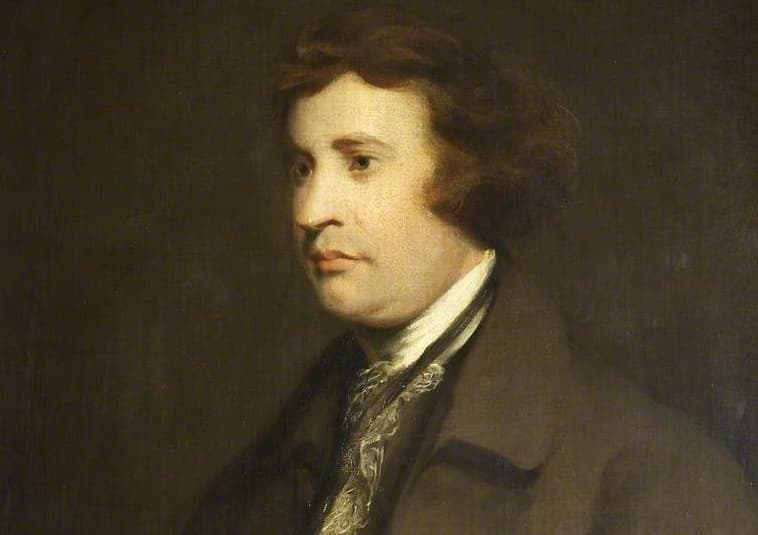
‘Friends Until the End: Edmund Burke and Charles Fox in the Age of Revolution’
By James Grant
W.W. Norton, 496 Pages
Plutarch’s portrayal of parallel lives is the paradigm James Grant pursues in his dynamic dual biography of Edmund Burke and Charles Fox, two politicians and orators of markedly different personalities. They opposed Lord North and George III and the war against the American colonists, and then split apart when Burke denounced the French Revolution and Fox was all for it.
Fox was the pliable, changeable Alcibiades to the stubborn, aloof Burke. Fox, coming from noble blood, began a political career disdaining popular democracy and ended it as a champion of the people. Burke, coming from humbler origins, never wavered in his loyalty to crown and parliament, manifesting a lofty, Coriolanus-like disdain of even his own parliamentary constituency.
Burke never held a cabinet position. Not only did Fox become a cabinet minister, he switched sides, at one point joining Lord North, whom Fox had denounced for decades. Burke broke off his friendship with Fox over the latter’s support of the French Revolution. Fox believed the times demanded government reform — even revolution in some cases. Burke believed in the conservative, organic development of traditions that the French had destroyed to the detriment of moral and civil order.
Before the breakup, Burke and Fox admired each other extravagantly, both holding forth in the House of Commons to the delight of all factions — including those who opposed them. Lord North himself, after one of Fox’s drubbings, seemed virtually exhilarated by the attack, acknowledging the brilliancy of his opponent’s forensic demolition of North’s government.
Both Burke and Fox understood the nature of the House of Commons as a debating — nay a jousting — society, in which combatants went at one another with ferocity and inventive invective that Mr. Grant portrays vividly. After speeches that could last three hours or more, adversaries might well enjoy a drink together or exchange other tokens of mutual admiration.
I’m reminded of a similar friendship between a Conservative MP, Enoch Powell, and a Labour MP, Michael Foot, representing opposite sides of the political spectrum, who banned together to oppose reforming the House of Lords — Powell because of his Burke-like belief that the Lords as an institution should be honored intact and Foot because he wanted that institution abolished altogether.
Many wondered, including Fox, how Burke could have sympathized with American revolutionaries and denounced the French Revolution. Burke, having served as business agent for two American colonies, believed Americans had the better argument as British subjects who had managed to create a new form of government that grew out of British traditions.
Burke’s classic “Reflections on the Revolution of France,” however, did more than present conservative principles. In passages such as his tribute to Marie Antoinette, he displayed a desire to idealize those who embodied his principles of hierarchical government just as he made Warren Hastings, the governor general of the Bengal Presidency in India, the cynosure of tyranny in impeachment proceedings that lasted nearly a decade and resulted in acquittal.
For all his vehemence, Fox had an easygoing personality that the rigid Burke could not abide as soon as they differed on the French Revolution. Fox tried to repair their friendship, but Burke would have none of it. He believed Fox had betrayed him. Fox, on the other hand, did not believe any rupture in personal or political relations was irreparable — until, that is, he resolved never to honor Burke, even after his death.
The differences between these two men are starkly and empathetically presented in James Grant’s narrative. Isolated much of his time in parliament, Burke soldiered on — always praised for his eloquence even as he persuaded few opposed to him to change sides. Fox, nearly as good an orator as Burke, and often less well informed, usually carried the day because of his willingness to engage in the give and take of politics.
Fox was a rake before he settled down in a marriage to a courtesan that shocked society. Burke, always faithful to his wife, never even engaged in a dalliance with another woman.
It might be said that Burke did not know how to play with other men. He could be on no one’s team. Burke reminds me of that line in Shakespeare’s “Coriolanus” about a nature that is too noble for this world.
Mr. Rollyson is the author of “A Private Life of Michael Foot.”