New York Consumers Face Surge in Energy Prices as Climate-Obsessed Democrats Push To Run Nearly Everything on Electricity

Albany lawmakers are steering the Empire State into a man-made storm of inflated demand and constricted supply.

AP/Hans Pennink
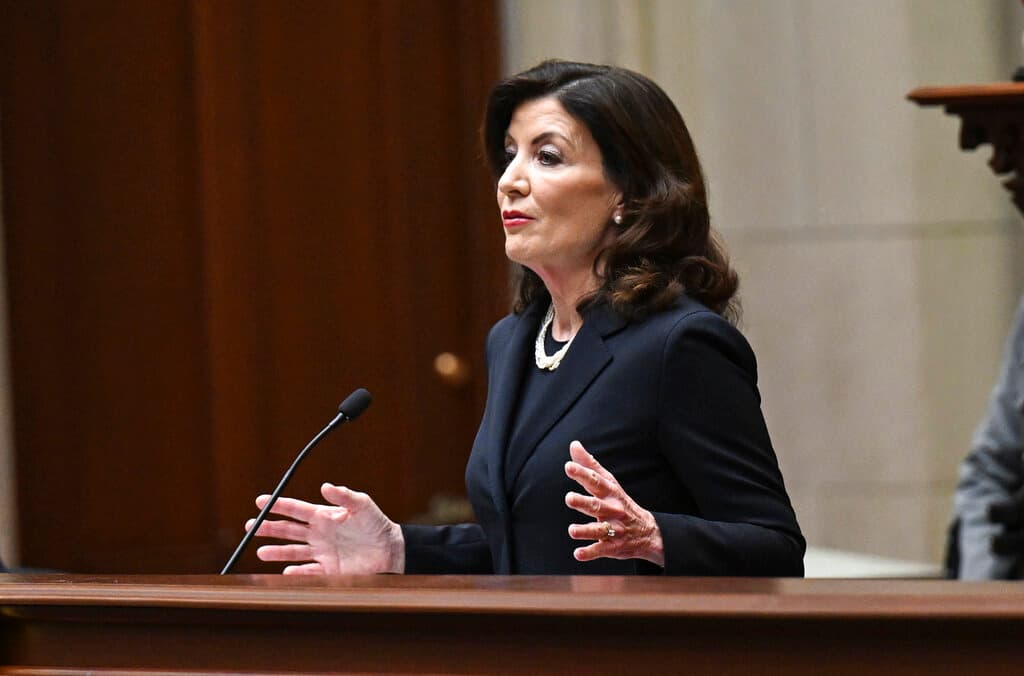
Governor Hochul in 2023 delivers her State of the State address at the capitol. AP/Hans Pennink

If you are worried that data centers are straining the grid and driving up your electricity bill, you should be horrified by the direction of New York’s energy policy. 

In the name of fighting climate change, Albany is mandating that nearly everything — heating, cooking, transportation — must run on electricity. That means higher demand and higher prices. 

Take the all-electric buildings rule, now paused by the courts. It bans newly constructed buildings under seven stories from using anything but electricity. Compare that to a home where the TV runs on electricity, but the heat comes from natural gas: the all-electric home consumes far more electricity. 

The task is monumental. Currently, eight out of ten homes use gas or other fossil fuels for heating. Electric heating with heat pumps – the ideal New York’s energy policy is going for – is only used by 3.5 percent of the households.

Here is another comparison: heating all New York buildings with electricity would require 86 terawatt-hours annually. For perspective, all American data centers combined consume 176 terawatt-hours

In other words, electrifying heating of buildings in New York is like relocating half of America’s data centers here. To be clear, New York is not requiring all buildings to go electric, yet, even though that is one of the directions described in the State Energy Plan.

And that’s before vehicles. By 2030, Albany requires all 45,000 school buses to be electric. Imagine the strain when they all plug in to recharge — on fragile local distribution lines.

Right now, electricity makes up only 19 percent of New York’s total energy use. The rest — heating, driving, industry — runs on other fuels. Even if electricity were dirt-cheap and plentiful, the switch to electricity would be a complicated task.

But electricity in New York is not cheap. We pay the 7th highest residential electricity rates in the nation — $0.27 per kilowatt-hour, 50 percent above the American average. 

Little of New York’s electricity comes from ultra-modern wind farms gleaming in the sunlight. Despite the hype, new wind and solar provide only about 7 percent of New York’s electricity. A fifth comes from hydropower, another fifth from nuclear, but by far the largest portion, half, is generated from fossil fuels.

Even more, a lot of New York’s electricity is produced by aging fossil plants already straining under demand. It costs a lot to modernize or build new power plants, and Albany’s climate policies are driving companies and investors away. 

Denying permits to build power plants, like Astoria and Danskammer in 2021, and the recent Constitution pipeline are just a few examples.

New York is not an energy powerhouse. New York imports electricity from Canada and Pennsylvania, which is hypocritical given the state’s fracking ban. 

We refuse to produce natural gas here, but happily buy electricity generated from Pennsylvania’s gas. That means lost royalties for New Yorkers and lost tax revenue for Albany — while Pennsylvanians cash in. 

Under these conditions, forcing entire sectors of the economy to switch to electricity is technically daunting, environmentally dubious, and economically reckless. 

Yet Albany is steering New York into this man-made storm of inflated demand and constricted supply. Think of egg prices during the bird flu scare before Easter. Albany is banning hens while forcing everyone to eat omelets.

The real problem isn’t data centers, it’s New York’s deeply flawed and not thought-through Climate Act of 2019. If New York politicians are serious about helping consumers with their energy bills, they should focus on reworking the Climate Act and its restrictions on energy use and production.

Pausing the all-electric building rule is a good start, but it needs to be completely repealed. Otherwise, it will return after the next election or court ruling. 

Just look at how Governor Kathy Hochul opposed New York City’s congestion tolls before the November 2024 election, only to implement the scheme shortly afterward.

All-electric buildings are just a small piece of the problem. The core issue is  New York’s energy policy, which should be realigned to provide cheap, plentiful, and reliable energy — not virtue signaling.


The New York Sun

© 2025 The New York Sun Company, LLC. All rights reserved.

Use of this site constitutes acceptance of our Terms of Use and Privacy Policy. The material on this site is protected by copyright law and may not be reproduced, distributed, transmitted, cached or otherwise used.

The New York Sun

Sign in or  create a free account

or
By continuing you agree to our Privacy Policy and Terms of Use