

New York Delays Implementation of Gas Stove Ban Amid Legal Challenge, Concerns Over ‘Reliability’ of Electric Grid

Gas and construction trade groups have argued – so far unsuccessfully – that the law violates federal rules for regulating gas appliances.
Spencer Platt/Getty Images
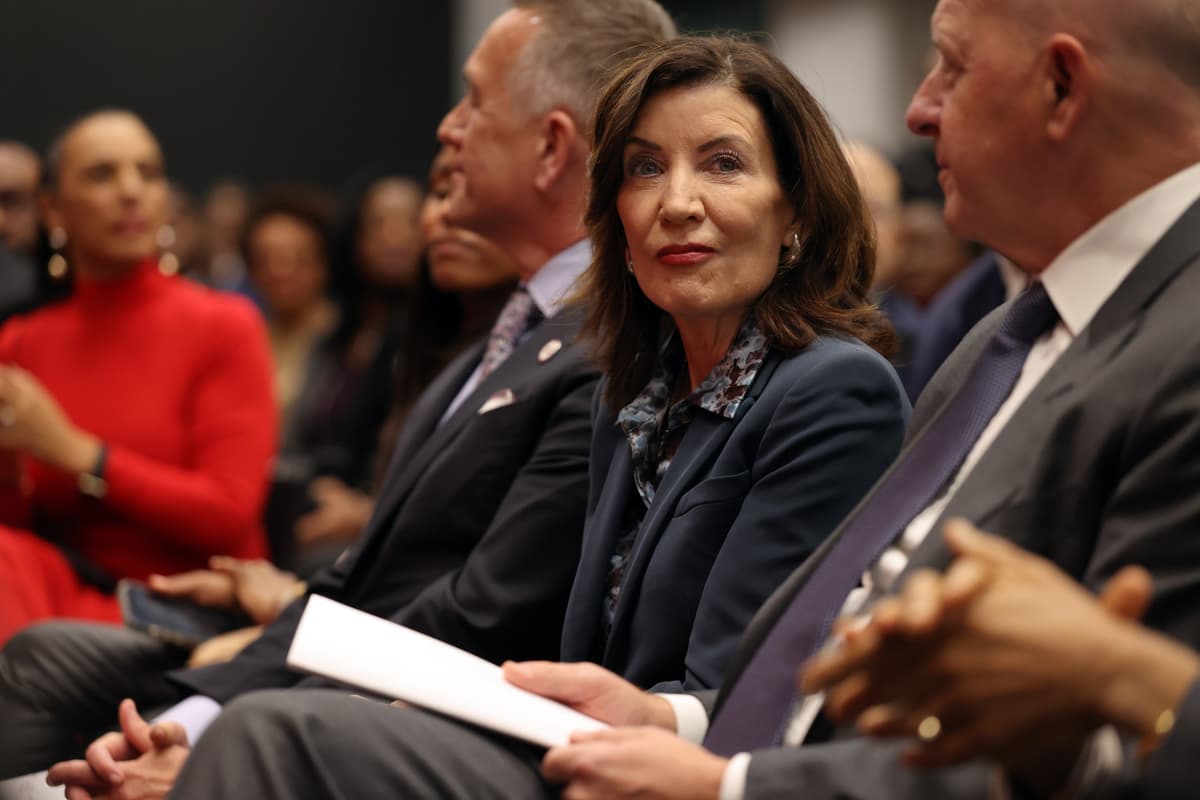
Governor Kathy Hochul appears at a ribbon-cutting ceremony at the National Urban League's new headquarters at New York City on November 12, 2025. Spencer Platt/Getty Images

New York is delaying the implementation of the All-Electric Buildings Act, which would ban gas stoves from new buildings, amid a legal challenge and concerns about the electric grid.

In a court filing on Wednesday, attorneys for New York said the state will delay the implementation of the law, which was set to take effect on January 1, 2026, until the Second Circuit U.S. Court of Appeals weighs in on whether it is enforceable. 

The All-Electric Buildings Act, passed in 2023, would have banned gas stoves and furnaces as well as propane heating in new buildings under seven stories beginning in January. The requirements would apply to taller buildings beginning in 2029. 

At the time of its passage, climate activists celebrated the law. A spokeswoman for Governor Kathy Hochul, Katy Zielinski, said the law would “protect our families and our residents, while putting New York on a trajectory to a cleaner, healthier future.”

The law became a polarizing issue, with Republicans rallying to protect Americans’ right to use gas-powered appliances and calling the ban an example of government overreach. Left-wing activists argued that gas stove emissions are harmful to the climate and pose potential health hazards. 

In October 2023, gas and construction trade groups filed a lawsuit against New York’s law, alleging that it violated the federal government’s rules dictating how gas appliances are regulated.

A federal district court judge, Glenn Suddaby, ruled in July 2025 that the argument had “no merit” and that the federal Energy Policy and Conservation Act “does not preempt the prohibition on fossil-fuel equipment and systems in new buildings mandated by [New York].”

The energy and construction industry groups appealed Judge Suddaby’s ruling to the Second Circuit, which has not yet added the case to its calendar.

In a filing for the state on Wednesday, New York’s secretary of state, Walter Mosley, said delaying the implementation of the law will “avoid further litigation … (and) uncertainty during the appellate process.”

Besides legal concerns, the New York Independent System Operator, which manages the state’s electric grid, warned in October that there might be “significant reliability shortfalls” at New York City, Long Island, and the Hudson Valley within five years due, in part, to a shift away from fossil fuel energy sources. 

A spokesman for Ms. Hochul, Ken Lovett, said in a statement, “The governor remains committed to the all-electric-buildings law and believes this action will help the state defend it, as well as reduce regulatory uncertainty for developers during this period of litigation.”

The decision to delay the law drew a rebuke from climate activists. The deputy executive director of policy and programs at Environmental Advocates New York, Katherine Nadeau, said in a post on X, “Delaying the All Electric Buildings Act will keep us stuck in a fossil fuel past we can’t afford. New York already has a plan ready to go to build and power our buildings more safely, cleanly, and cheaply, but Governor Hochul is choosing not to use it.”

“We need the governor to fight for clean energy, not drag things out further. Every month we wait holds back New York’s climate progress and puts our future at risk,” Ms. Nadeau said. 

Congresswoman Elise Stefanik, who is running for governor in New York, has criticized the idea of merely delaying the implementation of the law, saying it should be repealed.


The New York Sun

© 2025 The New York Sun Company, LLC. All rights reserved.

Use of this site constitutes acceptance of our Terms of Use and Privacy Policy. The material on this site is protected by copyright law and may not be reproduced, distributed, transmitted, cached or otherwise used.

The New York Sun

Sign in or  create a free account

or
By continuing you agree to our Privacy Policy and Terms of Use