North Carolina GOP, Outraged by Iryna Zarutska’s Murder, Pushes Plan To Restart Executions, With Eye on Her Accused Killer
Zarutska ‘was failed because there’s a system that would allow someone like that to exhibit the sorts of problematic behaviors without there being any intervention,’ one Republican lawmaker supporting the bill says.

Republican lawmakers in North Carolina are trying to revive the state’s long-dormant death penalty in response to the murder of a 23-year-old, Iryna Zarutska. The legislation, should it pass, could make it more likely that Zarutska’s accused killer — should he be condemned — could actually be put to death.
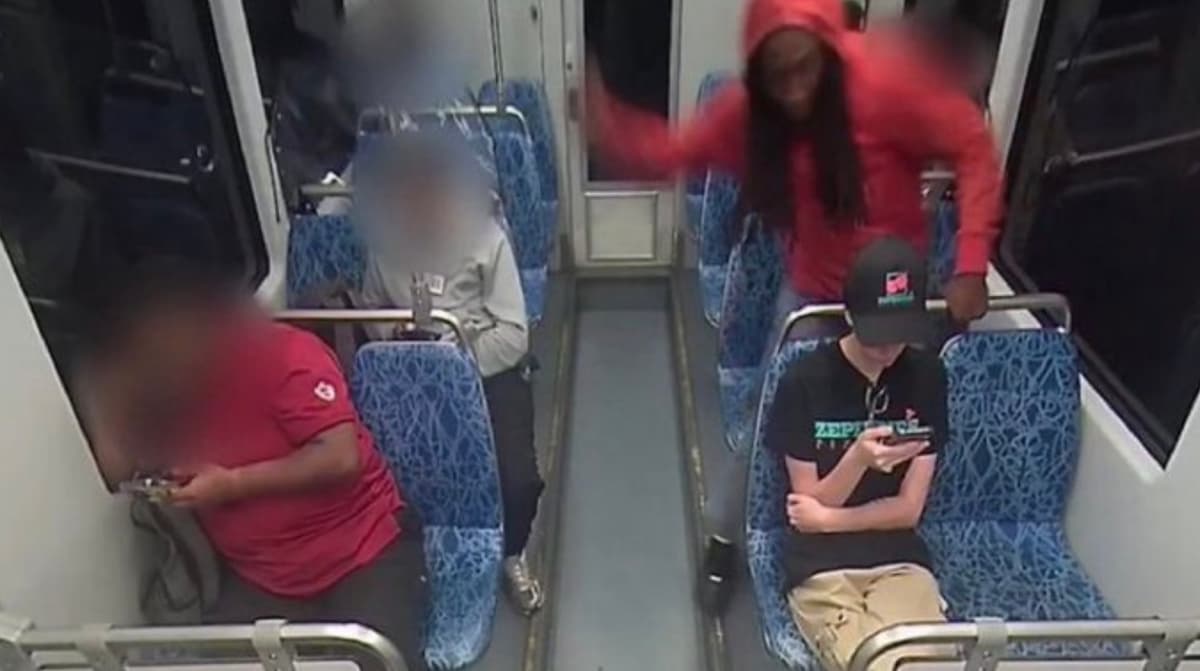
Prosecutors say Decarlos Brown Jr., 34, stabbed Zarutska four times in the neck after she sat in front of him on a Charlotte light-rail train on August 22. The killing, caught on videotape, caused a national uproar until the matter was overtaken by events — including the assassination of Charlie Kirk.
But back in North Carolina, outraged lawmakers are moving forward with efforts to reform the criminal justice system that had released Brown onto the streets. Some conservative lawmakers specifically want to make sure that the penalty will actually be carried out if Brown receives the death penalty.
Brown, who has had 14 arrests, and three felony convictions, in the last 12 years, has been charged with first-degree murder, and a court ordered a 60-day psychiatric assessment. He reportedly blamed the murder on “materials” in his brain. His mother told the Charlotte Observer he had been diagnosed with schizophrenia.

The death penalty is legal in North Carolina; however, the state has not carried out an execution since 2006, as courts have prevented the use of its method of execution: lethal injection.
Republicans added an amendment to a bill that they say is designed to prevent repeat offenders like Brown from being on the street — House Bill 307, known as “Iryna’s Law” — which requires officials to choose a new method of execution, such as the firing squad or electric chair, if lethal injection for legal or practical reasons cannot be used.
Two other Southern states have resumed executions by finding alternatives to lethal injection. South Carolina brought back the electric chair and added the firing squad, which was used in March and April of this year. Alabama has been executing inmates with a new method known as nitrogen hypoxia.
“Iryna’s Law” passed the North Carolina senate by a vote of 28-8 after the inclusion of the death penalty amendment, to which Democrats strongly objected. Several Democrats walked out of the chamber in protest ahead of the vote.
A Democratic state senator who opposed the bill, Mujtaba Mohammed, said, “Unfortunately, this was a missed opportunity, we could have worked together, we could have worked with the governor to actually provide some sort of legislation to meet the solutions that this family desperately and the solutions of so many people who are victims of crime across North Carolina.”

“I can’t see anything in this bill that would have saved Iryna’s life,” Mr. Mohammed added.
In a state with a constitutionally weak governor, Republicans have a supermajority in the North Carolina legislature and are largely unhindered in furthering their legislative priorities.
The state has sentenced individuals to death even though it has not carried out an execution since 2006. There are 120 men and two women on North Carolina’s death row, and judicial precedent suggests that they could be put to death using a new execution method. In the Supreme Court’s 1910 case Malloy v. South Carolina, the justices ruled that changing the method of execution does not violate ex post facto laws because it does not change the severity of the penalty: death.
In North Carolina, a 1977 law restored the death penalty for first-degree murder. President Trump has said Brown should be “awarded” the death penalty. The attorney general, Pam Bondi, also signaled that federal prosecutors have not taken the death penalty off the table

It is unclear whether state prosecutors will seek the death penalty due to Brown’s reported mental illness and questions about his competency, which could factor into an appeal.
A Republican state senator, Danny Britt, said during a committee hearing on Monday that Zarutska’s death influenced the drafting of the bill.
“When we were drafting this bill, a lot of it was looking at the situation that happened in Charlotte,” Mr. Britt said. “It just so happens that the provisions that we have and the decisions that have been made, have rendered that death penalty inoperable.”
Zarutska’s murder gripped the nation due in part to Brown’s previous arrests and questions about why he was not in jail. Brown was involved in four different cases when he was 22 and faced charges of shoplifting, larceny, breaking and entering, and felony conspiracy, and he was convicted on all charges but felony conspiracy. A year later, Brown was charged for pulling a gun on a man in an apartment complex, for which he pleaded guilty and was sentenced to six to eight years in prison.

In January, Brown was charged with misuse of 911 after an incident at a hospital when he claimed someone gave him a “manmade material” that controlled him. Brown called 911 while officers were on the scene and asked to speak with the police. He was later released without bail.
In July, a judge granted Brown’s defense attorneys’ request to have him evaluated for mental competency.
“Iryna’s Law” also makes a series of changes to North Carolina’s criminal law, such as the creation of a new category of “violent offenses” that requires GPS monitoring, house arrest, or secured bond for the suspect, and eliminates cashless bail. It also requires judges to consider a defendant’s criminal history while determining pretrial release conditions, and to provide a written explanation for their decision.
Additionally, the bill creates new protocols for judges to order a mental health evaluation for involuntary commitment.

The amendment states that committing a capital felony on public transportation would make a defendant eligible for the death penalty.
The Republican-controlled legislature’s bill seeks to override less stringent criminal justice systems in cities like Charlotte, which are governed by Democrats.
Another Republican senator, Phil Berger, said Zarutska “was failed because there’s a system that would allow someone like that to exhibit the sorts of problematic behaviors without there being any intervention.”