North Korea, After Quietly Sending Troops to Ukraine, Loudly Celebrates Its Commanders Returning From the War
North Korea’s leader, Kim Jong-un, in lavish ceremonies, banquets, and stage shows, has proclaimed them heroes for ‘their feats’ in ‘operations to liberate the Kursk region.’

North Korea is pulling out all the stops in welcoming home the commanders of its 12,000 troops who battled Ukrainian forces inside Russia at the cost of thousands killed and wounded.
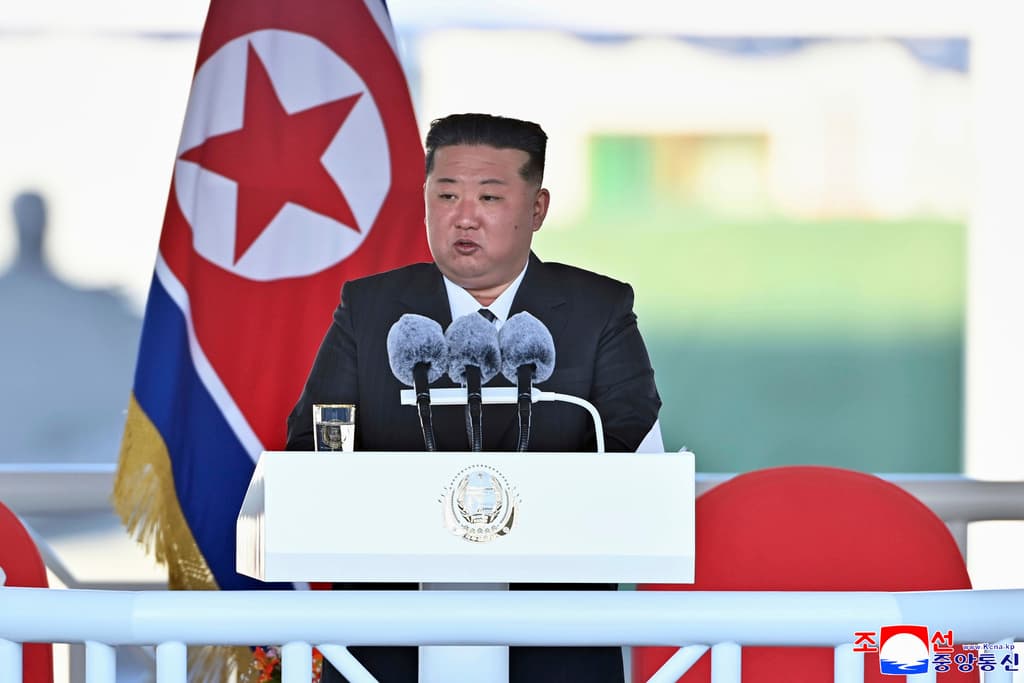
In contrast to the secrecy that surrounded the North Korean troops when they were ordered to Russia last fall, North Korea’s leader, Kim Jong-un, in lavish ceremonies, banquets, and stage shows, has proclaimed them heroes for “their feats” in “operations to liberate the Kursk region,” from which Ukrainian troops had driven out depleted Russian forces.
“Ours is a heroic army,” Mr. Kim said, avoiding any mention of the tremendous losses endured by North Korea: Of the 12,000 or so dispatched to Russia’s Kursk region, bordering eastern Ukraine, a third are believed to have been killed, mainly by Ukrainian drones. He did, however, hint at casualties when he said, “Our army is made up of the sons whose lives were given by our heroic people,” according to Pyongyang’s Korean Central News Agency. Learning from combat experience, he said his troops are “now doing what … needs to be done,” and “will do so in the future, too.”
Mr. Kim did not say if he’s sending more troops into Russia, but he’s believed to have assured President Vladimir Putin that as many as 30,000 will go there, and he continues to send hundreds of thousands of artillery shells and missiles for the Russians to rain on Ukrainian cities in the face of President Trump’s pleas for Mr. Putin to stop the fighting and talk to Ukraine’s president, Volodymyr Zelensky. It was uncertain if the generals honored at the ceremony would return to Russia, but Mr. Kim spared no effort or expense in showing his appreciation for their roles — and for combat losses that inevitably go unexplained.
At what KCNA described as an “artistic performance” honoring “commanding officers and combatants,” Mr. Kim “laid a flower before the memorial wall erected in the central hall and paid noble tribute to the martyrs who are immortal in the memory of the country and the people as the eternal stars.” In an obvious attempt at justifying the losses, he credited commanders with having “skillfully led the units to victory in overseas military operations” while “bereaved families of the martyrs” watched along with top members of the ruling Worker’s Party and military and political officers.
The whole show appeared as an elaborate effort to assuage the anger of North Koreans to whom their country’s role in the war was largely unknown until word began to leak out of the losses among inexperienced North Korean troops. Although the Korean People’s Army, including the air force and navy as well as the army, has about 1.2 million troops, it has never had to face combat since the war in Korea, which ended in a highly armed truce in July 1953.
In the outburst of publicity, the North Korean media omitted any specific mention of Russia or Ukraine and failed to offer any reason why troops had had to go “overseas.” The impression was that Mr. Kim was preparing his people for the prospect of more such operations in accordance with his much-strengthened defense treaty with Mr. Putin.
“The combatants of the armed forces of the Republic who took part in overseas military operations,” an article in the Chongnyon Jonwi, meaning Youth Vanguard, said, had “demonstrated to the whole world the transparent and outstanding ideological and spiritual superiority and fighting spirit of the KPA which no army in the world can match and the indomitable mettle of Koreans by weathering heavy gunfire in bloody life-and-death battles.”
The propaganda blitz did not specifically target South Korea or its American ally despite denunciations in the North Korean media. Separate articles have denounced joint military exercises going on now in South Korea, threatening reprisals as they always do, but have not linked the operation in Ukraine to possible war on the Korean peninsula.
Russia, however, has compensated the North Koreans by providing advanced missile technology, and American intelligence sources have reported construction of a new North Korean missile base near the Chinese border.