
A Pursuit of Family History Unveils Dark Secrets Behind an Act of Evil
Christine Kuehn grew up knowing very little about her genial, story-telling father’s family. Then a letter arrived with questions she couldn’t answer.
‘Family of Spies: A World War II Story of Nazi Espionage, Betrayal, and the Secret History Behind Pearl Harbor’
By Christine Kuehn
Celadon Books, 272 pages
If, like me, you belong to a family with dark secrets, Christine Kuehn’s haunting account of learning about a Nazi grandfather-spy and how she dealt with her family’s fraught legacy will resonate. Even if you think this disturbing story does not apply to you, it might be worth checking what you actually know about your family’s provenance.
Ms. Kuehn grew up knowing very little about her genial, story-telling father’s family. Occasionally Eberhard would make brief references to the past, to family members who had died, but he left the impression that there was not much to know. She did not question him. As with many happy American children, antecedents didn’t matter that much to a young person occupied with herself and her world.
Then a letter arrived from a screenwriter with questions about her grandfather and his ties to Nazi Germany. That seemed impossible to Ms. Kuehn and to her husband, both of whom assumed the screenwriter had the wrong Kuehn. Gradually, however, Ms. Kuehn began to wonder why her father had been so vague about family history, why he usually changed the subject when she began to inquire about it.
Ms. Kuehn also had another problem: Did she really want to know that she was related to fervent Nazis, including her father’s sister, Ruth, who, it turned out, had dated Joseph Goebbels, the minister of propaganda. Ruth would not say anything about the family’s past, but Ms. Kuehn found her aunt discussed in books about espionage.
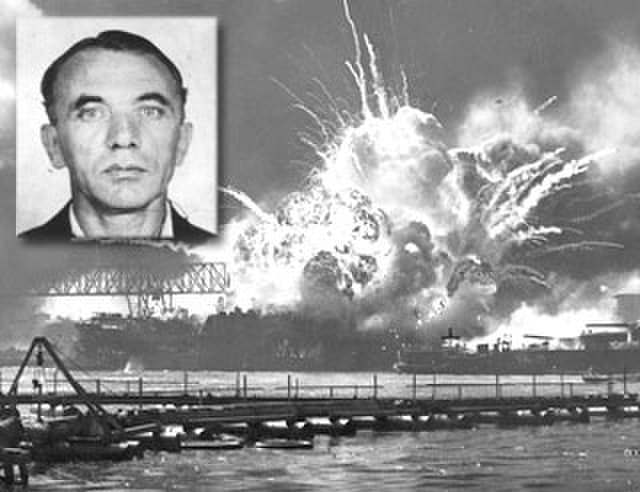
Family of Spies becomes the piecing together of a past that Ruth had done her best to destroy and that her brother had tried to forget, and then could not remember as his mental faculties failed. Ms. Kuehn’s research became sporadic and upsetting as she learned that while living in Hawaii, her grandfather had collaborated with the Japanese in their plans to bomb Pearl Harbor.
Even worse: it had been widely suspected before the attack that Otto Kuehn was a Nazi spy. J. Edgar Hoover knew about Kuehn’s activities but, like many in Hawaii, was fixated on the Japanese, regarding them as a fifth column and supposing they should be the main target of investigation. Racism was at work in the FBI’s calculations, except for one agent who had come to know the Japanese American community, appreciated their patriotism, and focused on Otto as his main suspect.
Otto Kuehn was reckless, spent lavishly, and after the Pearl Harbor attack was apprehended. What happened to him is a story in itself that it took Ms. Kuehn 30 years to figure out with help from relatives in Germany. Her grandparents, she learned, never relinquished their fealty to Nazi Germany, even expecting their son Eberhard, to return with them to Germany after Otto’s release and deportation in 1948.
Ms. Kuehn ascertained that her father refused repatriation (he had been born in Germany) and considered himself American. He joined the army and became part of the invasion of Okinawa. He haltingly told his unrelenting daughter what he knew until his memory failed, and then the whole story became too much for her until she realized that her own sense of family required that she pursue the story all the way to the end.
What that end meant, what happened to Otto Kuehn, ought to remain a part of your own experience in reading this book of discovery, as Ms. Kuehn unravels her own fitful efforts to recover the awful truth, made all the more palpable when her newly discovered German relatives pointed out how they recognized certain of her mannerisms as belonging to their Nazi kin.
A harrowing history is brought home to this American descendent of fanatical Nazis so searingly that she begins to understand why her father wanted to expunge it, to relieve his daughter of what had become for him a lifelong burden, only lifted at those moments when he could enjoy the family he had created by blocking off his connections to evil.
Ms. Kuehn’s narrative, however, is about more than her family because it renders the eerie sense provoked by the letter that arrives, or a call that is answered. that makes you aware of events that have shaped your life that you did not know even happened.
Mr. Rollyson is the author of “American Biography.”