Labor’s Awesome Challenge

This article is from the archive of The New York Sun before the launch of its new website in 2022. The Sun has neither altered nor updated such articles but will seek to correct any errors, mis-categorizations or other problems introduced during transfer.

The New York Sun

Traditionally, the journalists and academics who follow developments in organized labor have welcomed insurgent forces who promise a new and more militant direction for American unions. For example, John Sweeney’s election as president of the AFL-CIO 10 years ago was greeted as signaling the dawn of a new era of growth and revitalization. It is thus of interest that those same observers have responded to the Change to Win forces — the dissident unions that split from the federation at its recent convention — with wariness and skepticism.


According to the insurgent unions — principally the Service Employees, Teamsters, Food and Commercial Workers, and UNITE-HERE — labor has failed to stop the hemorrhaging of union workers because of a lack of imagination, toughness, and willingness to change. Their differences with the Sweeney leadership are not ideological, but rather “structural.” They argue that only a labor movement that is more centrally directed, strategically savvy, and willing to spend millions of dollars on organizing the unorganized can reverse labor’s flagging fortunes.

The Change to Win forces present a picture of youth, energy, and conviction. But there is reason to question whether they grasp the political and economic dynamics that underlie labor’s decline.


American labor has been in a state of decline, as measured by the percentage of the unionized workforce, for the past four decades. The core reasons behind labor’s troubles are familiar enough. Like the labor movements of other advanced democracies, American unions have been battered by mechanization, deindustrialization, and globalization.


But while these forces affected unions throughout the world, American unions suffered the most serious setbacks. American unions represent 12% of the workforce; by contrast, Canadian unions represent three times that proportion. Granted that Canadians have a less enthusiastic view of unfettered markets; this alone cannot explain the difference in unionization rates.

Part of the explanation can be traced to a shift in the political environment. American labor experienced major growth during the 1930s, propelled by the New Deal and Wagner Act. It grew yet again during World War II, when the Roosevelt administration pressured contractors to recognize unions. Subsequently, unions were treated as an integral part of the great American postwar success story. Even moderate Republican presidents like Eisenhower and Nixon shared this view, and refrained from challenging labor’s institutional interests.


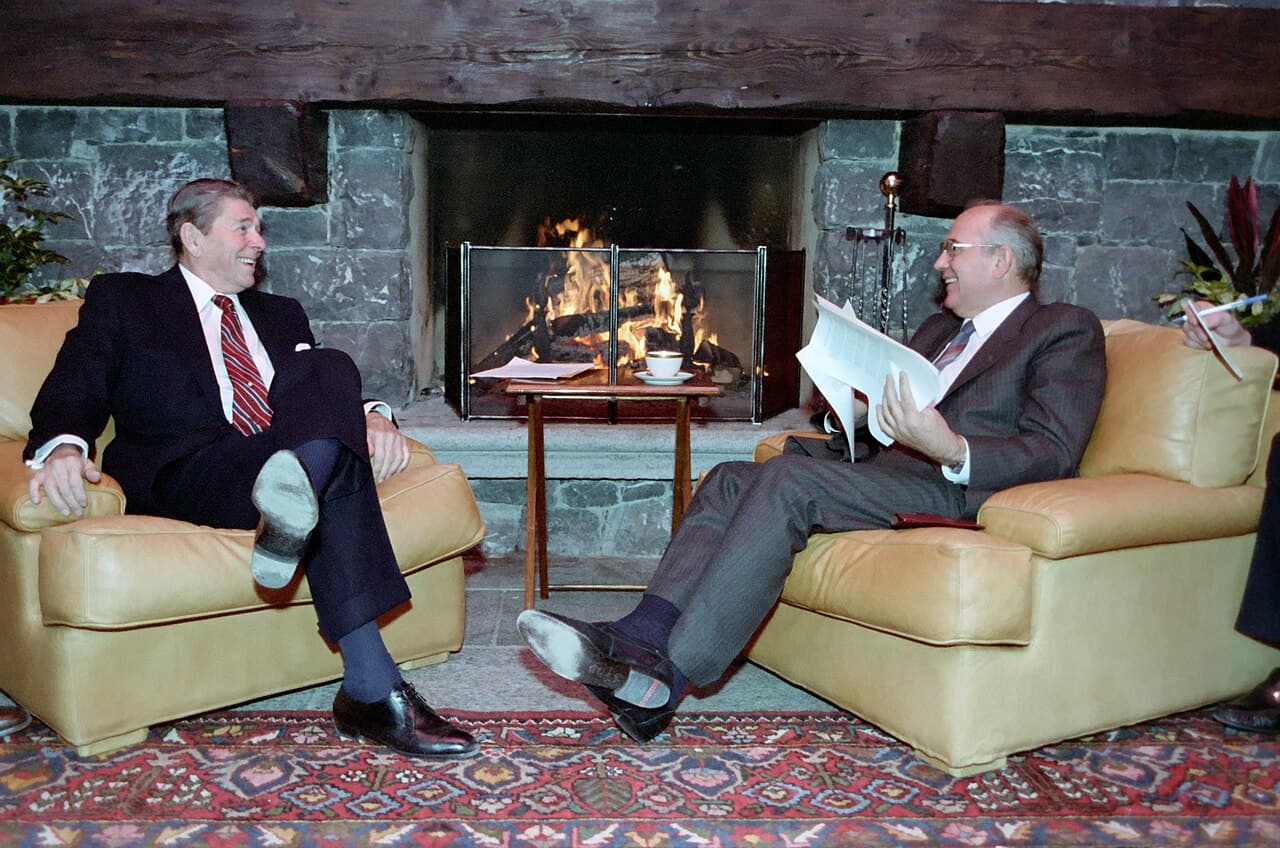
All this changed with the presidency of Ronald Reagan. Whatever Reagan’s personal sentiments — he often spoke fondly of his stint as president of the Screen Actors Guild — his administration took measures that accelerated the losses unions were suffering from technological change and deindustrialization. In particular, Reagan’s appointees to the National Labor Relations Board issued decision after decision that encouraged employers to resist unionization, fortified with the knowledge that the federal government was not likely to intervene on labor’s behalf.

The result was a huge gap between the legal status of unions in the United States and in the rest of the developed world. In Europe, Canada, and Australia, employers were expected to negotiate with unions once a majority of workers voted for union representation. In the United States, employers fired union activists, threatened to close down installations, and hired replacement workers during strikes, usually with impunity.


The shift in labor’s legal status did not occur simply because of the Republican Party’s commitment to free enterprise. Clearly, some policymakers believed that strong unions stood as an obstacle to America’s global competitiveness. They argued, though seldom publicly, that America would be better positioned to meet globalization’s challenges if its unions were rendered impotent.


But if we can assume that a reform of America’s labor laws would provide a boost to union recruitment, there is reason to question whether the impact would be as substantial as labor officials believe. During the 1930s, the struggle for union recognition was an important part of American political culture. Workers sang songs about unions, they voted for candidates who supported pro-labor legislation, they engaged in civil disobedience to secure union recognition.

While surveys show that some non-union workers would prefer union representation, the passion of the New Deal era is absent. American workers do not clamor for unions, and there is no mass constituency demanding an overhaul of our labor laws. In a competitive, globalized economy, unions are finding it increasingly difficult to convince workers about the benefits of union membership. Labor can no longer credibly claim that in the private sector union workers earned 25% more than their non-union counterparts. And where unions once functioned as the defender of workers from a capricious or bigoted management, today the federal government has taken over responsibility for ensuring that workers do not suffer from racial discrimination, sexual harassment, unsafe job conditions,and other unsavory aspects of workplace life.

All of this may help explain why labor experts, who usually greet promises of militance and new ideas with enthusiasm, have reacted to the Change to Win unions with skepticism and wariness. A resurgent labor movement is important for American workers at a time of increased inequality and would strengthen American democracy. But the hurdles to labor revival are immense: globalization, a hostile legal environment, and a workforce that is unclear about the advantages of union membership or fearful about management retribution for union activism. Thus far, no one inside or outside the ranks of labor has put forward a convincing plan to meet these monumental challenges.


Mr. Puddington is director of research at Freedom House and author of “Lane Kirkland: Champion of American Labor” (Wiley).


The New York Sun

© 2025 The New York Sun Company, LLC. All rights reserved.

Use of this site constitutes acceptance of our Terms of Use and Privacy Policy. The material on this site is protected by copyright law and may not be reproduced, distributed, transmitted, cached or otherwise used.

The New York Sun

Sign in or  create a free account

or
By continuing you agree to our Privacy Policy and Terms of Use