Paper Trail

This article is from the archive of The New York Sun before the launch of its new website in 2022. The Sun has neither altered nor updated such articles but will seek to correct any errors, mis-categorizations or other problems introduced during transfer.

The New York Sun

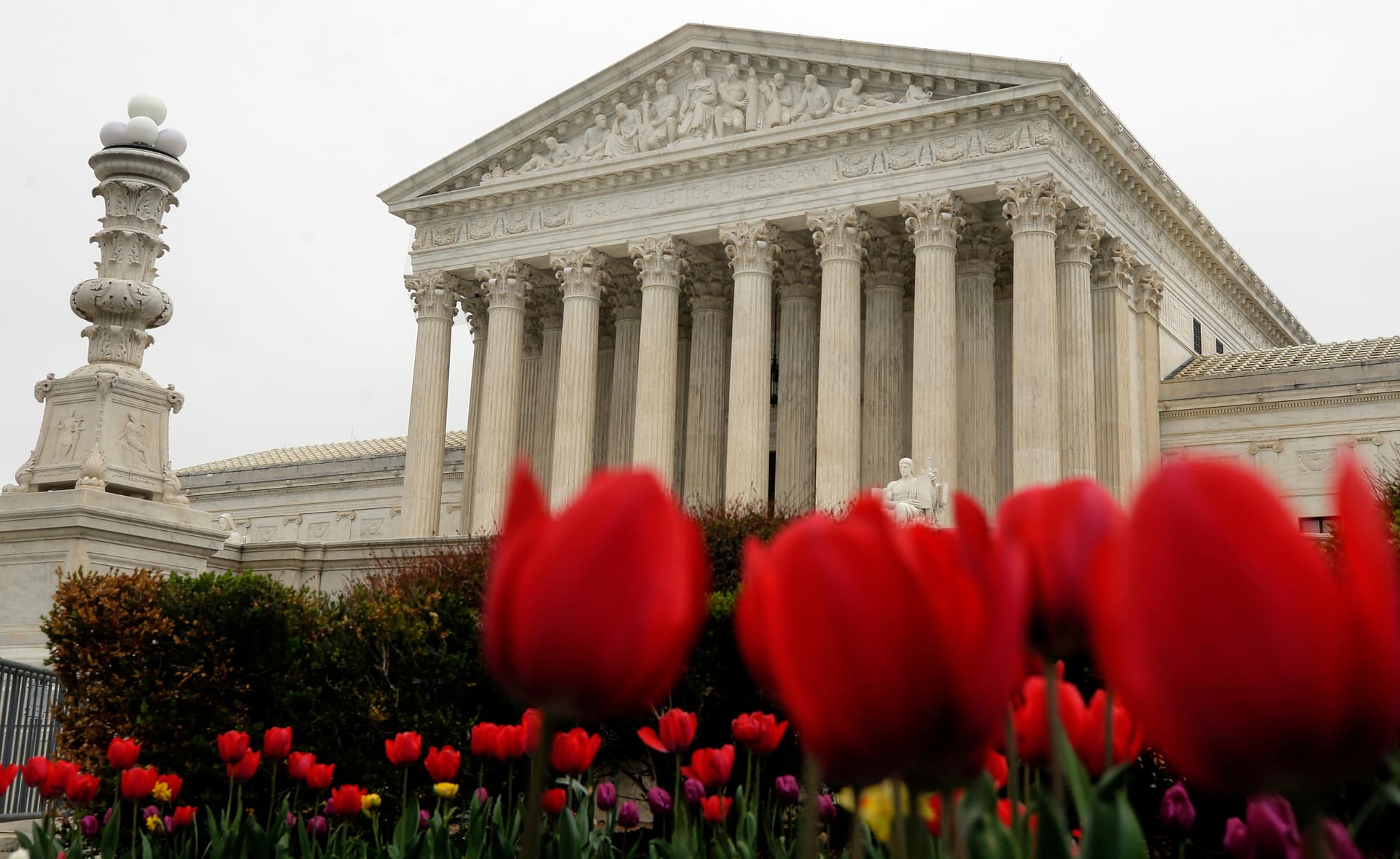
As the confirmation hearings for Judge John Roberts approach, the Senate will be reading tea leaves on how Roberts will vote on various issues, especially Roe v. Wade, which upheld a woman’s right to choose an abortion based on her constitutional right to privacy. The effort brings to mind the Supreme Court confirmation hearings of Louis D. Brandeis in 1916.


Brandeis, a progressive Boston lawyer, was the first Jew to be nominated to the Supreme Court. Southern senators were concerned he would overturn Plessy v. Ferguson, the 1896 decision upholding the constitutionality of separate but equal facilities for blacks. They began to search for some indication of his views. Brandeis had never served as a judge, so there was no record of judicial decisions, although a year earlier he had proclaimed in a Fourth of July speech at Faneuil Hall that America “recognizes racial equality as an essential of full human liberty and true brotherhood, and racial equality is the complement of democracy.”


In those days, the Senate did not interview the nominee himself, so Brandeis’s hearing was handled by his law partners at Brandeis, Dunbar & Nutter (now Nutter, McClennen & Fish). Edward F. McClennen quarterbacked the effort. From Washington, he wrote to George R. Nutter: “Do you know whether LDB has ever written any opinions, publications [or] privately which would indicate his views as to the constitutionality of the segregation laws?… [E]ven an examination book or club court brief in the Law School would be valuable.” Nutter replied: “LDB has never expressed any opinion one way or another on this subject, and as a matter of fact would approach it with an entirely open mind.”


Brandeis’s nomination was delayed for over three months, but he was ultimately confirmed, 47 to 22.


What did Justice Brandeis actually do with regard to Plessy? No direct challenge to Plessy came before the Court during his tenure from 1916 to 1939. That did not occur until Brown v. Board of Education in 1954. Two Brandeis-era cases may have provided an opportunity for the Court to overturn the old decision, but the plaintiffs in those cases were not challenging Plessy.


Brandeis joined a unanimous Court in Gong Lum v. Rice, a 1927 decision holding that a state could classify a Chinese student as “colored” in assigning him to a school. The Chinese plaintiff did not attack Plessy, instead arguing that he, like white students, should have the benefit of Plessy and not be forced to attend school with blacks.


In 1938, Brandeis joined the majority in Missouri ex rel. Gaines v. Canada, where the Court struck down a law that allowed Missouri to send blacks to law schools in other states rather than provide its own “separate but equal” law school for blacks. The plaintiff, supported by the NAACP, was not seeking to overrule Plessy, but rather was using it to require that he be allowed to attend a separate but equal school in Missouri. By emphasizing that the black school really had to be equal in all respects, this opinion became the first in a series of decisions that led to Brown v. Board of Education, which held that separate was inherently unequal.


Brandeis himself encountered discrimination after joining the Court. One of the other justices, James Clark McReynolds, was openly anti-Semitic. Justice Ruth Bader Ginsberg reports that no official photograph was taken of the Court in 1924 because McReynolds, who would have had to sit next to Brandeis based on seniority, refused to do so.


The Brandeis experience instructs us that, while we should be able to divine something of a nominee’s philosophy before confirmation, just how this philosophy may evolve or be implemented over a long tenure is unknowable and will, to some extent, depend on the specific cases that make their way to the Court.


It is perhaps ironic to note that the majority in Roe v. Wade cited Brandeis’ 1928 dissent in Olmstead v. U.S. as support for the position that there is a constitutional right to privacy. This right was first clearly articulated in an 1890 Harvard Law Review article entitled “The Right to Privacy” by Samuel Warren and his law partner Louis D. Brandeis. The Senate will certainly try to learn how Judge Roberts will deal with Brandeis’s jurisprudential legacy. But Judge Roberts himself may not know the ultimate answer.


Mr. Bohnen is a partner in the Boston law firm of Nutter McClennen & Fish LLP.


The New York Sun

© 2025 The New York Sun Company, LLC. All rights reserved.

Use of this site constitutes acceptance of our Terms of Use and Privacy Policy. The material on this site is protected by copyright law and may not be reproduced, distributed, transmitted, cached or otherwise used.

The New York Sun

Sign in or  create a free account

or
By continuing you agree to our Privacy Policy and Terms of Use