
Threatening the Expansion

This article is from the archive of The New York Sun before the launch of its new website in 2022. The Sun has neither altered nor updated such articles but will seek to correct any errors, mis-categorizations or other problems introduced during transfer.

The New York Sun

The federal government’s strong economic report on second quarter GDP growth is proof positive the Bush tax-rate reductions continue to fuel a robust economic expansion. In fact, overall economic activity in the second quarter of this year was even more vigorous than the reported 3.4% GDP growth announced by the Bureau of Economic Analysis at week’s end.


According to the BEA, private businesses reduced their inventories, but there is no indication that this inventory draw-down resulted from a lack of confidence by businesses that is leading them to reduce production. Indeed, the best indicator of business confidence, business investment in plant and equipment, rose at an annual pace of 9% last quarter. The bottom line is that even while businesses drew down their inventories, output accelerated at a well-above-average annual rate. Depleted inventories will have to be rebuilt in the near future, and with business confidence high, that is a harbinger of healthy growth ahead.


There are no theoretical limits on how long economic expansions can last. The so-called “business cycle” is really a “policy cycle” as economic growth, rising revenues, and a prosperous country tempt Congress, the president, state legislatures, and governors to expand government programs to buy votes, which creates political pressure to increase taxes to pay for the spending. Frequently in the past, wrong-headed theories of monetary policy at the Federal Reserve Board – which hold that persistently high rates of economic growth are inflationary – have led the Fed to stall economic growth by starving the economy of liquidity.


To date, at least, the Fed doesn’t seem inclined to trigger an economic downturn by restricting liquidity unduly. The Congress and state legislatures, however, show every sign of being up to their old tricks of taxing and spending the economy into the dirt. States like Virginia, which raised taxes last year using deficits as the excuse, are now enjoying large and growing surpluses, but rather than cutting tax rates, they are squandering the surpluses on higher spending.


The Republican-controlled Congress also continues to spend money like a drunken sailor. While the surging economy raised revenues and cut the budget deficit some $100 billion beneath the level projected in January – a huge “prosperity dividend” – Congress remains on a profligate spending binge that threatens continued economic growth. That is why it is a priority for the House and Senate leadership to move quickly and extend or make permanent the capital gains and dividends tax-rate reductions before the uncertainty over the fate of these provisions and out-of-control federal spending cause investors to hold back and send the economy south.


Liberals, of course, focus on long-term deficit projections rising into the stratosphere and claim taxes are too low. To the contrary, higher taxes would only derail our prosperity and therefore are more likely to worsen the deficit picture than improve it. Long-term budget deficit projections are driven by one thing and one thing only: a projection that long-term federal spending will rise from its current level of about 20% of GDP to more than one-third by mid-century. It’s the spending, stupid.


While Congress has yet to raise taxes, there appears to be growing sentiment by some Republicans in Congress to raise the Social Security wage cap under the guise of “reform.” Moreover, every day the Bush capital gains and dividends tax-rate reductions remain in limbo acts just like a tax cut in waiting. The uncertainty built into U.S. tax policy as the expiration date for the Bush tax rate reductions on capital gains and dividends nears threatens to cause investors to begin pulling back, which will quickly affect business confidence and performance. Thus, every day that goes by without a clear indication from Congress that the tax-rate reductions will be extended undermines the economic expansion.


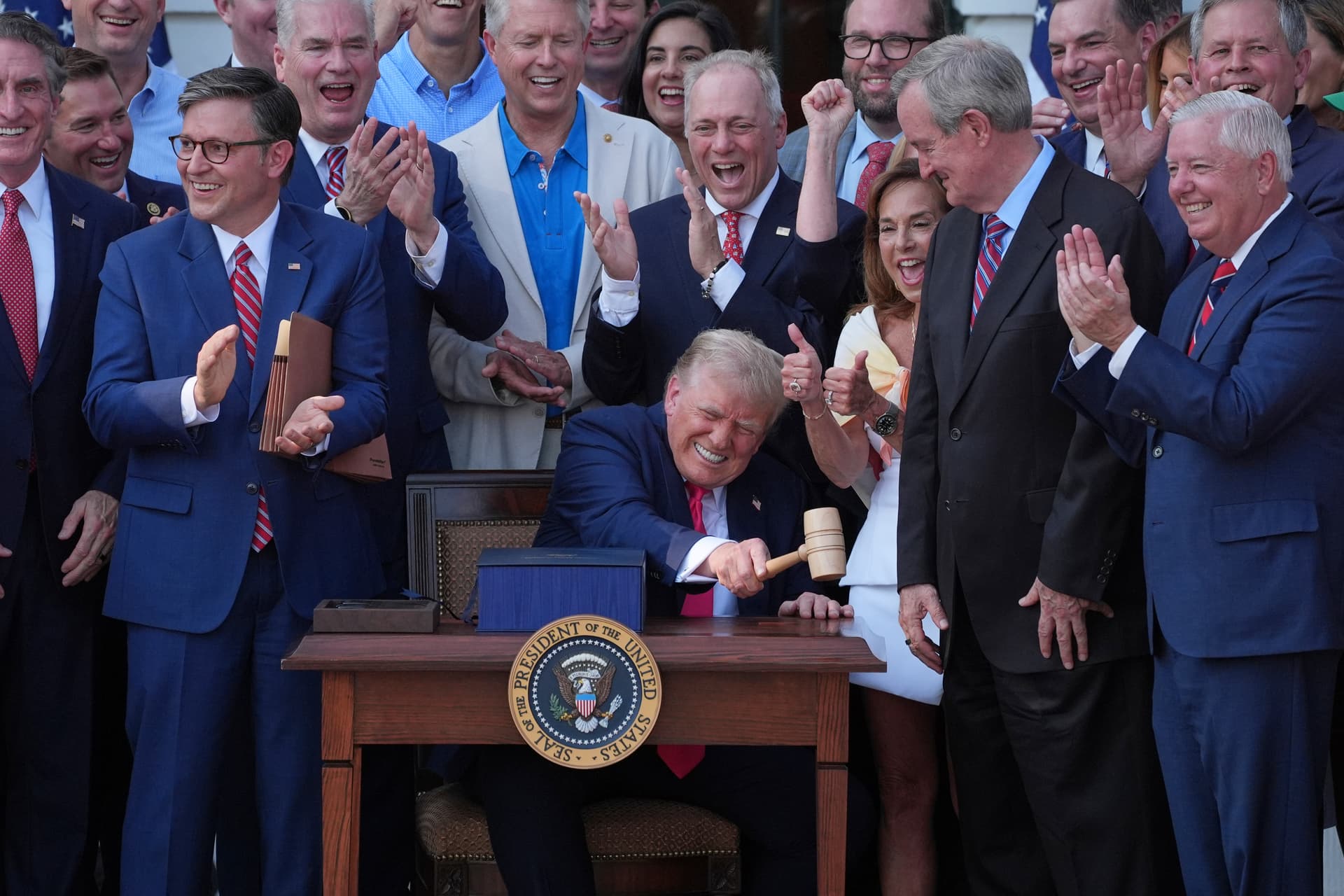
I hope the president will take his veto pen out of mothballs and put a stop to this runaway spending. I also urge the House and Senate leadership to make a priority the extension of the capital gains and dividends tax-rate reductions before the uncertainty over the fate of these provisions causes investors to hold back and undermine the expansion.


Mr. Kemp is founder and chairman of Kemp Partners and honorary co-chairman of the Free Enterprise Fund.


The New York Sun

© 2025 The New York Sun Company, LLC. All rights reserved.

Use of this site constitutes acceptance of our Terms of Use and Privacy Policy. The material on this site is protected by copyright law and may not be reproduced, distributed, transmitted, cached or otherwise used.

The New York Sun

Sign in or  create a free account

or
By continuing you agree to our Privacy Policy and Terms of Use