Overcoming the National Construction Crisis Will Be Critical to Making America’s Infrastructure Great Again

The collapse of California’s proposed high-speed railroad line between San Francisco and Los Angeles is a dramatic warning.
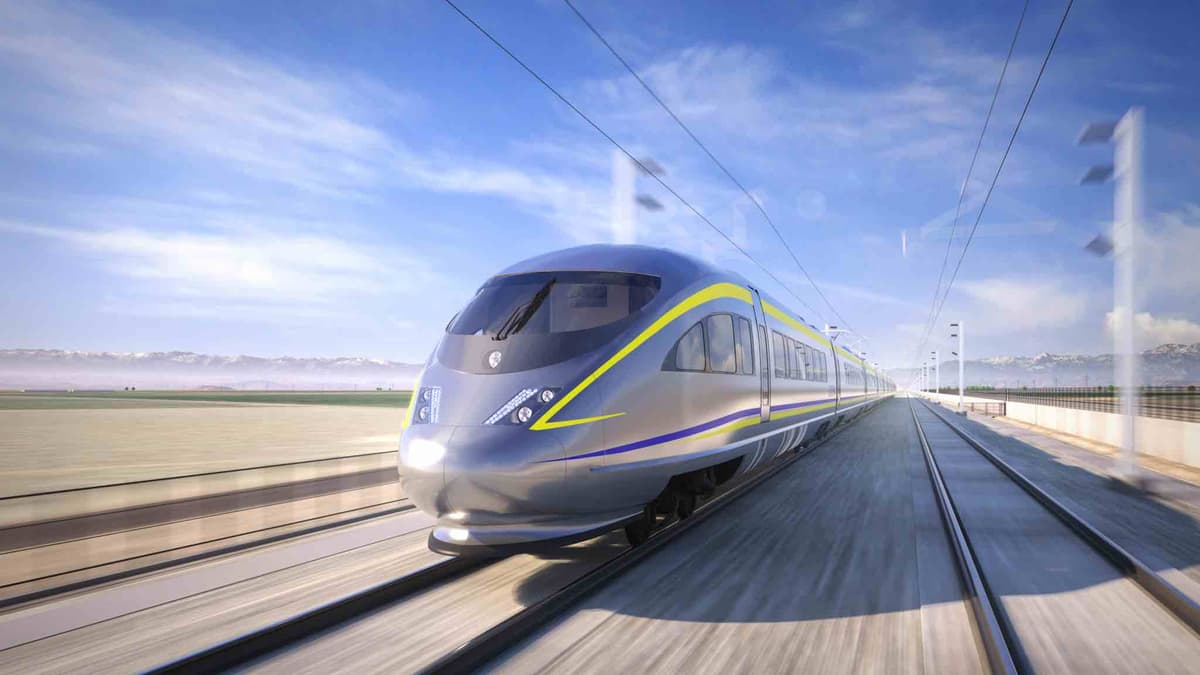

Courtesy of the California High Speed Rail Authority
An artist's rendering of the all-electric, 200-mph bullet train that California hopes will ferry people between San Francisco and Los Angeles. Courtesy of the California High Speed Rail Authority

America is in the middle of an enormous crisis of construction failure. The collapse of California’s proposed high-speed railroad line between San Francisco and Los Angeles is a dramatic warning that something is profoundly wrong with the American infrastructure system.

The California high-speed rail project is a tragic joke that will never be completed, as I explained last week. When proposed in 2008, it was going to cost $33 billion and be finished by 2020. Costs have skyrocketed while construction has collapsed. Now this boondoggle is projected to cost $128 billion and rising. At the current rate it will not be completed in this century. 

What makes the California collapse so painful is the reality that other countries have successfully built and operated high-speed rail systems. One survey found the 10 fastest high-speed rail systems were in Communist China, Germany, France, Japan, Morocco, Spain, Korea, and Italy. America could not even match Morocco.

The most advanced train in the world is the Chinese Maglev, which runs between downtown Shanghai and the nearby airport at 186 miles per hour. It covers the 19 miles in 8 minutes.

The American inability to build high-speed trains on time and within budget is a symptom of the deeper crisis of public works infrastructure. It is collapsing because of bureaucracy, wildly overregulated environmental issues, and union work rules. 

All of this is compounded by a culture of “show me the money” which grossly overpays consultants, design engineers, and other people who contribute little or nothing to the projects.

For example, the most expensive mass transportation construction project in the world is New York’s Second Avenue phase three project. It is estimated at $4.3 billion per mile. 

New York University’s Marro Institute of Urban Management estimated New York’s project costs eight to 12 times as much as projects in Italy, Istanbul, Sweden, Paris, Berlin, or Spain.

The former president of the American Society of Civil Engineers, K.N. Gunalan, has said that American infrastructure projects “have layers and layers of bureaucracy built into it,” Bloomberg reported in February 2023. “I am not a native of New York, but I have worked on a few projects [there]. I honestly don’t know how people do business in New York because of the bureaucracy.” 

Greed, incestuous contracting, over design, and over consulting are costing New Yorkers $656 million just for this one subway extension. Yet, New York is not alone. As Bloomberg further reported, “off-the-rails costs and delays have also bedeviled urban transit efforts in many other US cities, too.”

These include projects like the Regional Connector and Purple Line Extension at Los Angeles, as well as the Boston-area Green Line extension, which “have all seen their soft costs — which include design, planning, insurance and other non-material expenses — rise to 25-30% of total hard costs,” Bloomberg added. In Italy, by contrast, “soft costs make up only 10% of hard costs; in France, Spain and Turkey, they are typically between 5-10%.”

China has 29,000 miles of high-speed rail. America has none. Japan has been running a bullet train between Tokyo and Kyoto for 60 years. We can’t seem to match this 1965 achievement. 

New construction is only part of the huge crisis of public works construction in America. Scientific American reported in 2023 that there were 42,000 bridges that fell short of the national bridge inspection standard.

Public works in America have grown too expensive and slow. As a result, much of the American system is decaying and virtually all of it is falling behind the leading countries in the world. 

We are simply not going to be able to compete with other countries if our transportation system is falling apart.

We are not going to be able to keep up with the continuous improvements and innovations around the world if we don’t dramatically reduce the bureaucracy, cut the regulatory compliance time, and insist on union work rules that emphasize productivity over special privileges.

Congress and the Trump administration should launch a comprehensive review that starts with looking at best practices and achievements around the world. They should define the gap in American performance — and boldly lay out the changes necessary if America is to be the most productive and rapidly improving country in the world again.

Congressional delegations should visit the best projects around the world and see what is possible with the right reforms. The American people need to be educated into how bad the gap is — and how much it costs us in economic development, quality of life, and safety.

We need an American Construction Renaissance bill which lays the groundwork of reform so we can match — and then surpass — all our competitors in effective, affordable, state of the art public works. This is a key part of making America great again.


The New York Sun

© 2025 The New York Sun Company, LLC. All rights reserved.

Use of this site constitutes acceptance of our Terms of Use and Privacy Policy. The material on this site is protected by copyright law and may not be reproduced, distributed, transmitted, cached or otherwise used.

The New York Sun

Sign in or  create a free account

or
By continuing you agree to our Privacy Policy and Terms of Use