


Personal and Family Histories Illuminate the Work of Two Artists and a Collector
Certain scholarly insights cannot be generated without understanding how the artist’s family curated and financed his work, argues the author of a new book on Édouard Manet.
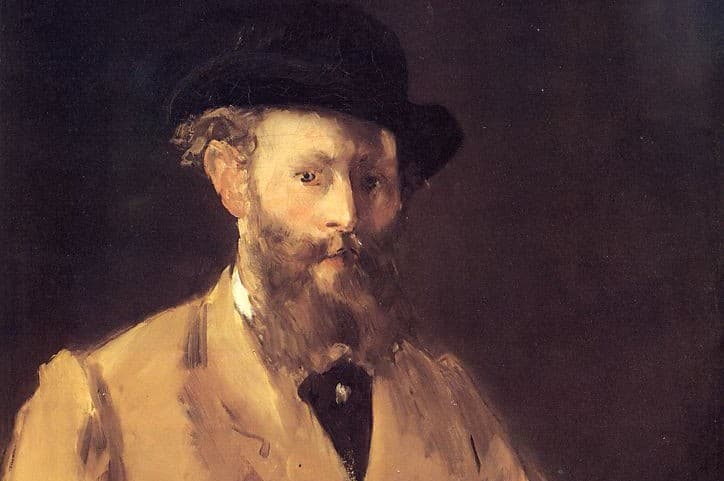
‘Manet: A Model Family’
Edited by Diana Seave Greenwood
Princeton University Press, 224 pages
‘Barnett Newman: Here’
By Amy Newman
Princeton University Press, 728 pages
‘Chasing Beauty: The Life of Isabella Steward Gardner’
By Natalie Dykstra
Mariner Books, 512 pages
In an essay included in “Manet: A Model Family,” Diana Seave Greenwood observes that “biographical approaches to art history have, for the past few decades, been out of scholarly fashion.” When Édouard Manet’s family members get a mention, it is always in the service of discussing a particular painting that “shows a family member … presented in a broader thematic or theoretical context.”
The trouble with excluding biography from a discussion of the artist, Ms. Greenwood argues, is that certain scholarly insights cannot be generated without, in Manet’s case, understanding not only how members of his family became part of his painting but how they, in turn, curated and financed the artist’s body of work, organizing it and making it accessible to the very scholars who then want to expunge biography from their perceptions of that work.
In this kaleidoscopic exhibition and examination of Manet’s work from so many points of view — including “Paris is Mother;” “Suzanne: The Private Portraits;” “Madame Auguste Manet and the Painting of Modern Life” — the limitations of a single biographical narrative are surmounted as, in different guises, family members come into focus as the vital constituent parts of the artist’s life and work.
That you cannot separate an artist’s biography from his art is similarly announced in “Barney,” the title of the introduction to “Barnett Newman: Here.” You have to know something about him, the artist who said “it’s only after man knows where he is that he can ask himself ‘who am I’ and ‘where am I going.’”
Amy Newman (no relation to the artist) has to quote him in order to buttress her description of his largest and smallest paintings (for example, “The Wild” and “Onement I”) that portray “a primeval natural vista, a colossal remnant of an ancient civilization, or an individual soul in Meditation.”
Ms. Newman emphasizes that the artist, Barney, “was, eponymously, the ‘new man’ (like Henry James’s Christopher).” The artist’s quest to connect himself to places of origin is treated in true biographical fashion as “the corner Newman backed himself into, less by design — psychologically, he had no choice — than by standards, doubts, and superego.”
To understand the artist, his methods and sources, you have to inquire into his biography and the history out of which he operates; that is the theme of Ms. Newman’s book and, of course, of all biography. She has produced a work commensurate with the huge ambition and size of Newman’s paintings, drawing on interviews, oral histories, and heretofore unseen correspondence.
So then look at how Natalie Dysktra begins her biography of the philanthropist Isabella Stewart Gardner, who decided to structure her understanding of art by encasing her collection in a palace that is itself a work of art. From the opening of her self-named museum in 1903, “Visitors were then, as today, drawn in by the expanse and revelation of the courtyard and galleries, by the way one moves from outside to inside, as if experiencing the light and shadow of a Venetian day. No single artwork appears in isolation but rather in assemblages or tableaux of historical, cultural, and personal import.”
Ms. Dysktra’s language is evocative not only of Gardner’s approach to art but of an approach to biography itself, which moves “from outside to inside,” looking behind the facades of individuals and the edifices they have constructed, sometimes to hide and sometimes to reveal themselves.
A visit to the Gardner museum is tantamount to bursting the bounds of any narrow definition of the scholarly pursuit of art as the visitor gazes not only on pictorial masterpieces but on rare books, prints, porcelains, and fine furniture — all of which reflect the taste of one collector, and yet also reveal how the biography of an American original bursts the bounds of ego, creating that place for art that Manet’s family and Newman’s canvases sought to impress upon the world.
Mr. Rollyson’s writing about art and biography appears in his collection, “Essays in Biography.”