
Planned Parenthood in the Crosshairs: How a Billing Dispute Could Cost the Organization $1.8 Billion and Threaten Its Viability
Texas and Louisiana are accusing the national network of fraudulently billing Medicaid for services provided while disqualification orders were before the courts.
Planned Parenthood, the country’s largest network of reproductive health clinics, is staring down the possibility of a $1.8 billion penalty after a federal appeals court said Texas and Louisiana can press ahead with claims that the organization illegally billed Medicaid.
At the core of the lawsuit is a consequential yet straightforward question: Can a healthcare network continue to bill Medicaid after a state has formally disqualified it, if courts temporarily allow it to continue treating patients?
The plaintiffs — Texas and Louisiana — argue that once Planned Parenthood’s eligibility ended, every reimbursement claim it submitted was fraudulent, no matter what services had been provided. Planned Parenthood counters that it was acting under binding court orders that authorized the billing while appeals were underway.
“This isn’t about whether the care was real. Patients received birth control, cancer screenings, and testing,” a professor of law at UC Davis, Mary Ziegler, tells the New York Sun. “The fight is about whether Planned Parenthood was legally entitled to bill Medicaid during that period.”
Critics of the organization say the law is clear.
“Under the False Claims Act, funds obtained from the government while ineligible, even if collected under a court order that is later overturned, must be repaid,” an assistant professor at the Catholic University of America, Michael News, tells the Sun.
“Planned Parenthood’s lawyers were certainly aware of the risks of collecting taxpayer funds while these injunctions were in effect. Planned Parenthood collected these funds anyway. Forcing Planned Parenthood to reimburse Texas and Louisiana would not be a novel or unconventional ruling.”
Planned Parenthood sees it differently: it says the reimbursements were lawful because judges explicitly permitted them. That distinction — billing fraud versus contested eligibility — now threatens to determine whether the group owes nearly $2 billion including penalties, a sum that could threaten its survival in some states.
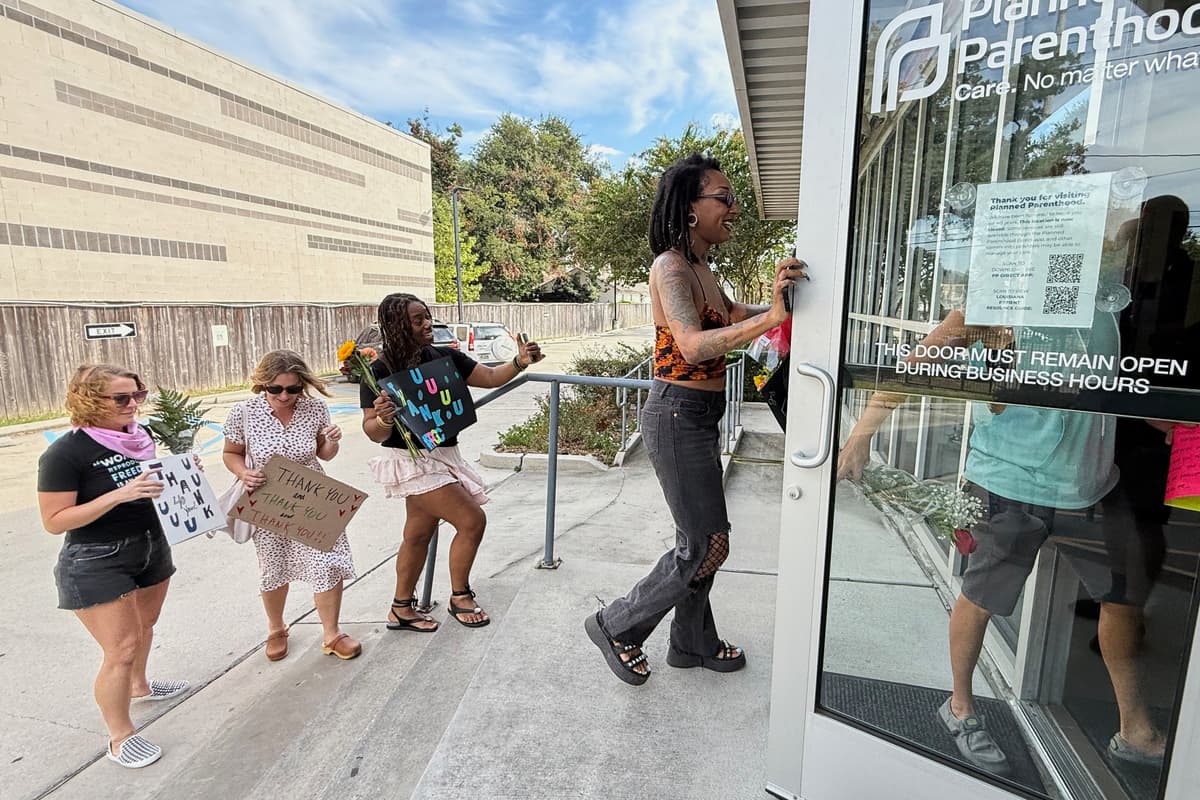
Planned Parenthood says financial and political pressures have already taken a toll on the organization, citing those as reasons for closing its only two clinics in Louisiana this week after 40 years in operation.
How a Technical Dispute Escalated
The fight dates back a decade. Undercover videos released in 2015 accused Planned Parenthood of selling fetal tissue. Multiple investigations later found no evidence of wrongdoing, yet the footage fueled a political backlash, prompting move in Texas and Louisiana to cut the group from Medicaid.
Planned Parenthood challenged those moves in court, and while litigation unfolded, judges allowed its clinics to continue serving Medicaid patients. During that period, the organization submitted millions of dollars in claims for routine services.
To the states, those claims were improper from the day the termination notices were sent out. To Planned Parenthood, the claims were proper because the injunctions gave them continuing legal authority to bill.
“This is an unusual case because it’s targeting Planned Parenthood. Planned Parenthood relied on a court order, and the states of Texas and Louisiana continued to pay Planned Parenthood during that time. It’s not as though Planned Parenthood was acting without the states’ knowledge,” the associate director for women’s health policy at the Henry J. Kaiser Family Foundation, Laurie Sobel, tells the Sun.
“They continued seeing Medicaid patients, submitting claims, and the states were paying.”
For anti-abortion advocates, that line of reasoning lets Planned Parenthood hide behind technicalities.
“Allowing states to sue Planned Parenthood and other abortion providers for Medicaid fraud is highly significant. Planned Parenthood receives hundreds of millions of dollars of Medicaid,” the founder of Liberty Counsel, Mat Staver, tells the Sun. “This case not only can stop abortion funding via Medicaid, but there are also huge civil fines and criminal penalties for Medicaid fraud.”
A Multibillion-Dollar Question
The disputed amount is roughly $17 million in reimbursements; however, because the case is being brought under the False Claims Act — a statute designed to punish deliberate fraud — the potential penalty balloons to nearly $1.8 billion.
For the states, that figure represents accountability for years of unlawful billing. For Planned Parenthood, it is a punitive attempt to bankrupt the organization for serving low-income patients under court supervision.
“If Planned Parenthood actually had to pay that kind of penalty, it would be devastating for the organization,” says Ms. Ziegler. “It would also have significant effects because Planned Parenthood is such a major provider, not only of abortions but also of a variety of other forms of health care, particularly in underserved areas.”
Critics argue that patients would still have options.
“In the absence of Planned Parenthood, women can obtain health care at the over 9,000 federally qualified health care centers throughout the country,” Ms. Ziegler says. “Also, in the absence of Planned Parenthood, many women will obtain life-affirming care and assistance from the over 2,700 pro-life pregnancy help centers in the United States.”
The director of legal affairs for Susan B. Anthony Pro-Life America, Katie Daniel, concurs that, “for Planned Parenthood, this case is as existential as it was preventable.”
“They kept billing Medicaid after being disqualified,” she noted. “Should a judgment come down against them, the cause sits squarely on their shoulders.”
Appeals Court Allows Scaled-Back Case to Proceed
In 2023, United States District Judge Matthew Kacsmaryk sided with the states and ordered Planned Parenthood to face trial, finding the claims of fraud plausible. That ruling blurred the distinction between fraudulent billing and contested eligibility — a distinction that Planned Parenthood insists is critical.
The Fifth Circuit Court of Appeals narrowed the scope in February 2025, ruling that Planned Parenthood’s lawyers could not be held liable for advising affiliates to continue billing. This left intact the core dispute: whether Planned Parenthood itself “knowingly” submitted false claims.
To the states, termination notices ended eligibility. To Planned Parenthood, those notices were suspended by court orders, meaning its billing was lawful.
“I don’t think you’d have any choice but to appeal it,” Ms. Sobel says. “And these plaintiffs, I don’t think, would go away either. This is headed toward the Supreme Court one way or another.”
Broader Stakes in Washington and Beyond
Although the fight is centered in Texas and Louisiana, the outcome could have consequences across the country. If states succeed, they may be emboldened to use fraud statutes to target other providers in politically sensitive areas of care.
To the likes of Liberty Cousel’s Mr. Staver, the lawsuit is not just about past Medicaid reimbursements; it represents an opportunity to reshape the funding landscape for reproductive healthcare providers permanently.
Planned Parenthood did not respond to the Sun’s request for comment.