

Trump’s Tactics Toward Canada Suggest He Underestimates Resolve of America’s Neighbor to the North
By CONRAD BLACK
|The serious and knotted verse of Hart Crane has been washed away by the great waves of time, crashing on the shore to pull the culture’s abandoned works down into the sea.

Published:
Updated:
Hart Crane (1899–1932) is as good an example of recent forgetfulness as we have — a major figure before his suicide at age 32. Although he still has admirers, his dense poetry in the high modern style (born from internalizing the world-bestriding poetry of T.S. Eliot) has no purchase on the stripped-down free verse that dominates academic poetry in America these days. And so the serious and knotted verse of Crane is washed away by the great waves of time, crashing on the shore to pull the culture’s abandoned works down into the sea.
That’s a shame, for his major work — an epic called “The Bridge,” published in 1930, inspired by the Brooklyn Bridge, near which Crane lived — is in its way an answer to Eliot’s “The Waste Land.” Where Eliot saw only the shattering of culture, Crane perceived in the intersection of grand architecture and dynamic construction the possibility of something more optimistic than just a wasteland in modernity.
For his birthday today, July 21, it’s worth looking at his 1926 poem “At Melville’s Tomb,” perhaps the most powerful of his pre-“Bridge” poems in illustrating his thick kind of modernism. The poem takes its force from a kind of endless metonymy: the slide of a thing into something associated with it, and then the slide of that new thing into something associated with it. And on and on, until we are as far from the original as we can reach. The chain is always threatening to break, yet Crane’s rich language and seriousness of purpose keep us from ending our suspension of disbelief as we follow along. He insists that all this means something deep, and we believe him, even when we can’t quite see what that deep meaning is.
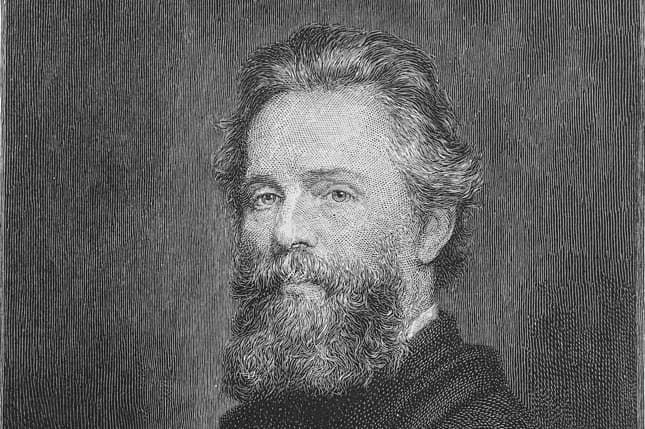
The reader of “At Melville’s Tomb” needs to start with the fact that Herman Melville doesn’t actually have a tomb. He’s buried at Woodlawn Cemetery at the Bronx, at a site that has neither the ledge Crane mentions in the poem’s first line, nor a sightline to the shore. Yet by the magic of metonymy, Crane forces us to take the ocean itself as Melville’s tomb, by his association with the sea. And then we slip to the sea’s association with the bodies of the drowned, and then to the dead rising, and then to what the dead might see among the stars, until Crane brings it all back with his strange, difficult almost beyond meaning conclusion: “High in the azure steeps / Monody shall not wake the mariner. / This fabulous shadow only the sea keeps.”
By CONRAD BLACK
|
By MATTHEW RICE
|
By GEORGE WILLIS
|
By MATTHEW RICE
|
By CAROLINE McCAUGHEY
|
By ROSS ANDERSON
|
By MARIO NAVES
|
By CARLOS SOUSA
|Hart Crane (1899–1932) is as good an example of recent forgetfulness as we have — a major figure before his suicide at age 32. Although he still has admirers, his dense poetry in the high modern style (born from internalizing the world-bestriding poetry of T.S. Eliot) has no purchase on the stripped-down free verse that dominates academic poetry in America these days. And so the serious and knotted verse of Crane is washed away by the great waves of time, crashing on the shore to pull the culture’s abandoned works down into the sea.
That’s a shame, for his major work — an epic called “The Bridge,” published in 1930, inspired by the Brooklyn Bridge, near which Crane lived — is in its way an answer to Eliot’s “The Waste Land.” Where Eliot saw only the shattering of culture, Crane perceived in the intersection of grand architecture and dynamic construction the possibility of something more optimistic than just a wasteland in modernity.
For his birthday today, July 21, it’s worth looking at his 1926 poem “At Melville’s Tomb,” perhaps the most powerful of his pre-“Bridge” poems in illustrating his thick kind of modernism. The poem takes its force from a kind of endless metonymy: the slide of a thing into something associated with it, and then the slide of that new thing into something associated with it. And on and on, until we are as far from the original as we can reach. The chain is always threatening to break, yet Crane’s rich language and seriousness of purpose keep us from ending our suspension of disbelief as we follow along. He insists that all this means something deep, and we believe him, even when we can’t quite see what that deep meaning is.
The reader of “At Melville’s Tomb” needs to start with the fact that Herman Melville doesn’t actually have a tomb. He’s buried at Woodlawn Cemetery at the Bronx, at a site that has neither the ledge Crane mentions in the poem’s first line, nor a sightline to the shore. Yet by the magic of metonymy, Crane forces us to take the ocean itself as Melville’s tomb, by his association with the sea. And then we slip to the sea’s association with the bodies of the drowned, and then to the dead rising, and then to what the dead might see among the stars, until Crane brings it all back with his strange, difficult almost beyond meaning conclusion: “High in the azure steeps / Monody shall not wake the mariner. / This fabulous shadow only the sea keeps.”
Already have a subscription? Sign in to continue reading
Cancel anytime
By continuing you agree to our Privacy Policy and Terms of Service.