
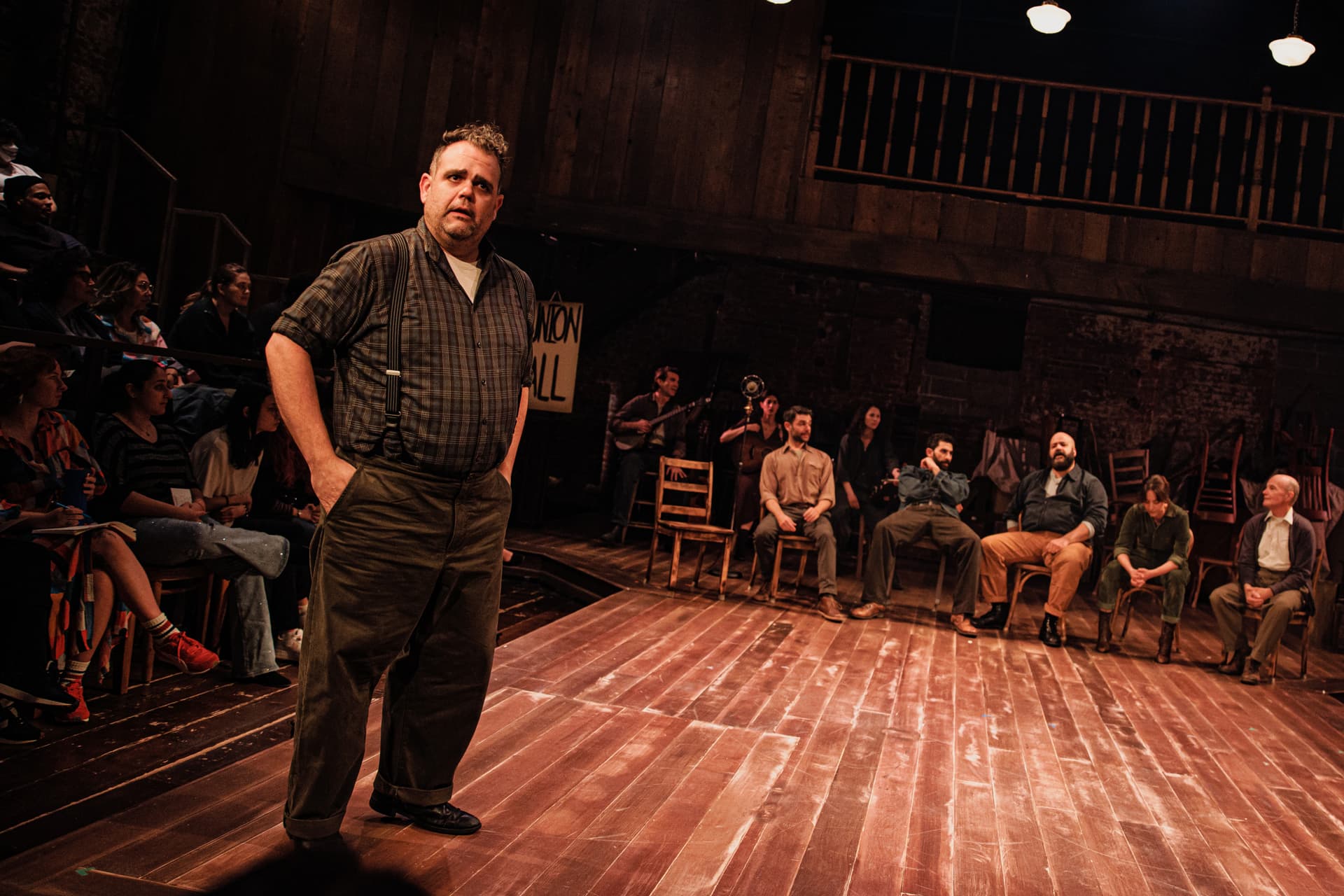
In ‘Waiting for Lefty,’ Class Struggle Remains Unfinished Business
By ELYSA GARDNER
|Hopkins’ poem alludes to the injunction to the Israelites, on the border of the promised land, to celebrate there the Feast of Tabernacles, with the fruits of the harvest, bread and wine.


Published:
Updated:
In 1865, Gerard Manley Hopkins (1844–1889), still an undergraduate at Oxford and still an Anglican, composed today’s Poem of the Day, “Barnfloor and Winepress.” The following spring, he would give up poetry for Lent. In July of that year, 1866, he would resolve to become a Roman Catholic. The rest of his life, from that time forward, is a familiar story to us now.
But in 1865, he was thinking his way forward theologically by way of his own most intuitive medium — writing this poem. Its title taken from Deuteronomy 16, the poem alludes to the Lord’s injunction to the Israelites, on the border of the promised land, to celebrate there the Feast of Tabernacles, with the fruits of the harvest, bread and wine.
In four stanzas of tetrameter couplets, Hopkins connects this harvest with Christ’s body and blood, the feast of Tabernacles with the sacrifice of the cross. As the poem makes most urgently clear for its own author, the Eucharist becomes the feast of abundance, uniting those who receive it with that sacrifice — “we are so grafted on His wood” — and, by implication, the promised land of eternal life.
By ELYSA GARDNER
|
By DONALD KIRK
|
By LAWRENCE KUDLOW
|
By ROSS ANDERSON
|
By MATTHEW RICE
|
By THE NEW YORK SUN
|
By LUKE FUNK
|
By BRADLEY CORTRIGHT
|In 1865, Gerard Manley Hopkins (1844–1889), still an undergraduate at Oxford and still an Anglican, composed today’s Poem of the Day, “Barnfloor and Winepress.” The following spring, he would give up poetry for Lent. In July of that year, 1866, he would resolve to become a Roman Catholic. The rest of his life, from that time forward, is a familiar story to us now.
But in 1865, he was thinking his way forward theologically by way of his own most intuitive medium — writing this poem. Its title taken from Deuteronomy 16, the poem alludes to the Lord’s injunction to the Israelites, on the border of the promised land, to celebrate there the Feast of Tabernacles, with the fruits of the harvest, bread and wine.
In four stanzas of tetrameter couplets, Hopkins connects this harvest with Christ’s body and blood, the feast of Tabernacles with the sacrifice of the cross. As the poem makes most urgently clear for its own author, the Eucharist becomes the feast of abundance, uniting those who receive it with that sacrifice — “we are so grafted on His wood” — and, by implication, the promised land of eternal life.
Already have a subscription? Sign in to continue reading
Cancel anytime
By continuing you agree to our Privacy Policy and Terms of Service.
Cancel anytime