


Ohio Governor’s Race Tilts Toward Democrats After Ramaswamy’s Controversial Attack Ad
By JOSEPH CURL
|In this sonnet, with its modified Petrarchan rhyme scheme, the speaker envisions himself as a fallen world, in whose ultimate fiery destruction lies the hope of restoration.
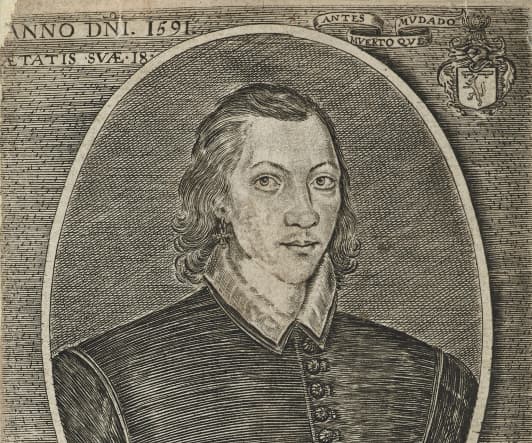
In 1615, John Donne (1572–1631) entered, with some reluctance, into holy orders in the Church of England. His sequence of Holy Sonnets, addressing God, reflect the internal conflict of one who submits unwillingly to, believes imperfectly in, and loves inadequately the great object of his submission, belief, and love. In this sonnet, with its modified Petrarchan rhyme scheme, the speaker envisions himself as a fallen world, in whose ultimate fiery destruction lies the hope of restoration.
By JOSEPH CURL
|
By DAVID JONES
|
By A.R. HOFFMAN
|
By GEORGE WILLIS
|
By DAVID JONES
|
By JOSEPH CURL
|
By HOLLIE McKAY
|
By HOLLIE McKAY
|In 1615, John Donne (1572–1631) entered, with some reluctance, into holy orders in the Church of England. His sequence of Holy Sonnets, addressing God, reflect the internal conflict of one who submits unwillingly to, believes imperfectly in, and loves inadequately the great object of his submission, belief, and love. In this sonnet, with its modified Petrarchan rhyme scheme, the speaker envisions himself as a fallen world, in whose ultimate fiery destruction lies the hope of restoration.
Already have a subscription? Sign in to continue reading
Cancel anytime
By continuing you agree to our Privacy Policy and Terms of Service.
Cancel anytime