
An Alaskan Mystery Buried in Pennsylvania
By CARL ROLLYSON
|Trumbull Stickney gives us an American picture of promise unfulfilled. Even his works from his twenties are not yet what his promise might have promised.

Published:
Updated:
Promise is a deadly thing. Cyril Connolly once described it as though promise were an English disease: a condition that elevates young writers and then leaves them unfulfilled — that makes them shoot to green heights and then go to seed.
Trumbull Stickney (1874–1904) gives us a American picture of promise unfulfilled. He died young, of a brain tumor at age thirty, but even his works from his twenties are not yet what his promise might have promised. And make no mistake, Stickney had promise. He was editor of the Harvard Monthly while an undergraduate and then became the first American to earn a doctorate of letters from the Sorbonne. He returned to teach Classics at Harvard only a year before his death.
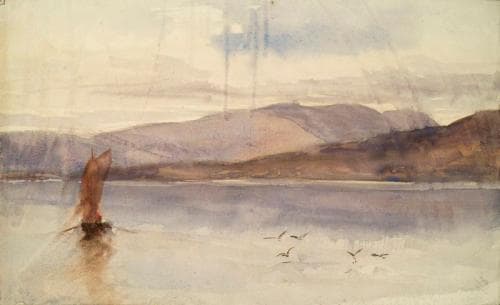
“In the Past” is an odd and interesting construction that shows both his promise and its unfulfillment. In eleven quatrains, rhymed abab, he deliberately wavers between trimeter and tetrameter, leaving us as uncertain as the poem’s boatman. The speaker emerges as a dead soul, lost on a dead lake — and “That boatman am I.” And yet, sometimes the light breaks through the sad, dead depression of a lost soul — and “The heart is alive of the boatman there: / That boatman am I.”
By CARL ROLLYSON
|
By BRADLEY CORTRIGHT
|
By LAWRENCE KUDLOW
|
By THE NEW YORK SUN
|
By BENNY AVNI
|
By LUKE FUNK
|
By BRADLEY CORTRIGHT
|
By THE NEW YORK SUN
|Promise is a deadly thing. Cyril Connolly once described it as though promise were an English disease: a condition that elevates young writers and then leaves them unfulfilled — that makes them shoot to green heights and then go to seed.
Trumbull Stickney (1874–1904) gives us a American picture of promise unfulfilled. He died young, of a brain tumor at age thirty, but even his works from his twenties are not yet what his promise might have promised. And make no mistake, Stickney had promise. He was editor of the Harvard Monthly while an undergraduate and then became the first American to earn a doctorate of letters from the Sorbonne. He returned to teach Classics at Harvard only a year before his death.
“In the Past” is an odd and interesting construction that shows both his promise and its unfulfillment. In eleven quatrains, rhymed abab, he deliberately wavers between trimeter and tetrameter, leaving us as uncertain as the poem’s boatman. The speaker emerges as a dead soul, lost on a dead lake — and “That boatman am I.” And yet, sometimes the light breaks through the sad, dead depression of a lost soul — and “The heart is alive of the boatman there: / That boatman am I.”
Already have a subscription? Sign in to continue reading
Cancel anytime
By continuing you agree to our Privacy Policy and Terms of Service.
Cancel anytime