
An Alaskan Mystery Buried in Pennsylvania
By CARL ROLLYSON
|A hymn of mortality that becomes a hymn of joy, the first in a week devoted to examining English hymns as poetic productions.

Published:
Updated:
Lyrics rarely make for great poetry. Great poetry rarely makes for good lyrics. No one hungers for “The Waste Land: An Oratorio” or “Four Quartets: An Opera,” and the only T.S. Eliot poetry to appear successfully in music is his lighter verse from “Old Possum’s Book of Practical Cats.”
And yet, that’s unfair to lyrics. Most musical words are rhymed lines in metrical patterns, which is surely a formal characteristic of poetry, and to refuse the name of poetry to, say, the genre of light verse would be to deny a place in the tradition for any verse that accepts the constraints of a particular type of poetry. The key is that word constraints. At their best, lyrics are poems that are willing set themselves within certain formal boundaries — among them, a rhythmical pattern that matches a melody (or for which a melody can be written), a refusal of phrasings too complex to be understood without reading a print version, and a willingness to use various devices of repetition (especially choruses) to keep the listener located in the song.
We could speak here of the ballad tradition in early English verse, and The New York Sun has offered as Poems of the Day such near-medieval work as “The Greenwood Side,” “Dow in Yon Forest,” and “Timor Mortis Conturbat Me.” But by far the largest collection of lyrics we might weigh as poetry comes in the hymn tradition — some early but most from the 18th, 19th, and 20th centuries, with the Protestant Victorians as the busiest hymnal assemblers, composers, and lyricists. (A recommended book on the topic is Christopher Phillips’s “The Hymnal: A Reading History.”) And so the Sun devotes this week to examining English hymns, seeking their power and influence as poetic productions.
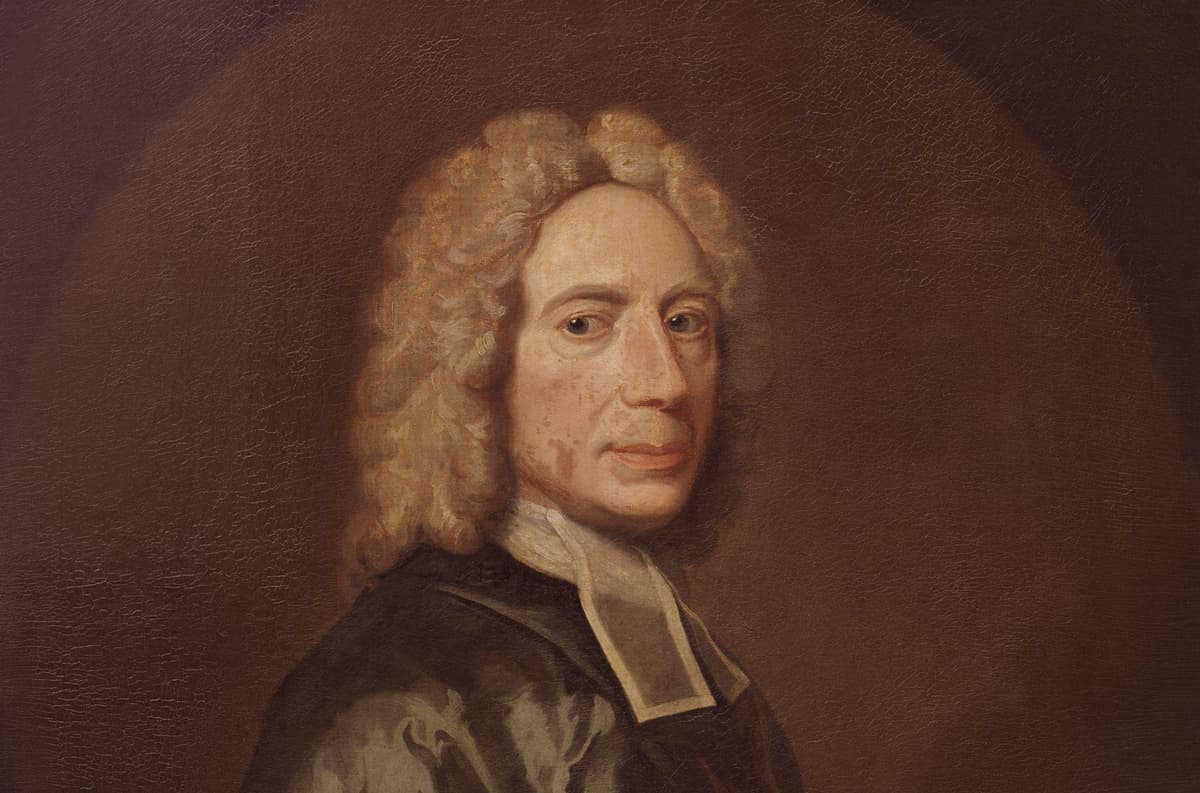
We start our hymn week off with “Lord, in the morning” by Isaac Watts (1674–1748). Watts was an indefatigably productive Congregational minister and writer, producing such poems as the surprisingly successful ode, “The Day of Judgment,” written in difficult English sapphics. Yet he is best known as a hymn writer. His “Joy to the World,” for example, is probably the most-often performed Christmas carol, set to a melody by his near contemporary George Frideric Handel (1685–1759) — or so at least that’s where Lowell Mason (1792–1872) said the tune came from when he published Watts’s words set to its now-standard melody, though no one can find it in Handel’s work. (Mason needs reviving: a major figure in 19th-century church music.) Watts also wrote the widely sung 1708 hymn “Our God, Our Help in Ages Past,” commonly set to a melody by the organist William Croft (1678–1727), which in a nice twist, Handel would go on to use in his anthem “O Praise the Lord.”
In “Lord, in the morning” Watts draws on Psalm 11 and Psalm 5 to construct a hymn of ceaseless prayer: “in the morning,” he promises, he will lift his eyes “Up to the hills where Christ is gone / To plead for all his saints.” His use of a common meter — four-line stanzas of four-foot lines alternating with three-foot lines, rhymed abab — is sometimes called “hymn meter,” after Watts. A hymn of mortality that becomes a hymn of joy (“to thy house will I resort, / To taste thy mercies there”), Watts’s lyrics can be found in most hymnals and many recordings, with Maddy Prior doing a particularly good version in the old gallery hymn style of the nonconformist Methodist churches in England.
By CARL ROLLYSON
|
By BRADLEY CORTRIGHT
|
By LAWRENCE KUDLOW
|
By THE NEW YORK SUN
|
By BENNY AVNI
|
By LUKE FUNK
|
By BRADLEY CORTRIGHT
|
By THE NEW YORK SUN
|Lyrics rarely make for great poetry. Great poetry rarely makes for good lyrics. No one hungers for “The Waste Land: An Oratorio” or “Four Quartets: An Opera,” and the only T.S. Eliot poetry to appear successfully in music is his lighter verse from “Old Possum’s Book of Practical Cats.”
And yet, that’s unfair to lyrics. Most musical words are rhymed lines in metrical patterns, which is surely a formal characteristic of poetry, and to refuse the name of poetry to, say, the genre of light verse would be to deny a place in the tradition for any verse that accepts the constraints of a particular type of poetry. The key is that word constraints. At their best, lyrics are poems that are willing set themselves within certain formal boundaries — among them, a rhythmical pattern that matches a melody (or for which a melody can be written), a refusal of phrasings too complex to be understood without reading a print version, and a willingness to use various devices of repetition (especially choruses) to keep the listener located in the song.
We could speak here of the ballad tradition in early English verse, and The New York Sun has offered as Poems of the Day such near-medieval work as “The Greenwood Side,” “Dow in Yon Forest,” and “Timor Mortis Conturbat Me.” But by far the largest collection of lyrics we might weigh as poetry comes in the hymn tradition — some early but most from the 18th, 19th, and 20th centuries, with the Protestant Victorians as the busiest hymnal assemblers, composers, and lyricists. (A recommended book on the topic is Christopher Phillips’s “The Hymnal: A Reading History.”) And so the Sun devotes this week to examining English hymns, seeking their power and influence as poetic productions.
We start our hymn week off with “Lord, in the morning” by Isaac Watts (1674–1748). Watts was an indefatigably productive Congregational minister and writer, producing such poems as the surprisingly successful ode, “The Day of Judgment,” written in difficult English sapphics. Yet he is best known as a hymn writer. His “Joy to the World,” for example, is probably the most-often performed Christmas carol, set to a melody by his near contemporary George Frideric Handel (1685–1759) — or so at least that’s where Lowell Mason (1792–1872) said the tune came from when he published Watts’s words set to its now-standard melody, though no one can find it in Handel’s work. (Mason needs reviving: a major figure in 19th-century church music.) Watts also wrote the widely sung 1708 hymn “Our God, Our Help in Ages Past,” commonly set to a melody by the organist William Croft (1678–1727), which in a nice twist, Handel would go on to use in his anthem “O Praise the Lord.”
In “Lord, in the morning” Watts draws on Psalm 11 and Psalm 5 to construct a hymn of ceaseless prayer: “in the morning,” he promises, he will lift his eyes “Up to the hills where Christ is gone / To plead for all his saints.” His use of a common meter — four-line stanzas of four-foot lines alternating with three-foot lines, rhymed abab — is sometimes called “hymn meter,” after Watts. A hymn of mortality that becomes a hymn of joy (“to thy house will I resort, / To taste thy mercies there”), Watts’s lyrics can be found in most hymnals and many recordings, with Maddy Prior doing a particularly good version in the old gallery hymn style of the nonconformist Methodist churches in England.
Already have a subscription? Sign in to continue reading
Cancel anytime
By continuing you agree to our Privacy Policy and Terms of Service.
Cancel anytime