


With Senate Control at Stake, Expect Obama To Campaign in Michigan and Urge ‘the Brothers’ To Back El-Sayed
By LAURENCE ELDER
|‘Cautionary Tales’ is the best in a class of literature that continues through to our own day: books about children coming to horrible ends, offered for the enjoyment of children.
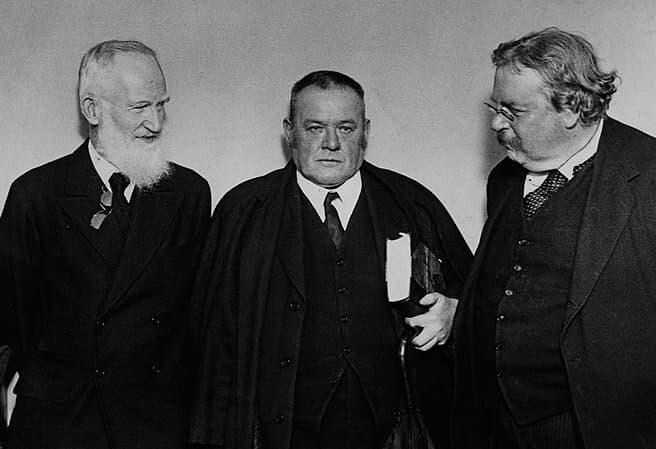
In 1907, Hilaire Belloc (1870–1953) published “Cautionary Tales for Children: Designed for the Admonition of Children between the ages of eight and fourteen years.” The New York Sun has already featured one of the book’s comic poems this month: “Jim, Who ran away from his Nurse, and was eaten by a Lion.” And we noted that in these poems for children, Belloc is somehow both the stuffy narrating adult, moralizing windily, and the mischievously irritating child whose adventures come to disaster. It’s usual, at this point in any discussion of Belloc, to rehearse sadly all the things wrong with the poet, since he was something of an antisemite, wrote faster (author of 150 books) than his mind could move, and opined loudly on far more topics than he understood. And the result is that even “Cautionary Tales” has fallen into disrepute — to our loss, since it is the single best in a class of literature that continues through to our own day: books about children coming to horrible ends, offered for the enjoyment of children. (See, for example the 1999–2015 “A Series of Unfortunate Events.”) The comedy in “Cautionary Tales” is not always aimed exclusively at children, however. In “Lord Lundy, Who was too Freely Moved to Tears, and thereby ruined his Political Career” Belloc indulges his dislike of the British Empire and the casual assumption of political position by the upper classes — all while pouring out the comic tetrameter lines of children’s verse.
By LAURENCE ELDER
|
By BENNY AVNI
|
By DAVID HARSANYI
|
By JENNIFER DOHERTY
|
By BRADLEY CORTRIGHT
|
By ALEX ZDAN
|
By MARIO NAVES
|
By VIVEK NAGRANI
|In 1907, Hilaire Belloc (1870–1953) published “Cautionary Tales for Children: Designed for the Admonition of Children between the ages of eight and fourteen years.” The New York Sun has already featured one of the book’s comic poems this month: “Jim, Who ran away from his Nurse, and was eaten by a Lion.” And we noted that in these poems for children, Belloc is somehow both the stuffy narrating adult, moralizing windily, and the mischievously irritating child whose adventures come to disaster. It’s usual, at this point in any discussion of Belloc, to rehearse sadly all the things wrong with the poet, since he was something of an antisemite, wrote faster (author of 150 books) than his mind could move, and opined loudly on far more topics than he understood. And the result is that even “Cautionary Tales” has fallen into disrepute — to our loss, since it is the single best in a class of literature that continues through to our own day: books about children coming to horrible ends, offered for the enjoyment of children. (See, for example the 1999–2015 “A Series of Unfortunate Events.”) The comedy in “Cautionary Tales” is not always aimed exclusively at children, however. In “Lord Lundy, Who was too Freely Moved to Tears, and thereby ruined his Political Career” Belloc indulges his dislike of the British Empire and the casual assumption of political position by the upper classes — all while pouring out the comic tetrameter lines of children’s verse.
Already have a subscription? Sign in to continue reading
Cancel anytime
By continuing you agree to our Privacy Policy and Terms of Service.