
Is America’s Ambassador Too Close to Turkey?
By THE NEW YORK SUN
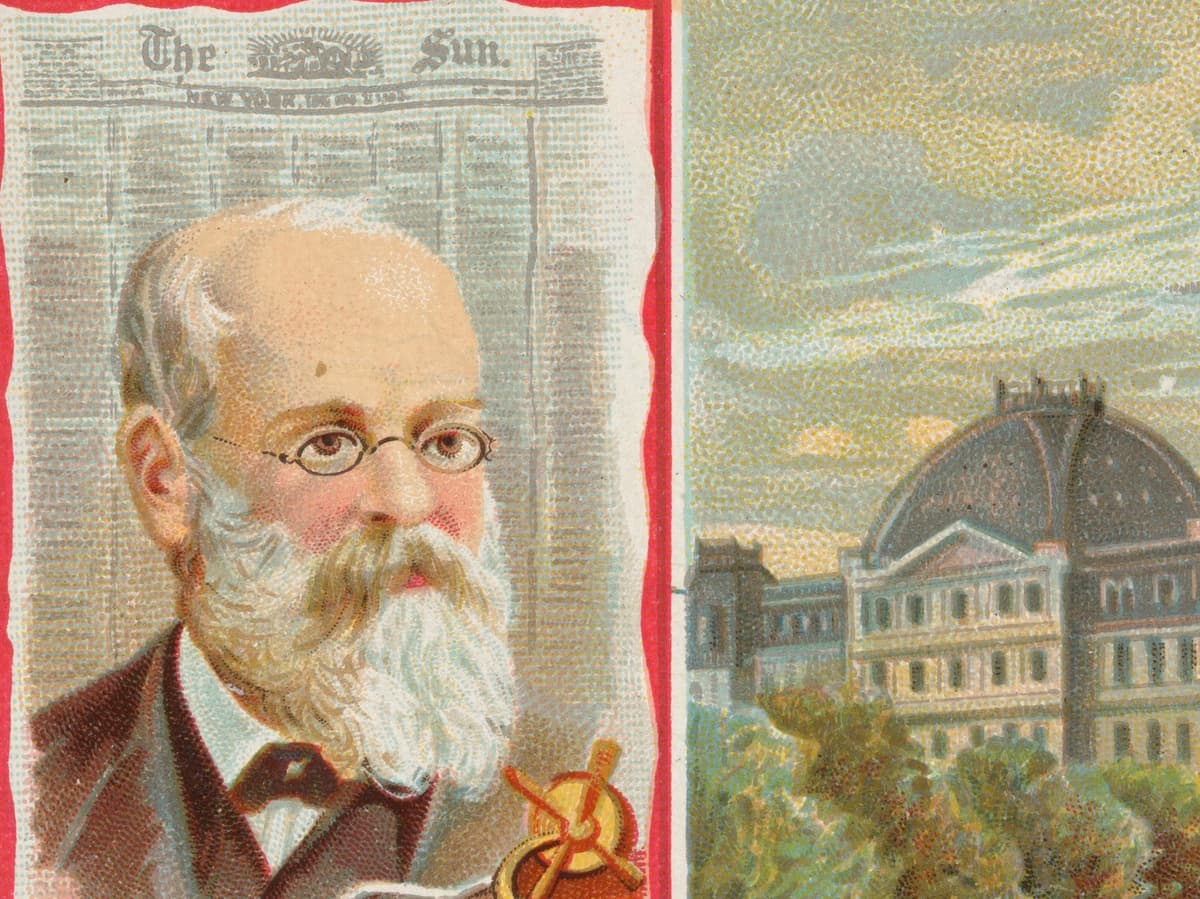
|Charles Anderson Dana was editor and part owner of The New Sun, back in the day, and a titan of journalism at a time when the titans were real and battled gods.

Published:
Updated:
Charles Anderson Dana (1819–1897) was editor and part owner of The New Sun, back in the day. But to say only that is to undersell the man. He was a titan of journalism at a time when the titans were real and battled gods. Besides, he had a taste for poetry, as all literate people did in those days, and edited one of the standard anthologies of the era, “The Household Book of Poetry” in 1859. He even translated and found an American publisher for “Truth and Poetry,” from Goethe’s autobiography, in 1850.
Eugene Field (1850–1895) was a newspaperman who published light verse — light verse that proved popular, famously including the children’s poem “Wynken, Blynken, and Nod,” the nonsense verse “The Duel” (about a fight between a Gingham Dog and a Calico Cat), and the sentimental “Little Boy Blue.” He coined the phrase “Lover’s Lane” in a poem reminiscing about St. Joseph, Missouri.
Field also spent two years as editor of the Denver Tribune, and he wrote today’s Poem of the Day about a reporter named Cantell Whoppers who showed up in Denver, looking for work — and telling everyone that he had worked for Mr. Dana. The real-life John Arkins of the Rocky Mountain News wanted him, and so did future governor Job Cooper, but Fields got him. As it turns out, the reporter . . . but then you have to read to the end of the poem to learn what happened.
Written in rhymed couplets of seven-foot lines in 12-line stanzas, the comic 1880s poem is in supposed dialect — an annoyance now, I think, but common for the time. And the result is a tribute to Dana and the Sun, and a mocking of the newspaper business.
By THE NEW YORK SUN
|
By GEORGE WILLIS
|
By LAWRENCE KUDLOW
|
By ROSS ANDERSON
|
By THE NEW YORK SUN
|
By THE NEW YORK SUN
|
By MATTHEW RICE
|
By JOSEPH CURL
|Charles Anderson Dana (1819–1897) was editor and part owner of The New Sun, back in the day. But to say only that is to undersell the man. He was a titan of journalism at a time when the titans were real and battled gods. Besides, he had a taste for poetry, as all literate people did in those days, and edited one of the standard anthologies of the era, “The Household Book of Poetry” in 1859. He even translated and found an American publisher for “Truth and Poetry,” from Goethe’s autobiography, in 1850.
Eugene Field (1850–1895) was a newspaperman who published light verse — light verse that proved popular, famously including the children’s poem “Wynken, Blynken, and Nod,” the nonsense verse “The Duel” (about a fight between a Gingham Dog and a Calico Cat), and the sentimental “Little Boy Blue.” He coined the phrase “Lover’s Lane” in a poem reminiscing about St. Joseph, Missouri.
Field also spent two years as editor of the Denver Tribune, and he wrote today’s Poem of the Day about a reporter named Cantell Whoppers who showed up in Denver, looking for work — and telling everyone that he had worked for Mr. Dana. The real-life John Arkins of the Rocky Mountain News wanted him, and so did future governor Job Cooper, but Fields got him. As it turns out, the reporter . . . but then you have to read to the end of the poem to learn what happened.
Written in rhymed couplets of seven-foot lines in 12-line stanzas, the comic 1880s poem is in supposed dialect — an annoyance now, I think, but common for the time. And the result is a tribute to Dana and the Sun, and a mocking of the newspaper business.
Cancel anytime
By continuing you agree to our Privacy Policy and Terms of Service.