

A Smiling Maduro Pleads Not Guilty to New Torture Charges Tacked Onto Narcoterror Offenses
By MARIE POHL
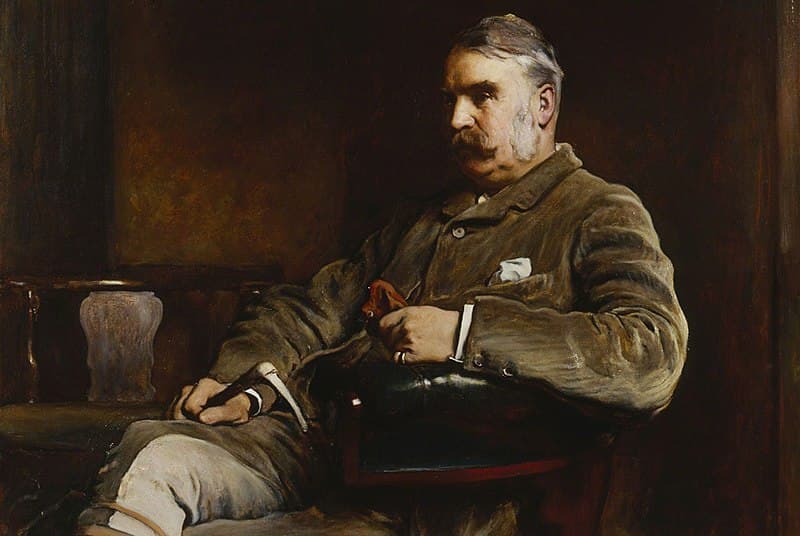
|A comic poet frequently grouped with his contemporaries Lewis Carroll and Edward Lear, W.S. Gilbert shared the same penchant for nonsense words.

Published:
Updated:
In the 1860s, W.S. Gilbert (1836–1911), poet and illustrator, dramatist, and librettist of “Gilbert and Sullivan” renown, abandoned a languishing legal practice to concentrate on light verse, short stories, and dramatic collaborations. Such comic operas as “H.M.S. Pinafore” and “The Mikado” prefigured the development of the American musical, as well as influencing later dramatists, including George Bernard Shaw and Oscar Wilde. A comic poet frequently grouped with his contemporaries Lewis Carroll and Edward Lear, Gilbert shared the same penchant for nonsense words, as in today’s poem, “Sing for the Garish Eye.” Here, in trimeter octets with an ababcdec rhyme scheme and a repeated refrain, the poet has chosen some recognizable verbs — cling, cry, sing — while the bird-like subjects of those verbs remain unidentified by any of the standard field guides. Whatever exactly they are, roddling and thribbling away, they make the most of a raucous moment, specified as happening in May, but somehow outside the bounds of time.
By MARIE POHL
|
By DONALD KIRK
|
By BRADLEY CORTRIGHT
|
By ALEX ZDAN
|
By ALEXANDER LARMAN
|
By JOSEPH CURL
|
By GEORGE WILLIS
|
By LUKE FUNK
|In the 1860s, W.S. Gilbert (1836–1911), poet and illustrator, dramatist, and librettist of “Gilbert and Sullivan” renown, abandoned a languishing legal practice to concentrate on light verse, short stories, and dramatic collaborations. Such comic operas as “H.M.S. Pinafore” and “The Mikado” prefigured the development of the American musical, as well as influencing later dramatists, including George Bernard Shaw and Oscar Wilde. A comic poet frequently grouped with his contemporaries Lewis Carroll and Edward Lear, Gilbert shared the same penchant for nonsense words, as in today’s poem, “Sing for the Garish Eye.” Here, in trimeter octets with an ababcdec rhyme scheme and a repeated refrain, the poet has chosen some recognizable verbs — cling, cry, sing — while the bird-like subjects of those verbs remain unidentified by any of the standard field guides. Whatever exactly they are, roddling and thribbling away, they make the most of a raucous moment, specified as happening in May, but somehow outside the bounds of time.
Already have a subscription? Sign in to continue reading
Cancel anytime
By continuing you agree to our Privacy Policy and Terms of Service.
Cancel anytime