


UEFA Weighs World Cup Boycott Over Infantino’s $20 Billion Private Equity Push
By GEORGE WILLIS
|Alexander Pope’s verse essay is a young poet’s proclaiming an Ars Poetica for his own time: a correction to all the poets around him.
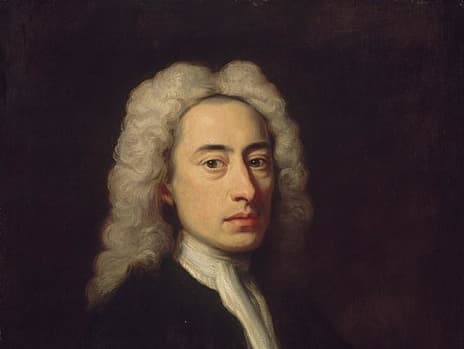
The verse essay has fallen out of style so definitively that even the most recalcitrant of teachers won’t bother assigning to their students the classics of the genre. Lucretius thought poetry a sufficient vehicle for 7,400 lines of philosophy in “De Rerum Natura” (circa 50 B.C.), and any number of British writers at the end of the 17th century and beginning of the 18th century wrote argumentative pieces in poetic forms. There’s John Dryden’s 1682 “Religio Laici,” for example, and Daniel Defoe’s “Jure Divino” (1701).
And then there are the two major verse essays of Alexander Pope (1688–1744): “An Essay on Criticism” (1711) and “An Essay on Man” (1733). Last May, The New York Sun presented a brief passage from Epistle II of “An Essay on Man” — the glittering lines that run “Know then thyself, presume not God to scan. / The proper study of Mankind is Man.” So perhaps it’s time to look to his earlier work and consider why the young Pope, in one of his first major poems, would devote 744 lines to an extended argument about the nature of poetry.
Part of the answer is Horace’s “Ars Poetica” (circa 19 B.C.), the Latin verse epistles that form one of the classic works of literary theory. We forget the confidence, the arrogance, of Pope as a young man: already at age 22 assuming he was engaged in conversation with, and able to correct, the greatest poets of the past. But part of the answer, too, is Pope’s sense of the sterility of poetry at the beginning of the 18th century. Dryden’s mastery of the heroic couplet had bequeathed to English verse a precise instrument — but it seemed to Pope to have been falsely taken as sufficient for poetic writing, as though all poetry needed was to be in rhymed pentameter couplets.
Pope still wants highly structured verse. But he points to Timotheus of Miletus (circa 446 B.C.–357 B.C.), who added an extra string to the ancient Greeks’ musical lyre. And Pope demands that, in poetry, “sound must seem an echo to the sense.” “An Essay on Criticism” contains such much-quoted lines as “To err is human; to forgive, divine” and “A little learning is a dang’rous thing” and “Fools rush in where angels fear to tread.” But in its essence, the verse essay is a young poet’s proclaiming an Ars Poetica for his own time: a correction to all the poets around him.
Already have a subscription? Sign in to continue reading
Cancel anytime
By continuing you agree to our Privacy Policy and Terms of Service.
By GEORGE WILLIS
|
By BRADLEY CORTRIGHT
|
By A.R. HOFFMAN
|
By MATTHEW RICE
|
By GEORGE WILLIS
|
By BRADLEY CORTRIGHT
|
By LUKE FUNK
|
By MATTHEW RICE
|