


‘We Have the Receipts’: Maria Bartiromo’s Attorney Insists Fox Did Not Fire Her
By BRADLEY CORTRIGHT
|The sense of Rilke as the center of some powerful understanding of the psychology of modern life has faded. The philosophical madness of the outsider no longer seems a gateway to the modern mind.
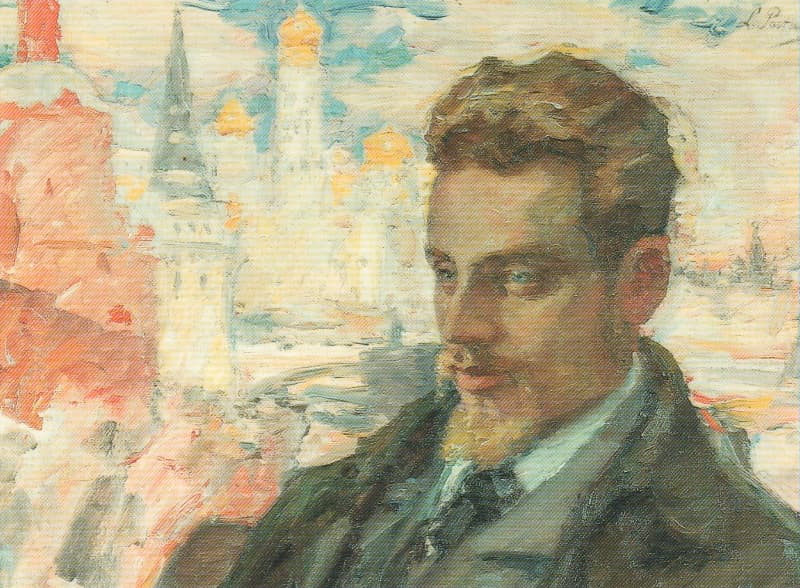
Rainer Maria Rilke (1875–1926) occupies a curious place in English-language poets’ sense of their art. Translations of his poetry mattered greatly, for a brief period, but now he seems just another figure from the past. Oh, very good, of course: the author of several works that a poet should have read somewhere along the line. But not a wellspring anymore. Not a live wire. The sense of Rilke as the center of some powerful understanding of the psychology of modern life is as faded as, say, our interest in taking as existential archetypes such figures as Dostoevsky’s Raskolnikov, Rilke’s own Malte Laurids Brigge, or the protagonist writer in Hamsun’s Hunger. The philosophical madness of the outsider no longer seems a gateway to the modern mind.
The loss is real, although it’s hard to quantify. Simply as a matter of style, Rilke is to German literature what Yeats (1865–1939) is to English literature and perhaps Fernando Pessoa (1888–1935) to Portuguese: a writer with some success in late romanticism who made the turn to modernist verse. His “Archaic Torso of Apollo,” “The Duino Elegies,” and “Letters to a Young Poet” are still around, still prompting new English translations. But to grasp why Rilke once seemed to matter so much, it may be worth going back to such early efforts as Jessie Lemont’s 1918 translations. These were not always as good as later efforts would prove, but the effect on English poets was greater. In “The Panther,” for example, Lemont uses the original’s pentameter rhymes to give us the animal in a zoo that had seemed to Rilke so profound.
By BRADLEY CORTRIGHT
|
By ALEXANDER LARMAN
|
By DONALD KIRK
|
By HOLLIE McKAY
|
By THE NEW YORK SUN
|
By LUKE FUNK
|
By GEORGE WILLIS
|
By MARIO NAVES
|Rainer Maria Rilke (1875–1926) occupies a curious place in English-language poets’ sense of their art. Translations of his poetry mattered greatly, for a brief period, but now he seems just another figure from the past. Oh, very good, of course: the author of several works that a poet should have read somewhere along the line. But not a wellspring anymore. Not a live wire. The sense of Rilke as the center of some powerful understanding of the psychology of modern life is as faded as, say, our interest in taking as existential archetypes such figures as Dostoevsky’s Raskolnikov, Rilke’s own Malte Laurids Brigge, or the protagonist writer in Hamsun’s Hunger. The philosophical madness of the outsider no longer seems a gateway to the modern mind.
The loss is real, although it’s hard to quantify. Simply as a matter of style, Rilke is to German literature what Yeats (1865–1939) is to English literature and perhaps Fernando Pessoa (1888–1935) to Portuguese: a writer with some success in late romanticism who made the turn to modernist verse. His “Archaic Torso of Apollo,” “The Duino Elegies,” and “Letters to a Young Poet” are still around, still prompting new English translations. But to grasp why Rilke once seemed to matter so much, it may be worth going back to such early efforts as Jessie Lemont’s 1918 translations. These were not always as good as later efforts would prove, but the effect on English poets was greater. In “The Panther,” for example, Lemont uses the original’s pentameter rhymes to give us the animal in a zoo that had seemed to Rilke so profound.
Cancel anytime
By continuing you agree to our Privacy Policy and Terms of Service.