

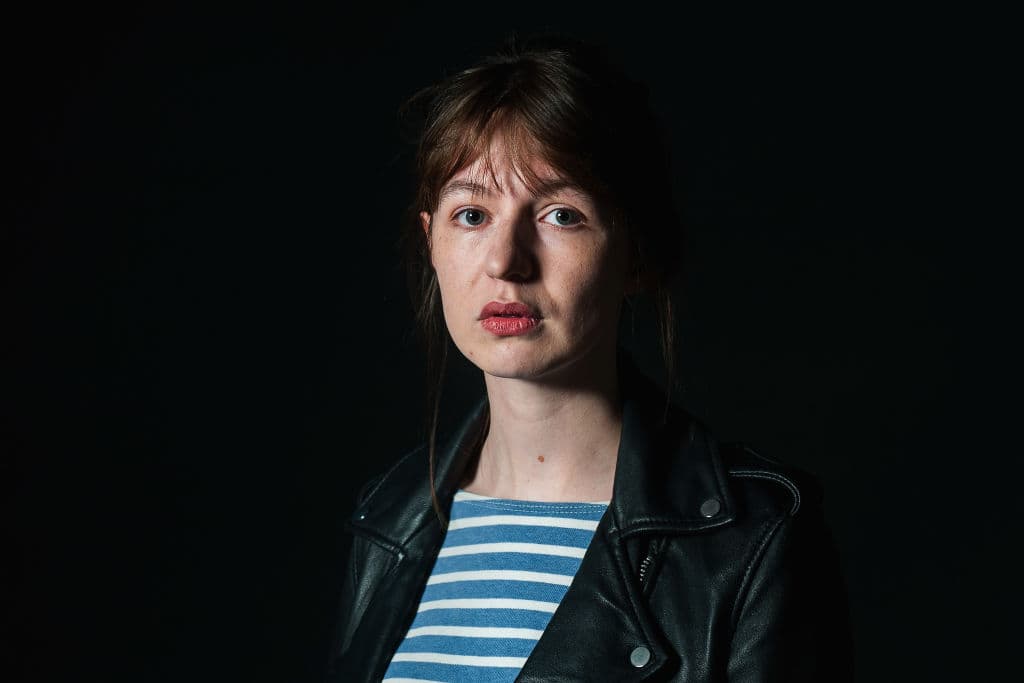
Bestselling Novelist Sally Rooney Chooses Palestine Action Over British Book Sales
By ALEXANDER LARMAN
|If imitation is the sincerest form of flattery, is the best kind of flatterer the one who takes notice, even if it is to make fun?
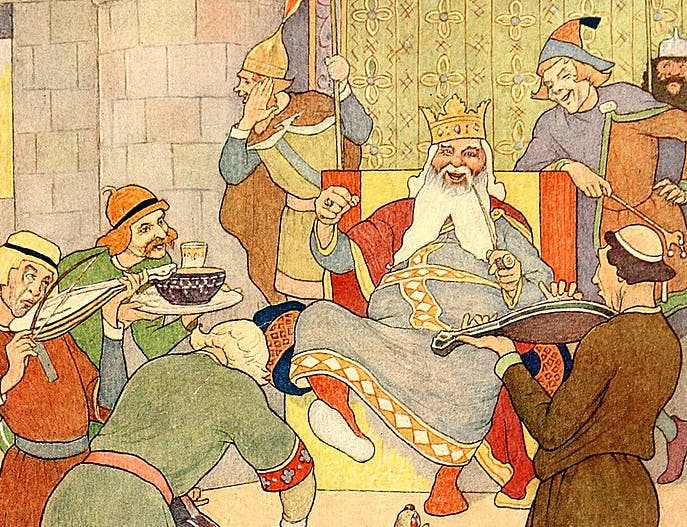
They say — don’t they? — that imitation is the sincerest form of flattery. In parody, imitation is elevated to the level of an art, whose aim is not to flatter as much as it is to poke fun. Parodia is an ancient comic art. In his “Poetics,” Aristotle notes the example of Hegemon of Thasos, who altered the words of well-known poems to make them ridiculous, which is the basic principle of the career of “Weird Al” Yankovic. The oldest jokes, it turns out, are ever new.
Of course, if we’re going to laugh at the joke, we first have to get the joke, which means that we have to know the original on which the parody riffs. If the contemporary poet Wendy Cope’s “Waste Land Limericks” are funny, that’s only because we’ve read T.S. Eliot’s “The Waste Land” (a section of which appeared as the Poem of the Day on April 14). The comic punch of Mr. Yankovic’s “I Think I’m a Clone Now” depends entirely on his audience’s familiarity with the oeuvre of Tommy James and the Shondells, as well as an artist named Tiffany, who covered their most famous song without (intentionally) making a joke of it.
But the corollary to all this is that the parodists have to be good. That is, they have to be astute observers of the original, as well as gifted mimics, to capture whatever its signature features happen to be. The effort of attention, the well-tuned ear: We see them on display in today’s Poem of the Day, marking the May birthday of its author, G.K. Chesterton (1874–1936). Are these not the marks of the best kind of flatterer? The one who takes notice, even if it is to make fun?
By ALEXANDER LARMAN
|
By JOSEPH CURL
|
By GEORGE WILLIS
|
By LUKE FUNK
|
By JOSEPH CURL
|
By BRADLEY CORTRIGHT
|
By GEORGE WILLIS
|
By MARIO NAVES
|They say — don’t they? — that imitation is the sincerest form of flattery. In parody, imitation is elevated to the level of an art, whose aim is not to flatter as much as it is to poke fun. Parodia is an ancient comic art. In his “Poetics,” Aristotle notes the example of Hegemon of Thasos, who altered the words of well-known poems to make them ridiculous, which is the basic principle of the career of “Weird Al” Yankovic. The oldest jokes, it turns out, are ever new.
Of course, if we’re going to laugh at the joke, we first have to get the joke, which means that we have to know the original on which the parody riffs. If the contemporary poet Wendy Cope’s “Waste Land Limericks” are funny, that’s only because we’ve read T.S. Eliot’s “The Waste Land” (a section of which appeared as the Poem of the Day on April 14). The comic punch of Mr. Yankovic’s “I Think I’m a Clone Now” depends entirely on his audience’s familiarity with the oeuvre of Tommy James and the Shondells, as well as an artist named Tiffany, who covered their most famous song without (intentionally) making a joke of it.
But the corollary to all this is that the parodists have to be good. That is, they have to be astute observers of the original, as well as gifted mimics, to capture whatever its signature features happen to be. The effort of attention, the well-tuned ear: We see them on display in today’s Poem of the Day, marking the May birthday of its author, G.K. Chesterton (1874–1936). Are these not the marks of the best kind of flatterer? The one who takes notice, even if it is to make fun?
Cancel anytime
By continuing you agree to our Privacy Policy and Terms of Service.
Cancel anytime