

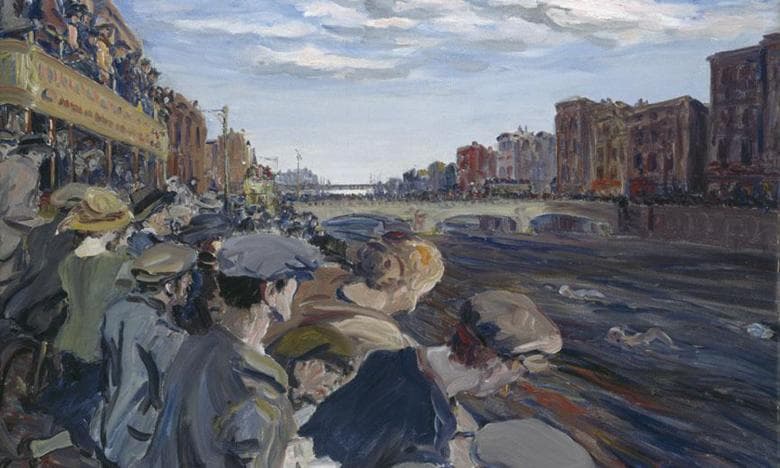
From ‘Dracula’ to ‘Ulysses,’ Ireland’s Literary Genius Enchants at New York’s Oldest Museum
By A.R. HOFFMAN
|Keats was fascinated by the possibility of knowledge attained not through philosophical reasoning, but through the extrarational apprehension of beauty in art or nature.
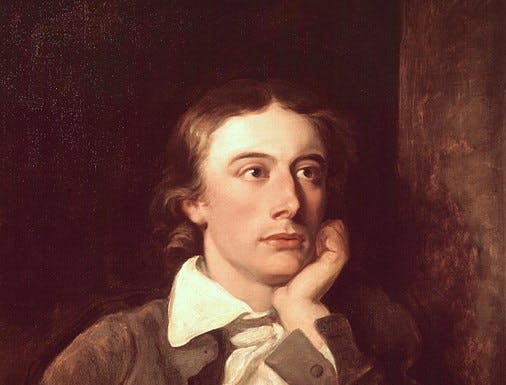
The youngest and shortest-lived of the English Romantic poets, John Keats (1795-1821) began training as a doctor but abandoned his studies to pursue poetry as a singular calling. The phrase negative capability originates with Keats, who was fascinated by the possibility of knowledge attained not through philosophical reasoning, but through the extrarational apprehension of beauty in art or nature. It is this sense of sublime understanding, beyond the bounds of reason, which the thrush of the unrhymed sonnet here articulates for the human listener.
By A.R. HOFFMAN
|
By JOSEPH CURL
|
By DONALD KIRK
|
By DAVID JONES
|
By ALEX ZDAN
|
By JOSEPH CURL
|
By DAVID JONES
|
By CARL ROLLYSON
|The youngest and shortest-lived of the English Romantic poets, John Keats (1795-1821) began training as a doctor but abandoned his studies to pursue poetry as a singular calling. The phrase negative capability originates with Keats, who was fascinated by the possibility of knowledge attained not through philosophical reasoning, but through the extrarational apprehension of beauty in art or nature. It is this sense of sublime understanding, beyond the bounds of reason, which the thrush of the unrhymed sonnet here articulates for the human listener.
Already have a subscription? Sign in to continue reading
Cancel anytime
By continuing you agree to our Privacy Policy and Terms of Service.
Cancel anytime