

Judge Blocks ‘Nonsensical’ Mamdani Pied-à-Terre Rollout for ‘Doxxing’ New Yorkers, Tells Mayor To Start Over
By JENNIFER DOHERTY
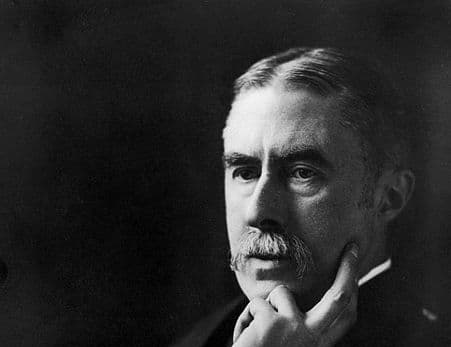
|A.E. Housman makes formal verse look easy — and as every writer knows, simple is hard. Maybe the hardest of all things to do.

Published:
Updated:
For any reader or writer of poetry with a formalist bent, A.E. Housman (1859–1936) is the gold standard of modern verse. Like Philip Larkin, Housman (whose birthday is March 26) can be grim, sardonic, facile, and merciless. But he also makes formal verse look easy — and as every writer knows, simple is hard. Maybe the hardest of all things to do. In “When I Was One-and-Twenty,” Housman uses doubled quatrains in trimeter (a rarish beat, sometimes called “half meter,” that relies on the ear hearing the ghost of 4/3 ballad meter) to joke of the wisdom that descends between ages twenty-one and twenty-two.
By JENNIFER DOHERTY
|
By LAWRENCE KUDLOW
|
By ALEX ZDAN
|
By BRADLEY CORTRIGHT
|
By THE NEW YORK SUN
|
By JENNIFER DOHERTY
|
By SHAILI SINGH
|
By BENNY AVNI
|For any reader or writer of poetry with a formalist bent, A.E. Housman (1859–1936) is the gold standard of modern verse. Like Philip Larkin, Housman (whose birthday is March 26) can be grim, sardonic, facile, and merciless. But he also makes formal verse look easy — and as every writer knows, simple is hard. Maybe the hardest of all things to do. In “When I Was One-and-Twenty,” Housman uses doubled quatrains in trimeter (a rarish beat, sometimes called “half meter,” that relies on the ear hearing the ghost of 4/3 ballad meter) to joke of the wisdom that descends between ages twenty-one and twenty-two.
Already have a subscription? Sign in to continue reading
Cancel anytime
By continuing you agree to our Privacy Policy and Terms of Service.
Cancel anytime