
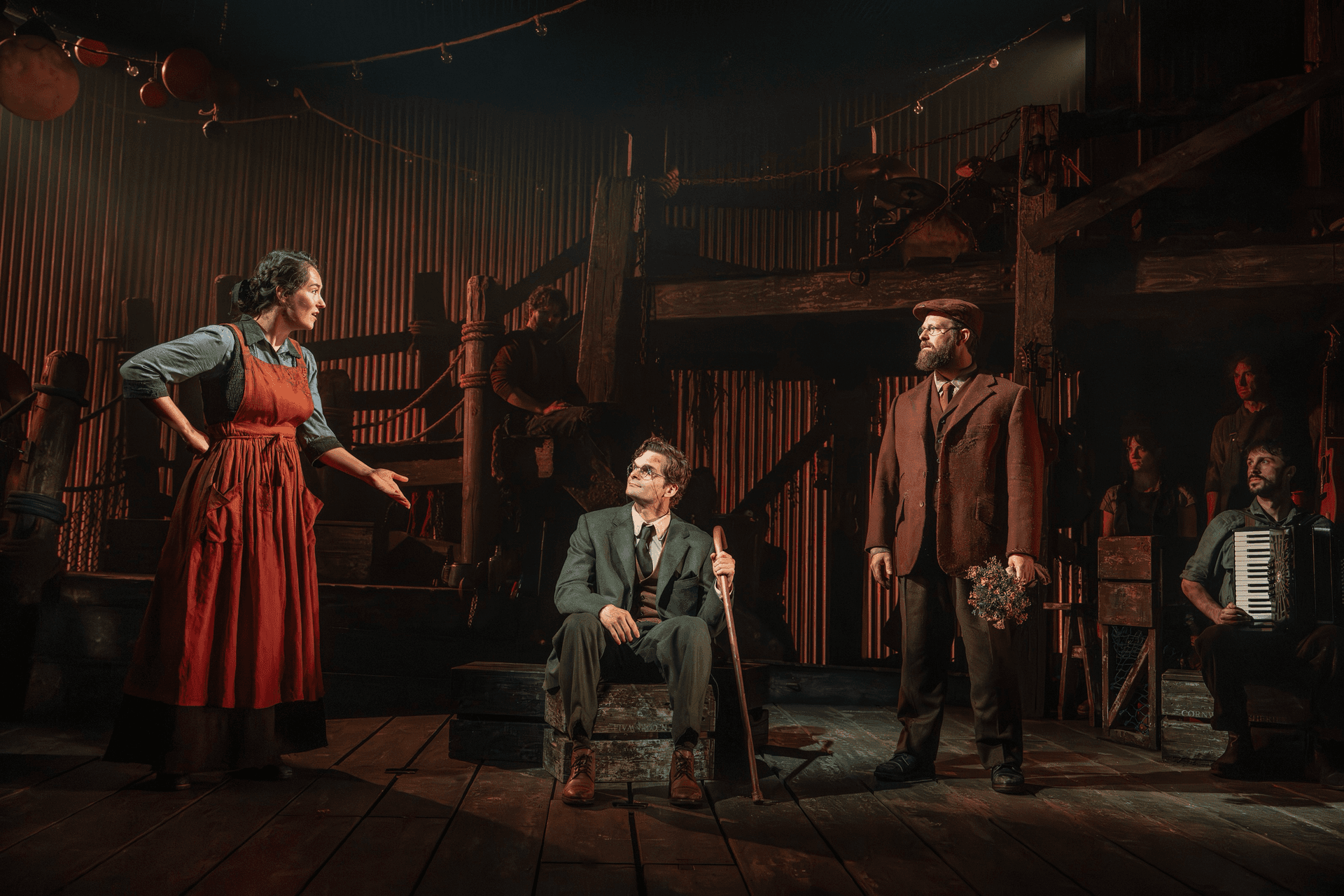
Benjamin Button Ages Badly in the Latest Curious Afterlife of Fitzgerald’s Short Story
By SEBASTIAN DOGGART
|‘Nothing is more apt to introduce us to the gates of the muses than Poverty,’ Oliver Goldsmith observed.

Published:
Updated:
Oliver Goldsmith (1728–1774) wrote either too little or too much. As a hack writer in London, he poured out inferior, often pseudonymous work for the poor pay of the local publishers: “Nothing is more apt to introduce us to the gates of the muses than Poverty,” he observed, and poverty drove him to write and write and write. The fact that he helped create his poverty by his incessant gambling was almost incidental.
He was, all in all, as strange a man as English literature has managed to produce, and his friendships among the 18th-century literary types — from Samuel Johnson (1709–1784) to Edmund Burke (1729–1797) — made Goldsmith’s peculiarities all the more striking. In the midst of as monstrously articulate a group of talkers as the world has ever known, he was poorly spoken enough that the actor David Garrick (1717–1779) composed a mock epitaph that ran: “Here lies Nolly Goldsmith, for shortness called Noll, / Who wrote like an angel, but talked like poor Poll.” He was vain, envious of any praise given another, inarticulate, and absurd.
The problem, which even his 18th-century acquaintances couldn’t solve, is that he really did write like an angel. “The Vicar of Wakefield” (1766) occupies a solid (if slightly tangential) place in the history of the English novel. His comedy “She Stoops to Conquer” is (1773) is still performed in theaters. The long heroic-couplet poem “The Deserted Village” (1770) is as good as that kind of social commentary can get. “The Traveller” is steady philosophy in poetry. There’s even the perennial children’s story “Little Goody Two-Shoes” (1765), which he (probably) wrote.
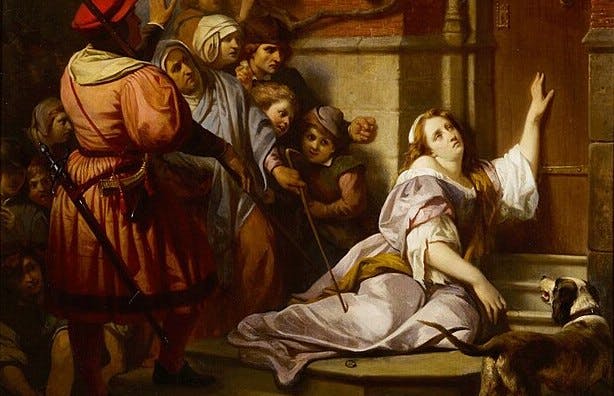
For a sample of Goldsmith’s verse, the Poem of the Day today is “When Lovely Woman Stoops to Folly,” which originally appeared in “The Vicar of Wakefield.” Just two tetrameter quatrains, the poem is so smooth and exact that it sticks in memory after a single reading — which, whatever else one wants to say about the poem, is among the highest praises a piece of writing can receive.
By SEBASTIAN DOGGART
|
By CARLOS SOUSA
|
By MATTHEW RICE
|
By MARIO NAVES
|
By CARL ROLLYSON
|
By SHARON KEHNEMUI
|
By ELYSA GARDNER
|
By BENNY AVNI
|Oliver Goldsmith (1728–1774) wrote either too little or too much. As a hack writer in London, he poured out inferior, often pseudonymous work for the poor pay of the local publishers: “Nothing is more apt to introduce us to the gates of the muses than Poverty,” he observed, and poverty drove him to write and write and write. The fact that he helped create his poverty by his incessant gambling was almost incidental.
He was, all in all, as strange a man as English literature has managed to produce, and his friendships among the 18th-century literary types — from Samuel Johnson (1709–1784) to Edmund Burke (1729–1797) — made Goldsmith’s peculiarities all the more striking. In the midst of as monstrously articulate a group of talkers as the world has ever known, he was poorly spoken enough that the actor David Garrick (1717–1779) composed a mock epitaph that ran: “Here lies Nolly Goldsmith, for shortness called Noll, / Who wrote like an angel, but talked like poor Poll.” He was vain, envious of any praise given another, inarticulate, and absurd.
The problem, which even his 18th-century acquaintances couldn’t solve, is that he really did write like an angel. “The Vicar of Wakefield” (1766) occupies a solid (if slightly tangential) place in the history of the English novel. His comedy “She Stoops to Conquer” is (1773) is still performed in theaters. The long heroic-couplet poem “The Deserted Village” (1770) is as good as that kind of social commentary can get. “The Traveller” is steady philosophy in poetry. There’s even the perennial children’s story “Little Goody Two-Shoes” (1765), which he (probably) wrote.
For a sample of Goldsmith’s verse, the Poem of the Day today is “When Lovely Woman Stoops to Folly,” which originally appeared in “The Vicar of Wakefield.” Just two tetrameter quatrains, the poem is so smooth and exact that it sticks in memory after a single reading — which, whatever else one wants to say about the poem, is among the highest praises a piece of writing can receive.
Cancel anytime
By continuing you agree to our Privacy Policy and Terms of Service.
Cancel anytime