


The Left Tempts Trump
By THE NEW YORK SUN
|Robert Louis Stevenson offers a sense of the noises a child hears in bed at night, the wind like a horseman pounding back and forth on the road.
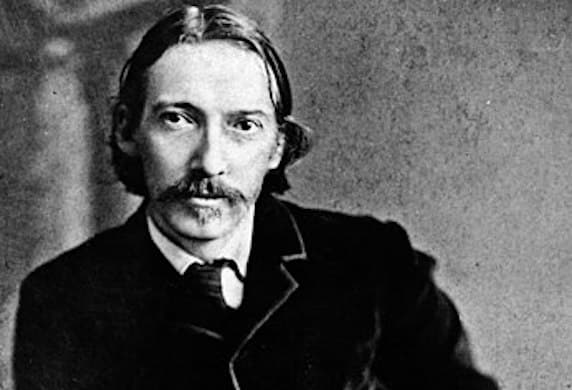
Literary fame is a chancy thing. It comes and it goes, and no one is quite sure why or how. Before his death in Samoa at age 44, the Scottish writer Robert Louis Stevenson (1850–1894) was as celebrated as any in his late-Victorian age. “Treasure Island,” “Dr Jekyll and Mr Hyde,” “Kidnapped”: Essays and stories with a scintillating prose poured out from him. In 1885, he added “A Child’s Garden of Verses” (1885), once among the best read volumes in the emerging canon of children’s books. Is it still? It ought to be. Here, in “Windy Nights” — a ballad-meter quatrain with a tetrameter couplet slapped on the end — he offers a sense of the noises a child hears in bed at night, the wind like a horseman pounding back and forth on the road.
By THE NEW YORK SUN
|
By MATTHEW RICE
|
By ROSS ANDERSON
|
By GEORGE WILLIS
|
By AIDAN MAGEE
|
By LUKE FUNK
|
By HOLLIE McKAY
|
By BRADLEY CORTRIGHT
|Literary fame is a chancy thing. It comes and it goes, and no one is quite sure why or how. Before his death in Samoa at age 44, the Scottish writer Robert Louis Stevenson (1850–1894) was as celebrated as any in his late-Victorian age. “Treasure Island,” “Dr Jekyll and Mr Hyde,” “Kidnapped”: Essays and stories with a scintillating prose poured out from him. In 1885, he added “A Child’s Garden of Verses” (1885), once among the best read volumes in the emerging canon of children’s books. Is it still? It ought to be. Here, in “Windy Nights” — a ballad-meter quatrain with a tetrameter couplet slapped on the end — he offers a sense of the noises a child hears in bed at night, the wind like a horseman pounding back and forth on the road.
Already have a subscription? Sign in to continue reading
Cancel anytime
By continuing you agree to our Privacy Policy and Terms of Service.
Cancel anytime