‘Press Freedom’ Organization Goes After FCC Chairman, Brendan Carr, for His Efforts To Challenge Liberal Media Bias, Demands He Be Disbarred
The group says the chairman is engaging in ‘egregious misconduct.’
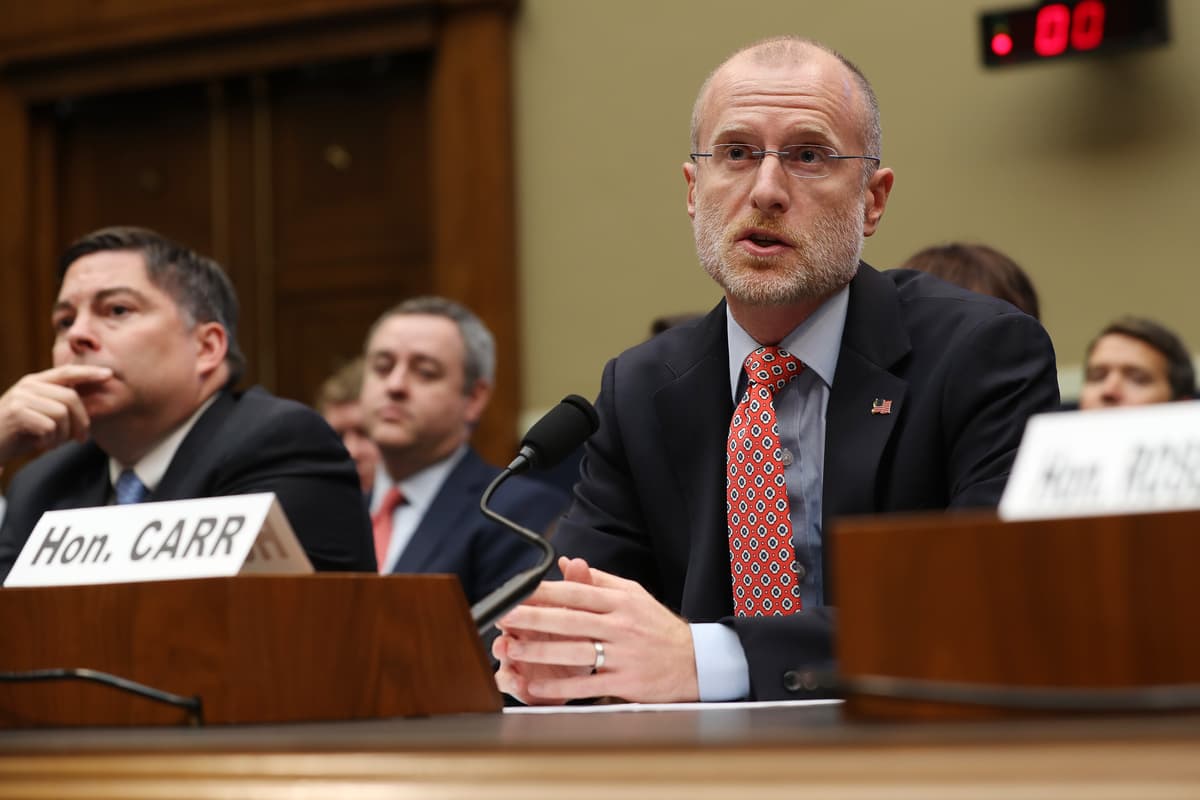
Less than a week after the Federal Communications Commission approved Skydance Media’s acquisition of Paramount Global, a press freedom organization is seeking to penalize the head of the agency for its handling of the review process and subsequent approval of the deal.
The Freedom of the Press Foundation — a controversial group best known for its alliance with Edward Snowden and WikiLeaks — sent a letter to the District of Columbia Bar’s disciplinary office asking it to investigate the Trump-appointed chairman of the FCC, Brendan Carr, and possibly disbar him.
The letter, first reported by a far-left media reporter, Oliver Darcy, says, “As a licensed attorney in public service, Carr is bound by the D.C. Rules of Professional Conduct and must uphold the principles of competence, integrity, impartiality, and respect for the Constitution.”
“Yet Carr appears to have engaged in egregious misconduct, most notably with respect to his recent approval of CBS owner Paramount Global’s merger with Skydance Media,” the group says.

The Freedom of the Press Foundation built its reputation on supporting leakers and whistleblowers in some of the most controversial national security cases in the last two decades. Edward Snowden, now living in exile in Russia, serves on its board of directors, as does a far left, anti-Israel activist, John Cusack, the “Say Anything” star.
Now, the group is targeting Mr. Carr over his vocal crusade to fight institutionalized liberal bias at the news operations of the “Big Three” broadcast networks — CBS, ABC, and NBC — which use lucrative over-the-air frequencies and therefore are legally obligated to provide responsible and objective news coverage.
The press freedom organization accused Mr. Carr of delaying the merger until Paramount agreed to pay $16 million to settle Mr. Trump’s $20 billion lawsuit against CBS.
On July 1, Paramount announced its settlement agreement to resolve Mr. Trump’s lawsuit. Days later, executives at Skydance had several meetings with the FCC, and on July 24, the commission approved the merger, after it received commitments to produce unbiased journalism and eliminate diversity, equity, and inclusion policies at Paramount.

The complaint stated that “everyone” said that the settlement would look like a bribe, and that they were validated by the timeline of the approval.
The Freedom of the Press Foundation also accused Mr. Carr of pursuing “numerous other frivolous and unconstitutional legal proceedings and threaten[ing] more of them in furtherance in [sic] his efforts to intimidate broadcast licensees to censor themselves and fall in line with Trump’s agenda.”
The letter says Mr. Carr has shown a “fundamental lack of competence,” and engaged in “conduct involving dishonesty, fraud, deceit, or misrepresentation,” as well as “conduct prejudicial to the administration of justice.”
The complaint does not stop with the Skydance matter. It accuses Mr. Carr of trying to intimidate MSNBC by threatening to launch a news distortion investigation of the network, even though it is a cable network and does not have a broadcast license, which excludes it from FCC regulation. Mr. Carr made his complaint directly to MSNBC’s parent, Comcast, which also operates NBC, a network that uses public airwaves. MSNBC now uses NBC News’s news-gathering operation and its news correspondents every day. That sisterhood is ending soon, after MSNBC is spun off from Comcast.

The letter also takes issue with Mr. Carr’s decision to reopen complaints against NBC and ABC for “bias” in their coverage, while not reopening a complaint against Fox. (Unlike NBC and ABC, Fox News does not use public airwaves. Fox TV, Fox’s broadcast channel, does not have a national news operation.)
Additionally, the letter says the FCC is engaged in a “fishing expedition” with its investigation into whether NPR and PBS are violating a federal prohibition on airing commercials with their corporate underwriting spots.
“Carr’s actions brazenly violate legal and ethical standards that govern the practice of law and public officials, undermining the First Amendment, the FCC’s credibility and the laws he is trusted to administer,” the complaint says. “His abuse of his office to force an unwarranted settlement of a private lawsuit, is shameful and warrants disbarment.”
The Freedom of the Press Foundation previously threatened to sue Paramount if it settled Mr. Trump’s lawsuit.

The disciplinary office has not commented on the foundation’s complaint. Mr. Darcy noted that even if the bar decides to investigate the complaint, it is “unlikely” that it would make a difference to Mr. Carr’s position at the FCC.
“For a bar disciplinary body to even open a formal inquiry into a sitting FCC chair would mark an extraordinary rebuke,” Mr. Darcy said.
However, he argued that the complaint itself, while it is about “accountability,” seems to be intended to send a message that if Mr. Carr wants to flex the regulatory muscles of his agency beyond what has been seen as the norm, then lawyers should be able to aggressively respond with litigation.
Mr. Carr has defended the decision to approve the Skydance merger when he did, saying that the key to granting the government’s blessing was letters from its top executives committing to unbiased journalism and ending diversity initiatives.

The general counsel for Skydance, Stephanie Kyoko McKinnon, sent two letters to the FCC last week promising that the company would install an ombudsman for at least two years to “receive and evaluate complaints of bias or other concerns involving CBS.” Ms. McKinnon also said the new management would “ensure that the company’s array of news and entertainment programming embodies a diversity of viewpoints across the political and ideological spectrum, consistent with the varying perspectives of the viewing audience.”
During an appearance on CNBC on Friday, Mr. Carr said Mr. Trump’s lawsuit was unrelated to the Skydance deal. Paramount has also publicly stated that the two matters were unrelated.
The complaint against Mr. Carr might signal the beginning of a flurry of litigation surrounding the deal. Senator Warren called for an investigation of the approval process. And multiple reports in the spring said that members of Paramount’s board fretted that settling Mr. Trump’s lawsuit might be perceived as a bribe and expose them to civil lawsuits and possibly criminal charges.