
Pressure on Jack Smith Spikes as ‘Bombshell’ FBI Emails Disclose Doubts Over Legality of Mar-Lago Search

One government note admitted to ‘disagreement’ over whether the special counsel met the standard to secure a warrant for the Palm Beach mansion.
J. Scott Applewhite
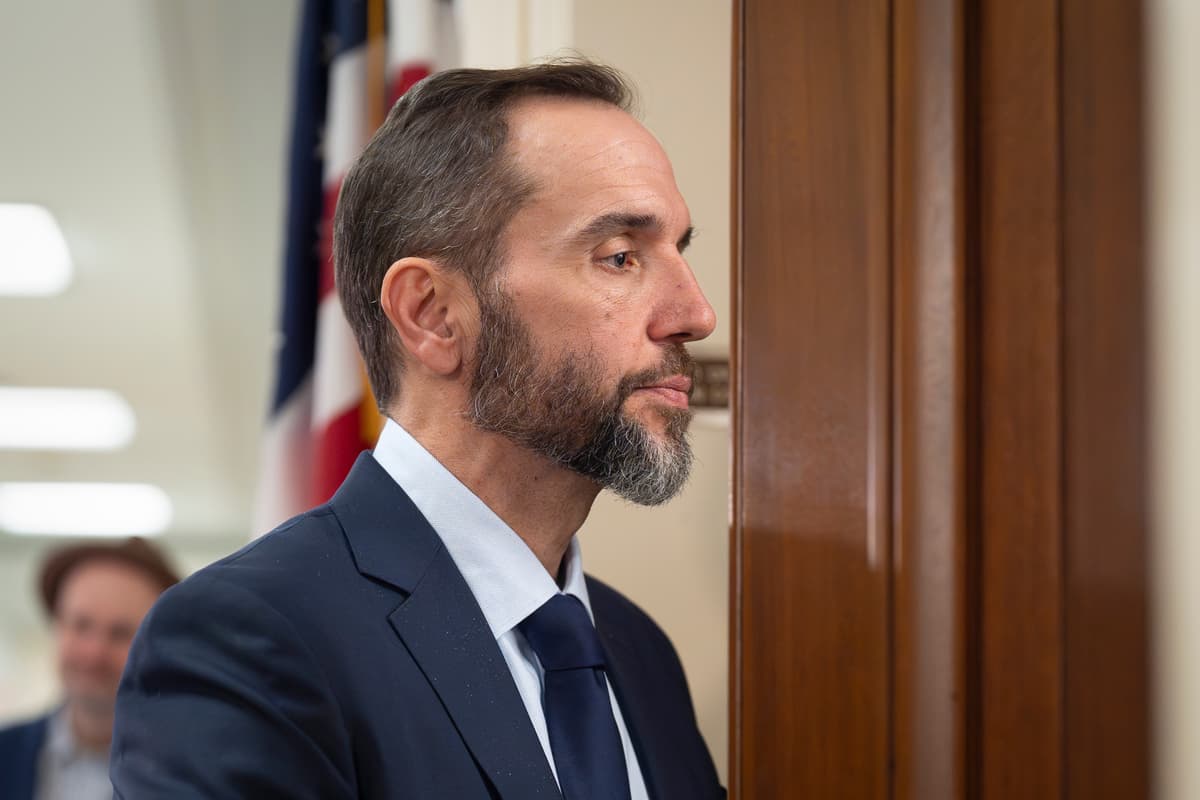
Special Counsel Jack Smith enters a room in the Rayburn House Office Building on December 17, 2025. J. Scott Applewhite

Special Counsel Jack Smith’s closed door testimony on Wednesday to the House Judiciary Committee marks the beginning of what is emerging as a protracted clash between the prosecutors and Republican lawmakers loyal to President Trump. 

A signal that the pressure on Mr. Smith is set to escalate came in the form of documents turned over to Congress by the FBI and Department of Justice hours before Mr. Smith testified on Wednesday. The emails, which one DOJ official, Harmeet Dhillon, contends amount to a “bombshell,” disclosed that there was dissent within the FBI over the decision to search Mar-a-Lago under the aegis of a warrant secured by Mr. Smith.

The emails, which were declassified by Attorney General Pam Bondi and FBI Director Kash Pater, shed light on internal deliberations over whether the government could meet the legal standard— “probable cause” — required to secure a search warrant. One email reads that “we are not in agreement for PC [probable cause] on the SW [search warrant].” Another shares that “we are in disagreement on the SW and its scope.” One proposes “alternative, less intrusive and likelier, quicker, options for resolution.”  

The pursuit of a warrant was eventually greenlit by Attorney General Merrick Garland and approved by a magistrate judge, Bruce Reinhart. Mr. Trump and congressional Republicans are especially exercised by the sweeping nature of the search, which covered First Lady Melania Trump’s bedroom as well as the private quarters of Mr. Trump’s son, Barron. 

One email declassified this week reckons that “If a primary goal of this investigation is to identify and recover classified records quickly, so as to protect the information, the 6 weeks spent fixated on probable cause for a search warrant have been counterproductive.” 

Mr. Smith could soon be summoned to a second session to discuss the Mar-a-Lago case. Lawmakers were limited in their ability to probe the documents case because Mr. Smith’s final report has not been released. That dossier is sealed  by order of Judge Aileen Cannon, She reasons that its release could damage the due process rights of Mr. Trump and his two co-defendants, Waltine Nauta and Carlos De Oliveira. The cases against all three were dismissed “without prejudice” — meaning that they could be refiled  

Mr. Trump has, in his personal capacity as an amicus curiae, urged Judge Cannon to keep the dispatch under lock and key. The report’s release is being urged by the Knight First Amendment Institute at Columbia and American Oversight, who argue that the rationale behind Judge Cannon’s ruling has expired. The 11th United States Appeals Circuit, which oversees Judge Cannon, has chided her for “undue delay” in the matter and ordered her to respond to the requests for release by early January.

Mr. Smith’s appearance — under oath — amounted to a full-throated defense of his prosecution of Mr. Trump with respect to the 2020 presidential election. The special counsel in his testimony accused the 47th president of a “criminal scheme.” Mr. Smith declared that he gathered evidence to convict Mr. Trump, who pleaded “not guilty,” of criminal election interference “beyond a reasonable doubt.” 

Mr. Smith’s opening statement to the legislators declared that “If asked whether to prosecute a former president based on the same facts today, I would do so regardless of whether the president was a Republican or Democrat.” Last month, he  denounced Mr. Trump’s claims that his prosecution was driven by political considerations as “ludicrous.” Mr. Smith was appointed by Attorney General Merrick Garland two days after Mr. Trump declared his intention to retake the White House.   

Another emerging area of conflict between Mr. Smith and lawmakers is “Operation Arctic Frost,” the codename for the special counsel’s probe into January 6. That investigation involved the surveillance of telephone metadata from eight senators and one congressman. Mr. Smith obtained not only warrants authorizing that surveillance but also secured “do not disclose” orders that prevented the lawmakers from knowing they were being observed. 

The existence of the wiretapping program was disclosed by Senator Charles Grassley, who also released emails showing that the DOJ worried that the surveillance amounted to a “litigation risk” because of the absolute immunity lawmakers enjoy for legislative activities. Congress vows to hold hearings on the investigation — possibly with more compelled input from Mr. Smith — in the new year.


The New York Sun

© 2025 The New York Sun Company, LLC. All rights reserved.

Use of this site constitutes acceptance of our Terms of Use and Privacy Policy. The material on this site is protected by copyright law and may not be reproduced, distributed, transmitted, cached or otherwise used.

The New York Sun

Sign in or  create a free account

or
By continuing you agree to our Privacy Policy and Terms of Use